Think Forward blog

When ignorance ain’t bliss

Posted March 15, 2013 by    

Used under creative commons license from sparktography.

I’m sure you care as much as I do about having a working antibiotic around when you really need one, or your child needs one.

It’s no idle concern. In the last two weeks, both CDC’s Director and England’s chief doctor warned about people soon dying—the latter called it a “catastrophic threat”—from the lack of antibiotics to treat people felled by bacterial infections resistant to multiple drugs.

Apparently, Senators on the HELP Committee (Health, Education, Labor and Pensions) would rather put their heads in the sand. This is the year they renew ADUFA, the law by which FDA collects money from pharmaceutical companies to regulate the antibiotics these companies sell for use in food animals.

Leaders of the HELP Committee, including Chairman Tom Harkin of Iowa, the leader hog producer, are fighting hard to keep any mention of antibiotic resistance out of the debate over ADUFA.

This is not only cynical, it’s dangerous. Even beginning students know the more we expose bacteria to antibiotics, the more they develop resistance to them. And thanks to the last version of ADUFA, the FDA finally collects data from pharmaceutical companies showing that four-fifths of all the antimicrobial drugs sold anywhere in the U.S.—nearly 30 million pounds per year—go for use in food animals; ninety percent of them are sold with no prescription.

Harkin, other HELP Committee members and the FDA want us to forget about all this. At the only public hearing on ADUFA last week, there was not a physician or public health witness anywhere to be seen. And not coincidentally, no mention of antibiotic resistance.

» Read the full post

Campaign against Golden Rice and other GMOs in the Philippines

Posted March 13, 2013

The Asian Farmers’ Association for Sustainable Rural Development (AFA) joins the South East Asia Regional Initiatives for Community Empowerment (SEARICE) and other network partners in the campaign against the commercialization of Golden Rice, as well as other GMOs, in the Philippines.

In line with its desire to achieve rice self-sufficiency for the country, the Philippine government has declared 2013 as the National Year of Rice. While this may be good on the surface, it is quite alarming that part of the efforts to achieve rice self-sufficiency involves the commercialization of Golden Rice, a genetically modified rice variety that is said to be vitamin A-enriched.

In addition to concerns over risks to health, environment, biodiversity, and infringement of farmers’ rights and livelihood, AFA believes that the best way to eliminate Vitamin-A deficiency is by eating a variety of nutritious foods that are usually found in diversified and integrated farming systems by smallholders, and which the government should support instead.

Thus, AFA joins hands with SEARICE and its network partners in issuing a call against Golden Rice commercialization by voicing objections, demanding a moratorium and, ultimately, halting its cultivation.

We ask friends and partners to uphold the right to safe food and the protection of farmers and the environment by supporting this campaign.

Click here to sign the petition at ipetitions.com.

Click here to download a primer on Golden Rice by SEARICE.

» Read the full post

International Women’s Day: Protesting violence and protecting livelihoods

Posted March 8, 2013 by Shiney Varghese   

Soni Sori is an Adivasi school teacher who was arrested, tortured and sexually assaulted by Chhattisgarh state police in 2011.

As the world was getting ready to usher in the New Year, most Indians were mourning the death of one of their young women, gang-raped on the night of December 16 on a bus that she boarded along with her companion. This is not the first time a woman was raped while travelling, nor was it the first time a young middle-class woman was gang-raped. Yet it galvanized the young and the old, women and men of India in a manner that had not happened before. There were many gatherings across the country to protest and mourn; there was an outpouring of grief and anger online too.

As we celebrate International Women’s Day this year, I am most acutely aware of the grim reality faced by most women in this world: gender-based violence. It manifests itself differently in different cultures, but is omnipresent all the same.

Gendered violence is intrinsically linked to women’s livelihoods as well, such as women’s roles in agriculture and food systems: as farmers, agricultural laborers, food processors, and finally as the main persons responsible for providing and preparing food for homes.

» Read the full post

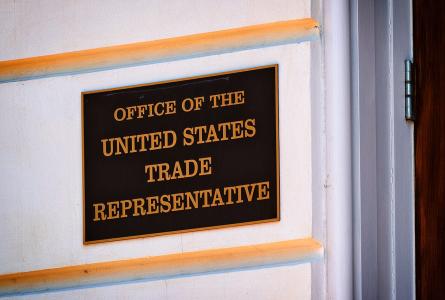
TPP: Doubling down on failed trade policy

Posted March 6, 2013 by Karen Hansen-Kuhn   

Used under creative commons license from Gobierno de Chile.

A 2010 summit with leaders of the member states of the Trans-Pacific Strategic Economic Partnership Agreement (TPP).

The 16th round of negotiations for the Trans-Pacific Partnership (TPP) began this week in Singapore. That trade deal has the potential to become the biggest regional free-trade agreement in history, both because of the size of the economies participating in the negotiations and because it holds open the possibility for other countries to quietly “dock in” to the existing agreement at some point in the future. What started as an agreement among Brunei Darussalam, Chile, New Zealand and Singapore in 2005 has expanded to include trade talks with Australia, Canada, Malaysia, Mexico, Peru, the United States and Vietnam. Japan and Thailand are considering entering into the negotiations, and others are waiting in the wings.

And yet, despite the potential of this agreement to shape (and in very real ways override) a vast range of public policies, there has been very little public debate on the TPP to date. Governments have refused to release negotiating texts. Media attention on agriculture and the TPP has focused on New Zealand’s insistence on access to U.S. dairy markets and Japan’s concerns over rice imports.

While important, that debate is much too narrow. The TPP is not only about lowering tariffs. It has the potential to greatly expand protections for investors over those for consumers and farmers, and severely restrict governments’ ability to use public policy to reshape food systems. The fundamental causes of recent protests across the globe over food prices, the rising market power of a handful of global food and agriculture corporations, as well as the dual specters of rising hunger and obesity around the world, point to the need to transform the world’s food systems, not to lock the current dysfunction situation in place.

» Read the full post

New report: Governments must protect land, food systems as trade liberalization accelerates land grabbing

Posted March 1, 2013 by Sophia Murphy   

Used under creative commons license from limaoscarjuliet.

IATP has always argued that trade agreements need to respect and promote human rights, not drive a process of globalization that privileges commercial interests and tramples on public interests. In a new paper on land grabs, we reaffirm that position.

“Land grabs” are large-scale purchases or leases of agricultural or forested land on terms that violate the rights of the people who live on or near that land. The problem has commanded enormous public policy and media attention for the last few years. In our paper, IATP sets some context for the land grabs phenomenon.  We focus on two forces that have contributed significantly to the problem:

  1. Globalization, or the deregulation of trade and foreign investment laws, which has greatly eased cross-border capital flows; relaxed the limits on foreign land ownership; and, opened markets to agricultural imports.
  2. The food price crisis of 2007-08, which highlighted how fragile food systems in many parts of the world have become, and which shattered the confidence of net-food importing countries in international markets as a source of food security.

The situation is compounded by climate change and the resulting destabilization of weather patterns, which in turn has made agricultural production less predictable. Climate change has made domestic food supplies less certain and exports, too. The United States, still a huge source of grains for international markets, lost 40 percent of a record large number of acres planted with corn to drought in 2012.

The sense of food insecurity has driven some of the richer net-food importers—countries such as Saudi Arabia and Kuwait—to invest in growing food abroad for import to their domestic markets. That is one driver of land grabs.

» Read the full post

Change in the wind on food aid?

Posted February 28, 2013 by Karen Hansen-Kuhn   

Used under creative commons license from USDAgov.

Washington D.C. is a gloomy place these days, with grey skies and a weirdly warm winter, the sour prospect of failure around the sequestration debate, and more cuts on the horizon. It’s possible, however, that on international food aid there just might be a silver lining to all that gloom.  Reuters reports that President Obama might propose new rules in his March budget proposal that would make food aid reach more people, more quickly and more efficiently.

Since the 1950s, nearly all U.S. food aid has been shipped in-kind. There was a certain (though even then, not entirely positive) logic to that practice when this country had vast grain reserves, but that hasn’t been the case for years. Most donor countries now provide more flexible resources for local and regional purchases of food aid, and there has been pressure for years from development and faith organizations for the U.S. government to get with the times and make that shift.

There was a small breakthrough in the 2008 Farm Bill, which created a pilot program to test local and regional purchases of food aid. The evaluation of that experiment found that food aid purchased locally arrived, on average, in about 56 days, compared to 130 days for food purchased and shipped from the U.S.—and at lower cost. Early drafts of the 2012 Farm Bill would have expanded that program and made it permanent, but the Farm Bill, like so many others initiatives these days, is in limbo.

» Read the full post

35 groups band together to ask for more on antibiotics in animal agriculture

Posted February 26, 2013 by    

Used under creative commons license from Anthony Albright.

Yesterday, IATP joined 34 other groups in writing to the leadership of the Senate Committee on Health, Education, Labor and Pensions.

Our simple ask: That in reauthorizing ADUFA—the law that requires Big Pharma to pay fees to the FDA, in part to hire staff to approve new animal drug products—the FDA ought to make sure the law carries some public health strings attached.

Namely, we urge the FDA collect and then report back to us, the public data on exactly how nearly 30 million pounds of antibiotics are being used in food animals each year. Currently FDA only reports summary data. One cannot easily see how much of that 30 million pounds is sold for use in animal feed, although previous data indicates it’s about 90 percent. The FDA also fails to indicate how much is sold for use in pigs, versus chickens, turkeys or beef cattle. These data are critical for targeting efforts to reduce the overuse of critical human medicines for what are unnecessary uses of convenience, like growth promotion, in animals.

The Senate’s one and only hearing on ADUFA is later this week. Giving testimony are two representatives of industry, and the veterinarian in charge at the FDA’s Center for Veterinary Medicine. Hopefully, the lack of a public health voice won’t also be reflected in the content of the bill.

Read the joint letter.

» Read the full post

Resilience means taking the long view on climate change

Posted February 22, 2013 by Andrew Ranallo   

In our final “Climate change, agriculture and resilience” video—the series we’ve been publishing all week in the lead up to the MOSES Organic Farming conference—it’s all about being different.

Farmer Tom Nuessmeier, from La Sueur, Minnesota, is different. His 200-acre organic farm—producing farrow-to-finish hogs, corn, soy, oats, winter grains and alfalfa—is pretty uncommon in its diversity and size, especially today. As the average size of farms has grown, the number of farms has decreased overall, and so has the variety of crops. According to USDA data highlighted in the video, while corn acres have increased 62 percent, hay and oat acres have decreased 15 and 92 (!) percent respectively in the past 50 years.

This loss of diversity, though, makes sense as markets and policy have developed to encourage monocropping (namely, corn and soy). As Tom puts it:

The market tells people, and the insurance setups dictate to a degree, that that’s what you’re going to do if you want to go after the greatest profit. But I think it’s kind of a short-term way of looking at things that does have long-term implications if you’re talking about just maintaining the farm’s ability to be resilient.

Watch the video, or take a look at the first four of our “Climate change, agriculture and resilience” videos:

» Read the full post

In a changing climate, farming’s a risky business

Posted February 21, 2013 by Andrew Ranallo   

Farming is risky for anyone: volatile markets and unpredictable weather can make planning and execution from season to season a difficult prospect. Make that double with the extreme weather climate change is bringing. Sure, there is crop insurance in some cases, but what about farmers like Mike Brownfield?

One bad hailstorm and Mike Brownfield’s orchard—the first certified organic orchard in Washington—could lose an entire crop. Being organic means being viewed by the USDA as more risky than conventionally grown fruit (despite studies showing the opposite); being viewed as more risky means paying higher premiums for insurance, but still receiving only conventional-price reimbursement should disaster strike (despite organics being worth more at market).

The fourth in IATP’s “Climate change, agriculture and resilience” video series focuses on the risk involved for farmers who grow our food, how they deal with it, and how that risk is increasing as weather extremes due to climate change shake our system’s very foundations. Without conventional crop insurance to protect his orchard, Mike Brownfield has instituted other methods of risk-management:

For us, having a diversity of crops has made a difference. A certain variety of apple is not always going to have a great year for you, and so that's why we diversified so much in our crops—and in our marketing.


Watch the video or check out the rest of the series:

» Read the full post

Finding a balance: A farmer’s role in climate change

Posted February 20, 2013 by Andrew Ranallo   

How can we balance the environmental impacts of farming with our need to continue producing food?

Today, in part three in our “Climate change, agriculture and resilience” video series, father and daughter team Maurice and Beth Robinette of Lazy R Ranch talk about their approach to farming grass-fed beef and why carbon sequestration and protecting their ecosystem is so important. As Beth Robinette puts it:

So much of what we do here is about ‘How do we create maximum functioning ecosystems in our pasture?’ and to me that’s what resilience is. If you have an ecosystem that’s at peak function, it can take a lot more damage or uncertainty than an ecosystem that is not at peak function. That’s about the sum of what we’re trying to do here: Grow grass that’ll keep growing.

But making changes like the Robinette’s isn’t easy, or cheap. As direct marketers of their beef, the Robinettes command a premium price, and can put those dollars toward protecting their farm’s ecosystem. For farmers that are just getting by due to market prices or input costs, this kind of adaptation would be impossible.

More long-term thinking in policymaking, and programs that encourage practices like those Lazy R Ranch has piloted would go a long way in building a food system that can withstand the shocks of climate change while contributing less to the factors that are known to cause it.

Watch the video, or check out the rest of the series:

» Read the full post