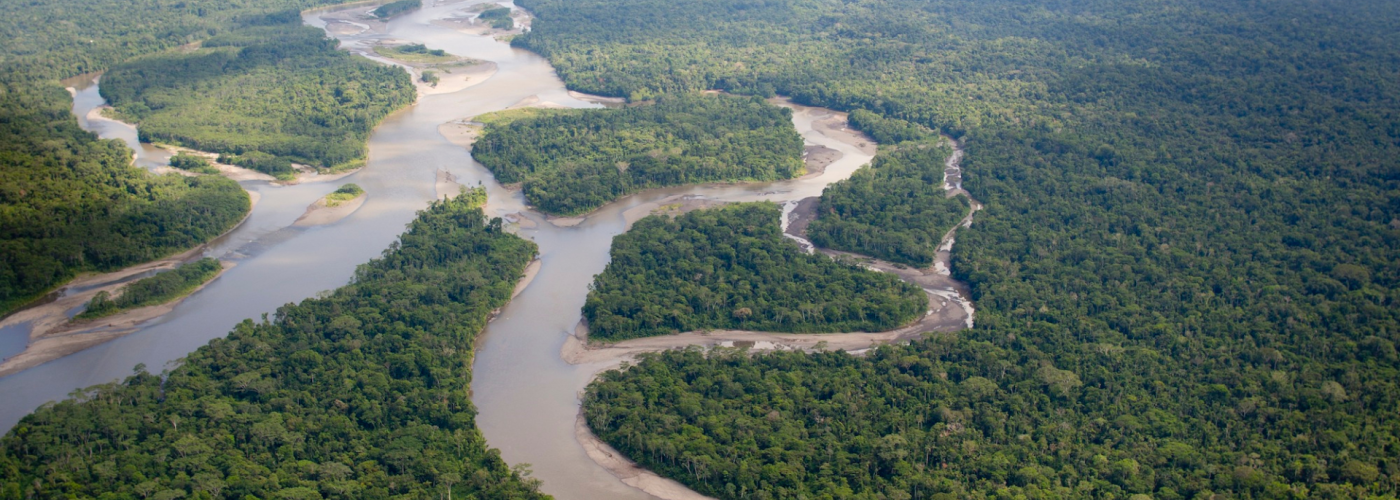
This week, the University of Melbourne launched the second edition of The Land Gap Report, which looks closely at countries’ climate commitments and their implications for how land is to be used — and how forests need to be protected — to reach those targets.
The Land Gap Report is an in-depth expert account of how misconceptions of land use and the understated importance of forests are combining with weak, unrealistic government climate pledges to deepen the climate crisis. I authored chapter seven, which focused on agricultural commodity trade and global value chains.
The report’s release is timed to be part of the debate at COP30, the UN’s annual intergovernmental negotiating forum on how to avoid climate catastrophe. A side event to discuss the report’s findings is scheduled for November 20 in Belém.
In the new report, we assessed the latest government commitments to reduce greenhouse gas emissions (in plans known as Nationally Determined Contributions, or NDCs) and found that countries have not only increased their reliance on land-based Carbon Dioxide Removal (CDR) to require a combined total of 1.01 billion hectares of land, but are also far off-course from pathways that could achieve their commitment to halt and reverse deforestation and forest degradation by 2030. Worse, as the report points out, there is not enough land in the world to realize these plans. CDR is a rational part of an “all-hands-on-deck” response to the climate emergency, but the more we delay the phase-out of fossil fuels and other big climate polluters, the higher we can expect average temperatures to rise, and the greater the likelihood of wildfires, droughts, floods and other disasters.
The report makes it clear that the problem with forest and climate commitments is not a lack of political will and money, though both are important. Nor will private finance and carbon trading solve the problem. Instead, the chapters build an argument for a transformation in the forest and land sectors. This would be achieved by governments identifying and disrupting the interrelated structural mechanisms and policies that keep extraction in place, including changes to debt, fiscal policy, taxation, and trade law.
The Land Gap Report offers climate solutions that are far more ambitious — and would be far more effective — than governments’ proposed action plans. The recommendations focus on protecting existing forests, phasing out fossil fuel use, and profound reforms to public subsidies, tax incentives, and international trade and investment rules. The report urges governments to stop allowing the externalization of pollution costs in economic accounting. Agribusiness must start to pay the true costs of their extractive production models.
What roles do trade and agriculture play in a report on land use and climate?
I wrote the report’s seventh chapter: “Trade policy reform for forest protection and food sovereignty.” In the chapter, I look at international trade, agricultural commodities, and food sovereignty, asserting that effective policy changes to slow deforestation and forest degradation can only be made with a clear, nuanced understanding of the forces driving commodity trade.
Why does a report on deforestation and climate change include a chapter on trade and agriculture? Because agriculture is the biggest driver of climate polluting land-use change, including deforestation. Twenty-six percent of global tree cover loss in the period 2001–2015 is attributed to an expansion in the production of seven agricultural commodities (cattle, oil palm, soy, cocoa, rubber, coffee, and plantation wood fiber), all of them heavily traded. At the same time, agriculture is one of the economic activities most hurt by climate change and biodiversity loss. Forests are critical not just to the communities and biodiversity that inhabit them, but to weather and water cycles planet wide. We need to protect food and agriculture systems that protect forests if we want to survive.
Climate forest action has been driven for two decades by the observation that a handful of global agribusinesses dominate the seven commodities that are disproportionately responsible for deforestation. That observation was combined with the belief that these businesses could be persuaded to do better, resulting in a strategy focused on voluntary actions and roundtable discussions that included agribusinesses, civil society organizations, and government officials. The goal, reflected in outcomes such as Brazil’s Soy Moratorium, was to raise production standards and improve the sustainability of value chains.
Despite small successes, however, devastating levels of deforestation continue. We need to bring economic and ecological incentives into alignment. The WTO Agreement on Agriculture is the framework for most international agricultural trade rules. The agreement is designed to limit the state’s role in managing agricultural markets, and to open access to imports with little or no regard for domestic policy objectives such as clean and just production systems. The agreement ignores the fact of the concentrated market power held by commodity traders, and the ways in which that power distorts prices and skews the distribution of benefits that trade theory predicts will accrue to efficient producers. In practice, the points within agricultural distribution systems where competition is weak — including access to transportation, storage, and processing capacity — create price asymmetries that are to the detriment of local producers — and too often, to the detriment of public budgets in the producer country. Practices such as transfer pricing allow companies to hide their profits where the tax burden is lightest (usually small states with no tropical forest to protect but large numbers of private banking firms).
What should come next?
It’s impossible to guess where COP30 will leave us. Hopes were high for several years that this COP would get better results than the past few years when COPs have been hosted by petro-states keen to avoid reductions in fossil fuel use. Brazil is a large, forested country whose government, under the first Lula administration, earned a positive reputation for effective anti-hunger programs and whose current leadership is pressing for significant financing for forest protection. But one week into the negotiations, the problems and intractable differences among the member states are disheartening.
So what could governments do? Action on climate change will take every level of government, and there is plenty to do while multilateralism is stalled. Countries have obligations to meet the universal human right to food — a right that depends on protecting the natural resources and ecosystems in which a diversity of foods will flourish. This food system must be sovereign, which does not mean that it is separate from other systems, but that people need control in the decisions that affect their capacity to produce and access food.
The mass production of agricultural commodities at industrial scale for global value chains must not be confused with food security; they require different regulations and controls. Trade rules should be reformed to distinguish these different forms of agriculture, as many developing countries have been advocating for years in their request for additional protections against dumped imports.
Trade mechanisms also need to connect with local communities. For example, the EU Deforestation Regulation targets companies in the value chain, holding them responsible for their commodity sourcing practices. This is positive — but there is no mechanism foreseen to engage the people who live and work in the forest. We need more layers to trade and forest management to dismantle the perverse, short-sighted incentives that encourage the destruction of our forests.
Ultimately, we need a new economic system that values the earth and its resources. As Indigenous Peoples know all too well, environmental protection is not a choice: without nature, we cannot have economic activity.