As the federal government throws climate progress in reverse, Minnesota builds a model for state-led climate action across sectors — revealing a big opportunity for a transition to sustainable agriculture.
Summary
In February 2026, the State of Minnesota released its Climate Action Framework, which guides state actions to address climate change. While some progress has been made over the past few decades to reduce greenhouse gas emissions and address climate change in Minnesota, the state has fallen short, especially in the agriculture sector. Agricultural emissions in Minnesota have remained flat or slightly increased over the last 15 years, while other sectors such as electricity and transportation have reduced their emissions.
The Climate Action Framework, while not perfect, is a welcome step forward while the federal government shirks its responsibility to take action on climate change. We encourage state leaders to seize the opportunity in addressing climate change by cutting emissions from agriculture to reach the goals of the Framework.
When federal climate action is absent, Minnesota shows a path forward
While the federal government exacerbates the problem and disavows the basic science showing the connection between human actions and climate change, Minnesota has taken action on climate change and created a path forward for the state.
Minnesota released its new Climate Action Framework in early February, a comprehensive document that provides a framework to address climate change across the state. The framework’s vision statement says, “We envision a climate future for Minnesotans that is carbon neutral, resilient, and equitable. Each of these pillars is essential.” These three pillars are separated out into seven goals: clean transportation, climate-smart natural and working lands, resilient communities, clean energy, healthy lives and communities, clean economy, and efficient and resilient buildings.
Within climate-smart natural and working lands, the Framework lays out four challenges, including the agriculture sector’s emissions, conversion of grassland and forestland to agriculture and development, the draining of peatlands, and the increase of weather effects from climate change such as drought, flooding, and higher temperatures.
IATP sat on the advisory council for working lands, which met several times a year as the Framework was being built starting in 2022. There was time to discuss shortcomings of drafts, needed improvements, and more nuance (all of which was noted here.) There was a balance of groups representing farmers of different scales, production methods, and a wide array of top priorities, such as public health, water quality, and wildlife conservation. The process for gathering input felt very open for those who were invited to be a part of the process. But greater outreach to farmer communities and those not already involved in state agriculture policy could have provided additional insights and further strengthened the Framework.
The opportunities for working lands
Working lands and agriculture present a prime opportunity to address climate change and take action to reduce emissions in Minnesota. According to the Minnesota Pollution Control Agency, greenhouse gas emissions from agriculture have remained flat or increased slightly over the past 15 years while other sectors such as waste, electricity, and transportation have reduced their emissions.
IATP has a history of advocating for working lands conservation programs at the state and federal levels. In addition to advocating for agroecology, for years we have researched two conservation cost-share and grant programs run by the U.S. Department of Agriculture (USDA): the Environmental Quality Incentives Program (EQIP) and the Conservation Stewardship Program (CSP). These programs help farmers pay for conservation improvements on their farms, from immediate needs such as erosion to more whole-farm conservation planning around water quality or soil health. These programs are voluntary, popular with farmers, and frequently oversubscribed.
In Minnesota, roughly only 28% of EQIP applicants and 21% of CSP applicants were accepted to the programs in 2024. State-level working lands programs that have similar conservation aims are also often oversubscribed, such as the Soil Health Financial Assistance Grant. The climate-smart agriculture program outlined by the state can help close some of those gaps through complementary programs. For example, as a way to increase soil organic carbon content and reduce erosion, the Climate Action Framework advocates for “increas(ing) incentives for practices such as cover crops, conservation tillage, diverse crop rotations, buffers, shelterbelts, hedgerows, and perennial crops that sequester carbon and increase resilience by restoring soil health.” A surplus of farmers with operations of varying sizes and production methods have already sought funding for these practices at the state and federal levels. Programs that provide this funding would help reduce emissions, store carbon, and build resilience for farms.
This Framework will blend well with other existing state initiatives, such as the $200 million Climate Pollution Reduction Grant (CPRG) Minnesota received from the Environmental Protection Agency during the Biden administration. This CPRG also laid out action steps to achieve its goals and initiatives and includes funding for climate-smart working lands incentives.
The Climate Action Framework promotes tree crops as a way to grow and maintain agricultural markets while creating natural carbon storage. Minnesota is able to support tree crops such as apples, pears, and hazelnuts, some of which are native and can support humans and wildlife alike.
Preventing the conversion of woodlands and grasslands to agriculture is another important component of the Framework. While woodlands and grasslands can be compatible with lots of different types of agroecological farming, industrial-scale farming has destroyed much of these ecosystems in Minnesota. Protecting Minnesota’s existing grasslands and woodlands is crucial, as is the reintegration of these ecosystems with agricultural land. Edge-of-field practices such as buffers, alleycropping, and grazing animals among native grasses and trees are also important components of protecting and restoring fragile ecosystems.
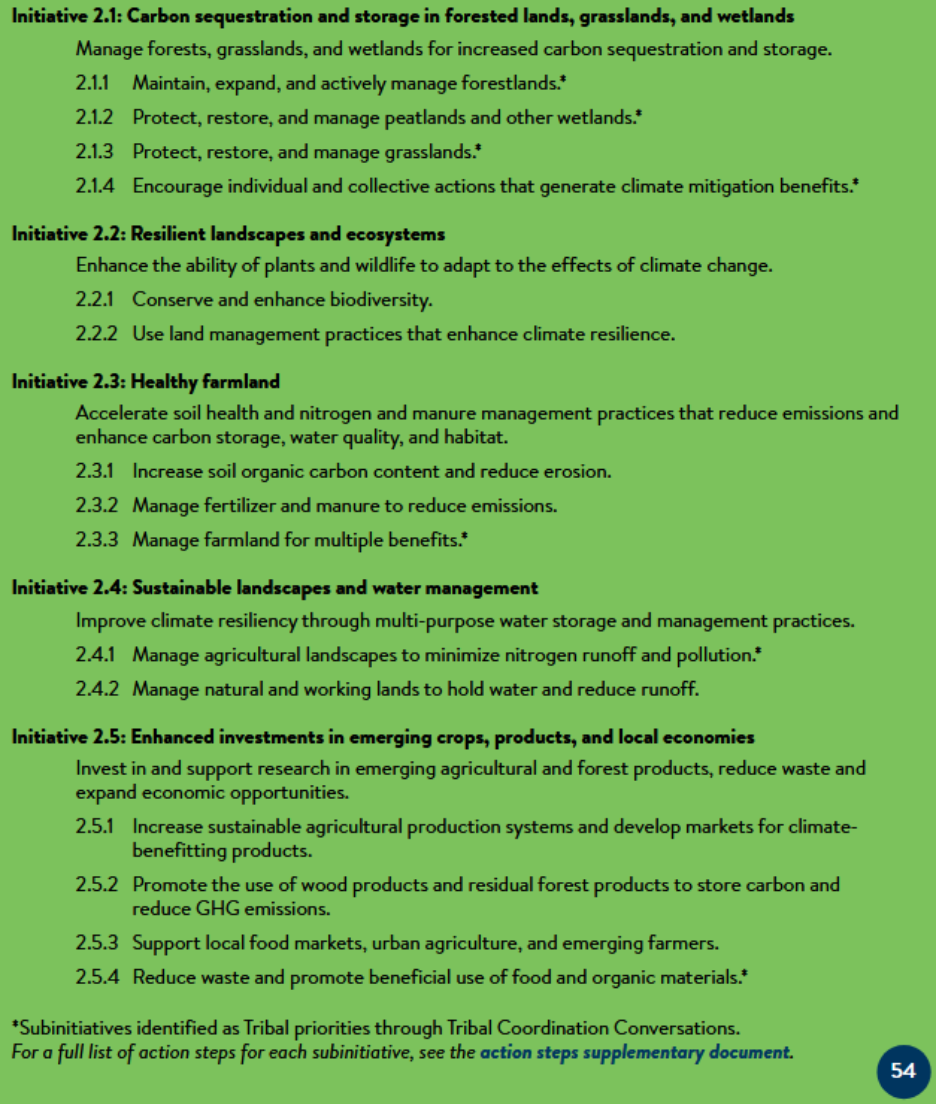
Figure 1: List of initiatives within MN Climate Action Framework’s Climate-Smart Natural and Working Lands
Peatland: A climate super-storer
One of the marquee initiatives of the Climate Action Framework is the rewetting of peatlands to store carbon, including converting farmland that had drained peatlands back to their original state. According to the Global Peatlands Initiative, only 3-4% of the world’s surface is peatland, but they store up to 33% of the world’s carbon. Peatland, a boggy wetland that is low in oxygen, is a major storer of carbon dioxide. Not only can conservation of peatland prevent carbon dioxide emissions, but the creation of new peatland can sequester even more — a natural carbon capture and storage solution that is needed in any comprehensive emissions reduction strategy.
According to The Nature Conservancy, Minnesota contains 6 million acres of peatlands, the second highest amount in the United States — the highest amount being in Alaska. Despite the prevalence of existing peatlands in Minnesota, there are much fewer now than there were just a little over a century ago. One-sixth of the state’s peatlands were drained for agriculture and other uses, mostly during the early 20th century. Protecting the peatlands that still exist while reconverting drained and degraded peatlands can go a long way toward keeping carbon in the ground while also building biodiversity and improving water quality throughout the state.
Some prescriptions fall short
The Climate Action Framework is certainly not perfect. There are policies outlined in the Framework that are positioned as climate solutions, but in reality they reinforce polluting systems. For example, the Framework highlights green fertilizer as a climate solution. In this case, green fertilizer means fertilizers produced using locally generated renewable energy rather than imported fossil fuels. However, in Minnesota it is the application (often over-application) of synthetic fertilizers that is a huge source of nitrous oxide and water pollution. Some production of fertilizer is probably necessary, but Minnesota should be careful not to direct public subsidies in a way that reinforces high-emissions and polluting systems. State resources would be better served investing in agroecological solutions to nutrient management, solutions such as conservation crop rotations, and improving soil health in a way that reduces nitrous oxide emissions and improves water quality.
Other prescriptions laid out in the Framework that have questionable or unproven climate benefits include livestock feed management, anaerobic digesters, liquid manure storage, and sustainable aviation fuel. There is evidence that installing anaerobic digesters on farms increases herd size, limiting emissions reduction from the digester. As they currently exist, digesters only make sense for large-scale livestock operations with confinement models. These projects are highly dependent on state and federal subsidies to be economically viable. The USDA’s REAP program has paused digester loans because of high delinquency rates, and several Wisconsin digester projects had to file for bankruptcy. A large state investment in these prescriptions may lead to fewer resources going to small, sustainable livestock operations and have a second-order effect of increased consolidation.
We also encourage the state to rigorously study the lifecycle emissions of sustainable aviation fuel, especially comparing different fuel sources such as corn, soybeans, and oilseeds such as winter camelina. The state should assess the true effect on emissions, including the impact of land use changes such as deforestation and grassland conversion. Better coordination between the working lands section of the document and the transportation section is needed. Better rail infrastructure and battery-powered aviation for smaller, short-haul flights not served by rail may be better investments and keep important connections between rural communities and larger metro areas.
Why this is important
At their best, states are laboratories of democracy and policy, which can show small-scale positive results that can later be replicated nationwide. Minnesota is showing a path forward on climate change, where sectors as varied as agriculture, transportation, energy, and even education can all work together to further a state’s climate goals. The Climate Action Framework is an important step in developing additional policies that reduce emissions, build resilience, and enhance local communities.
Implementation will be the next challenge. There are many entrenched systems that will make true change difficult, especially in agriculture. IATP is encouraged by Minnesota’s work, its open process, and commitment to addressing climate change across all sectors. It is important for the state to focus on solutions that truly address the root causes of climate change and do not inadvertently make the problem worse. We look forward to remaining engaged in the Framework’s implementation and holding the state accountable to achieving its goals.