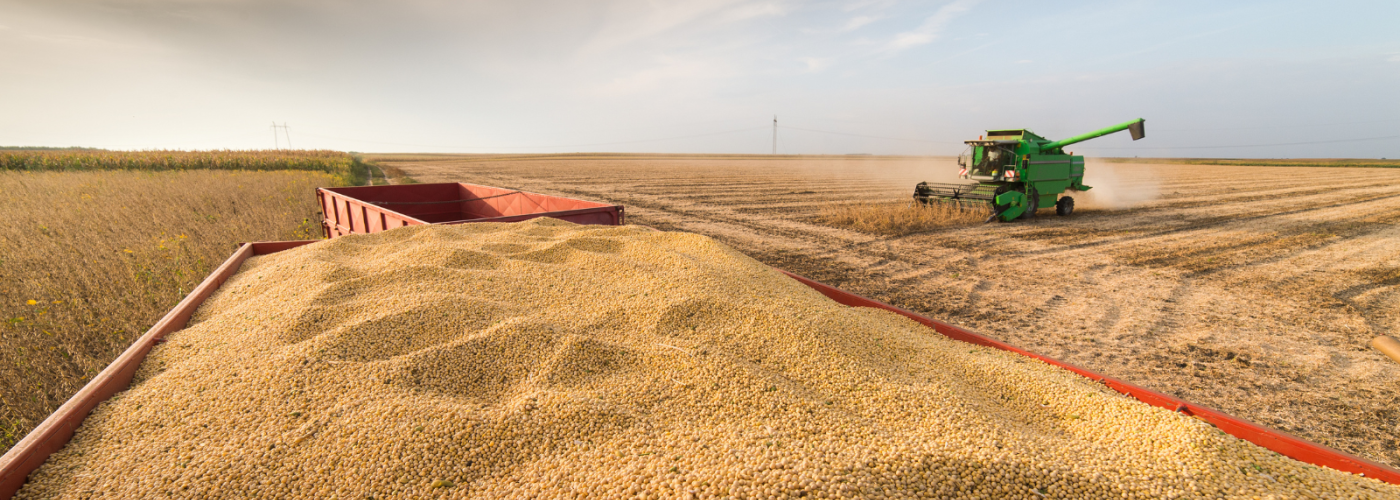
The plight of U.S. soybean farmers and lost exports to China has splashed across headlines this fall. The Trump administration announced a tenuous deal with China last week, promising the country would purchase some U.S. soybeans this year and slightly below-normal levels of soybeans in the next three years. Hardly a victory, particularly when the emerging farm crisis was never about soybeans or tariffs. Farmers growing every major commodity crop will lose money from the market this year, as they do most years. This losing streak combined with the steady loss of farmers is intertwined with a decades-long mythology about the magical powers of export markets, backed by powerful global agribusiness firms and a flawed U.S. Farm Bill.
Through a self-inflicted, perfect storm of damaging actions, the Trump administration has exposed the vulnerabilities of a fragile agriculture economy, highly dependent on exports of a few crops and reliant on immigrant labor. In just 10 months, erratic tariff announcements have led to lost exports, distrust from key trading partners, and rising costs for farmers. ICE attacks on the farm and food workforce has buckled supply chains. The abrupt slashing of food programs and massive staff cuts at the Department of Agriculture (USDA) have hindered farm programs, including efforts to strengthen local and regional food systems. To top it off, the administration sent a $40 billion bailout to Argentina to help stabilize their economy and announced it would expand beef imports to the U.S. from Argentina, leading to an immediate drop in cattle prices for U.S. ranchers.
The administration has tried to placate farmers for months. USDA Secretary Brooke Rollins has promised that “a golden age for farmers is around the corner,” that current trade fights are part of a strategy to onshore U.S. food production, and that ICE raids will open doors for adults on Medicaid to replace immigrant farmworkers. In March, President Trump told farmers to “have fun” and start growing for the U.S. market after he imposed new tariffs on major trading partners. For weeks, farmers have been promised trade aid due to a loss of exports. As one farmer commented, “On a daily basis, Secretary Rollins continues to blow sunshine up my pant legs.”
The chaos created by the Trump administration is serious, but an expected trade aid package for farmers and a modest soybean deal with China won’t fix the deeper, structural weaknesses in the farm economy. For decades, farmers have been promised that export markets will lift prices and incomes and drive rural prosperity. With the establishment of the North America Free Trade Agreement (NAFTA), the formation of the World Trade Organization (WTO), and a revamped Farm Bill called “Freedom to Farm” in the mid-1990s, farmers were told to expand commodity crop production and “feed the world.”
Now 20% of U.S. production is exported, with higher levels for products like soybeans and pork. Nearly half of those exports go to only three countries — Mexico, Canada, and China. The Trump administration picked trade fights with all three countries. The impact of tariff fights hit almost immediately and went well beyond soybeans. Last year China bought about $1.3 billion worth of American sorghum, but this year sorghum exports to China are down 97%. China is replacing US beef imports with beef from Australia. Other commodity crop growers, meat producers, specialty crop growers, and hardwood forest providers are all asking for financial aid.
How did we get here?
The export-to-prosperity story flopped almost immediately following the 1996 Farm Bill as farmers expanded commodity crop production leading to low prices — often below the cost of production — and a series of emergency payments to keep farmers afloat. The Farm Bill was re-designed to keep farmers going when prices and income dropped. In most years, farmers are paid less than their costs, according to USDA. The most recent Agriculture Census found the U.S. lost more than 300,000 farms since 1997, with big losses in farms producing for global markets like corn, soybeans, beef, and pork. At the same time, the number of large farms grew. We now have fewer, larger farms. The largest 4% of farms are responsible for 47% of the nation’s farm production. With only 1.88 million farms (an estimate some have questioned), the U.S. has the fewest farms in its history.
While the export focus has failed farmers, it has worked wonderfully for global grain and meat companies. Grain companies like ADM, Cargill, and Bunge turn plentiful, cheap (often below cost) crops into processed food ingredients, animal feed and biofuels. Meat companies like JBS, Tyson, and Smithfield benefit from animal feed that fuels a factory farm system that now dominates hog and poultry production. The big seed (Bayer and Syngenta) and fertilizer companies (Yara and Nutrien) also cash in by controlling the input market farmers rely on to grow a small number of commodity crops.
Free trade deals with lower tariffs have allowed these companies to move crops and animals across borders in a race-to-the-bottom on price and environmental and labor protections. In contrast with the early 1990s, the U.S. is no longer the largest agricultural exporter for corn and soybeans, where Brazil now dominates. With operations in multiple countries (Cargill is in over 70 countries, JBS is on 5 continents, Bayer in 80 countries), these firms are ideally equipped to navigate tariff fights and trade disruptions. Farmers on the other hand buy and sell only in their region, often with only one or two options. Farmers don’t have the market power to negotiate costs or prices they are paid — even when costs exceed the market price. In economic terms, farmers are what is known as “price takers.”
The flip side of this export-focus on commodity crops is that the U.S. has less farmland growing the food people actually eat, such as fruits, vegetables, and even beef (the U.S. has a beef trade deficit). Remarkably, starting in 2019 during the Trump administration’s first term the U.S. became a net food importer and this year is projected to have a $47 billion agricultural trade deficit.
In some ways, the first-term Trump administration’s conflict with China and accompanying trade aid package doubled down on the export-to-prosperity myth. A Phase One deal with China promised to purchase $80 billion in U.S. agricultural products that never fully materialized. A poorly designed trade aid package was riddled with problems identified by three Government Accountability Organization (GAO) reports, including:
- Favoring commodity crops over others.
- Favoring farmers in the South over other parts of the country.
- Benefiting the largest farms over smaller scale farms.
- Closing out farmers who grow fruits and vegetables and other non-commodity crops.
None of the first round of trade aid got to those who rented farmland or farmworkers. The result was further farm consolidation and continued false hope for export-led prosperity, in this case tied to China.
A band-aid won’t fix this
If the response to the emerging farm crisis is just another farmer bailout and another promise-based deal with China, we’ll be right back where we started — the slow and steady loss of farmers, below cost prices, and more farmer bailouts. Congress could be much bolder. The traditional Farm Bill is hanging by a thread, battered and bruised after a two-year delay and currently expired. The Farm Bill political coalition between farm and anti-hunger groups, and bi-partisan rural and urban legislators, was broken in the passing of the Republican budget bill over the summer. That budget split off pieces of the Farm Bill and boosted commodity crop subsidies and insurance, while it slashed the anti-hunger Supplemental Nutrition Assistance Program (SNAP).
We are in uncharted territory, and whether a new Farm Bill can actually pass through Congress is in question. If anything passes, it is more likely to be a simple extension — potentially opening the door in the future for new policy ideas on how to better support farmers, workers, and consumers, with an eye toward more resilience. The U.S. will always grow commodity crops and always export, but that approach shouldn’t dictate nearly every aspect of our farm and trade policy. A new focus on competition and antitrust enforcement to restore market fairness, greater incentives for more diversified farming and investments in regional food systems, and the protection of farm and food worker rights could strengthen our food system — and be better able to withstand political, economic or climate chaos into the future.