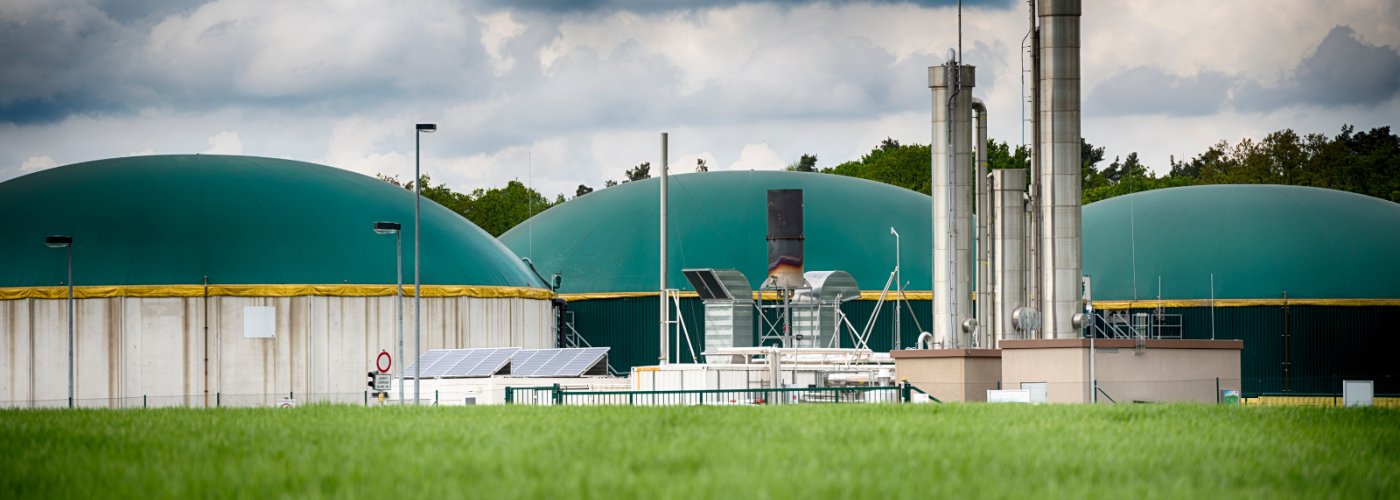
In April, the U.S. Department of Agriculture (USDA) announced it would stop providing loan guarantees for methane biodigester projects on large animal operations for the rest of 2026. USDA’s announcement followed a pause in lending to investigate the high rate of loan delinquencies and defaults on these projects. A series of recent financial problems, closures, and policy changes are slowing momentum for factory farm gas projects touted by the natural gas industry and large factory farms as a solution to methane emissions.
Big digester projects are designed to capture methane gas from large manure pits, process that gas and send it into natural gas pipelines. In a February letter to staff, the USDA’s Rural Business Cooperative Service disclosed that of 21 USDA loans to digester projects totaling $386.4 million, 27% were in delinquency covering $102.6 million. In announcing the full-year freeze on loans, the USDA stated, “Continuing to guarantee high risk projects — particularly those underwritten by lenders lacking expertise — threatens the long-term stability of the program and its capacity to fulfill its mission.”
The USDA loan freeze comes on the heels of reports about several troubled digester projects over the last year. In Oregon, NW Natural is asking taxpayers to pay $8.3 million to close down a failed manure digester project that went belly up. The project was tied to a Tyson beef processing plant in Nebraska, though it received financing from an Oregon utility attempting to offset its carbon emissions. In November, Tyson announced it was closing the plant as well as the digester. Last June, a Wisconsin dairy digester project with a complicated web of financing had to default and file for bankruptcy. The digester project had made big promises of jobs and future tax revenue as it benefitted from tax-exempt municipal bonds financed by the small town of Gillett. In August 2025, another biogas developer in Wisconsin filed for bankruptcy seeking to restructure their debt. In Michigan, a financially troubled digester that accepted manure and food waste had to shut down when the state required a standard groundwater permit.
In 2025, the fewest number of new digesters were built since 2019. When prices for Renewable Fuel Standard (RFS) credits dropped last year for renewable natural gas (gas derived from digesters), investors expressed concerns and some new projects slowed.
While the Biden administration positioned factory farm gas as a centerpiece of its agriculture strategy to reduce the potent greenhouse gas methane, the Trump administration, with its close ties to the fossil fuel industry, has effectively erased all climate policy at the national level. From pulling out of the Paris Agreement to ending the Environmental Protection Agency’s (EPA) greenhouse gas emissions reporting to the rejection of the climate endangerment finding (which found that climate change is a threat to human life and wellbeing), the Trump administration has changed the playing field for digester projects. Specifically, the EPA acted in August to prevent factory farm gas from receiving potential Renewable Fuel Standard credits for generating electricity to power electric vehicles.
The USDA’s February decision to pause digester loans based on their financial risk came only a few days after a number of groups, including IATP, filed a petition with the Department’s Rural Energy for America Program (REAP) calling for the agency to make digester projects ineligible for REAP funding because of their questionable climate and environmental benefits. The RBCS provides the financing for biogas projects through REAP. In recent years, REAP has given hundreds of millions of dollars to digester projects through both grants and loans. While the year-end digester pause applies only to loans, USDA has effectively paused all REAP funding, including grants to support on-farm solar, wind, and energy efficiency projects. Farmer demand for REAP support, even with additional funding from the Inflation Reduction Act, exceeds REAP’s current resources. (The Trump administration’s proposed 2027 budget ends funding for the RBCS, raising more questions about the future of loans for digesters.)
From 2021 to 2025, REAP spent about $257 million on 55 new manure digesters, according to the petition. Details about the success rate of these projects have not been made public. The average grant award for on-farm digesters was $855,701, and average loan guarantees of $19,847 from 2021 to 2025. Meanwhile, for the 8,023 solar projects funded by REAP during the same period, the average grant was $131,480 and the average loan guarantee was $6,445. The average grant for the 157 REAP-funded wind projects was $95,202. RBCS assesses how much energy a project will generate per public dollar and found that manure digesters that received loan guarantees from fiscal year 2021 to fiscal year 2025 generate an average of 4.5 times less energy per public dollar than solar projects, according to the petition.
The freeze on REAP funding is a blow to the factory farm digester industry, which relies deeply on a variety of public subsidies to be financially viable. Manure-based digesters make some money selling their methane gas, but without federal and state credits and subsidies it would be difficult to cover the massive investment costs for many projects. A major source of digester finance is the promise of credits from California’s Low Carbon Fuel Standard (LCFS). Remarkably, digesters don’t have to be located in California to receive credits (they only have to be connected to a pipeline that finds its way to CA). In fact, about 45% of factory farm digester credits go to projects outside of California, according to a report by Food and Water Watch. Prices for LCFS credits have dropped in recent years, reducing income for projects that had banked on a higher credit price when securing financing.
Digesters also rely on federal Renewable Fuel Standard credits to back financing and the USDA’s Environmental Quality Incentives Program (EQIP). An IATP analysis of EQIP spending found that digesters are far and away the most expensive practice under the program, averaging over $400,000 per contract, versus more popular conservation practices like cover crops that average just over $9,000.
A bad investment that’s worse for the environment
From an environmental perspective, one of the major concerns with digesters is that they incentivize farms to expand herd sizes to produce more manure to feed the digester. New research from California finds that operations with digesters expand their herd size, thereby increasing methane emissions from the cows themselves. That study found that 237 dairy operations in California with digesters added an estimated 860 additional cows three years after anticipating digester construction. Another study of dairy operations with digesters in Kewaunee County, Wisconsin found that herd sizes at those operations grew 5.2% year-over-year, about 52 times the growth rates for overall dairy herd sizes. In Iowa, large dairies with digesters are growing their herd size and raising water pollution concerns.
Due to their enormous expense, digesters only make sense economically for the larger farms that are located reasonably close to natural gas pipelines, which accepts the processed methane gas from those farms. But while these projects capture some methane, there is emerging evidence that the projects experience higher than expected leakage. A Food and Water Watch analysis found that California dairy farmers participating in the state’s LCFS still were emitting enough methane to be captured by satellite monitors. Digesters and the leftover byproduct, known as digestate, can increase emissions from other gases like ammonia, and increase risks to soil and water quality. Manure digesters can spill and pollute waterways, as one did in western Minnesota in March of 2025 and in Tennessee a year earlier.
If governments want to reduce methane emissions from manure, much cheaper alternatives exist. Other manure management practices — including solid-liquid-separation, aeration, acidification, decreased storage time, composting, storage temperature optimization, and dry manure management — generate significantly less methane, according to a recent analysis by World Resources Institute.
In its April letter announcing the digester loan freeze, the USDA stated plainly, “We can continue approving projects we have reason to believe will fail, or we can preserve capital for job creating rural projects we have strong confidence will succeed.” While the USDA’s concerns were financial, given the questionable climate benefits and other environmental concerns, pausing loans for factory farm gas projects makes sense. The USDA’s action should spur states and other federal programs that support factory farm gas to thoroughly investigate the financial risk of these expensive projects going forward.