October is Farm to Kids Month, also known as Farm to School Month! This month we are featuring some of IATP's work supporting Farm to School and Early Care initiatives in Minnesota. We hope that lessons learned in our state-based work can help grow robust Farm to Kids systems around the country.
This article was also featured as part of IATP's exhibition at Farm Aid 40.
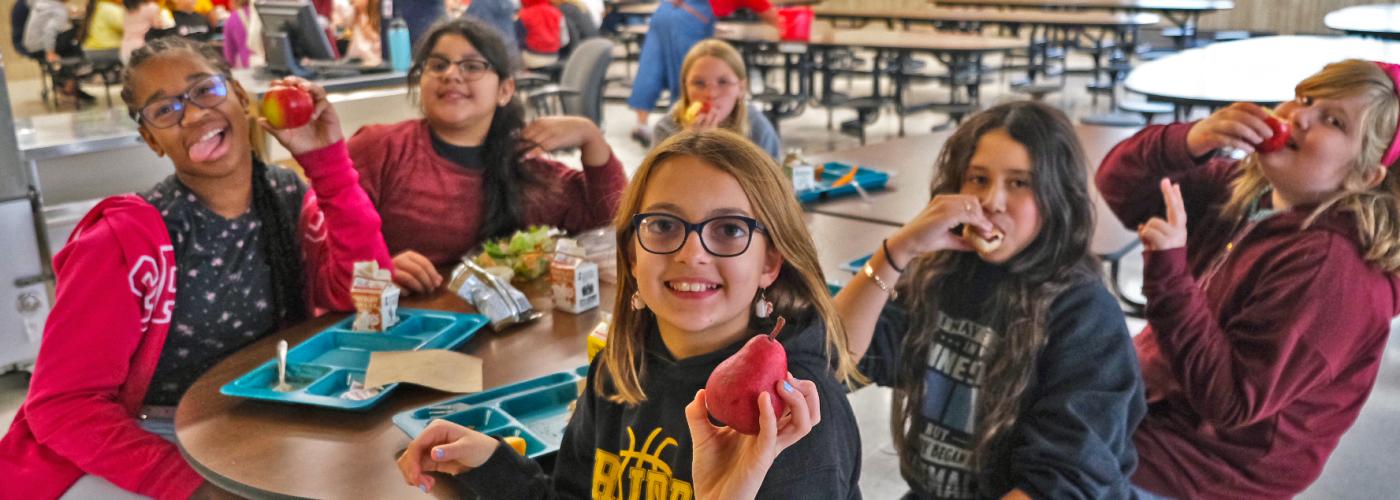
Farm to School and Farm to Early Care — broadly known as “Farm to Kids” — are tremendously popular ideas, and for good reason. Supporting local farmers and food businesses and getting fresh, local food on kids’ plates, all while educating kids about food and farming? What's not to like?
But that doesn’t mean it is easy. Sourcing, storing, preparing, and serving local products requires a complex network of partners to reach the scale of purchasing that can impact our local economies and build markets for local producers and businesses.
First, school districts and farmers work together to manage the complexity of logistics, making sure that schools can receive products in the form most useful for them, and that farmers can receive a fair price for their product, with sufficient quantities and logistics that allow them to sustain their business. In some cases, a variety of other partners help with this complexity: brick-and-mortar food hubs, farmers market food hubs, state agency staff, regional food system connectors, and others all help maneuver the complexity of sourcing and serving local products.
Together, all these partners create the Farm to Kids network, ensuring that millions of dollars of local food makes its way to school and early care plates in Minnesota each year. Nationwide, schools responding to the 2023 Farm to School Census indicated $1.8 billion in spending on local foods.
Read on to learn more about some key players in the Farm to Kids puzzle:
Early care providers
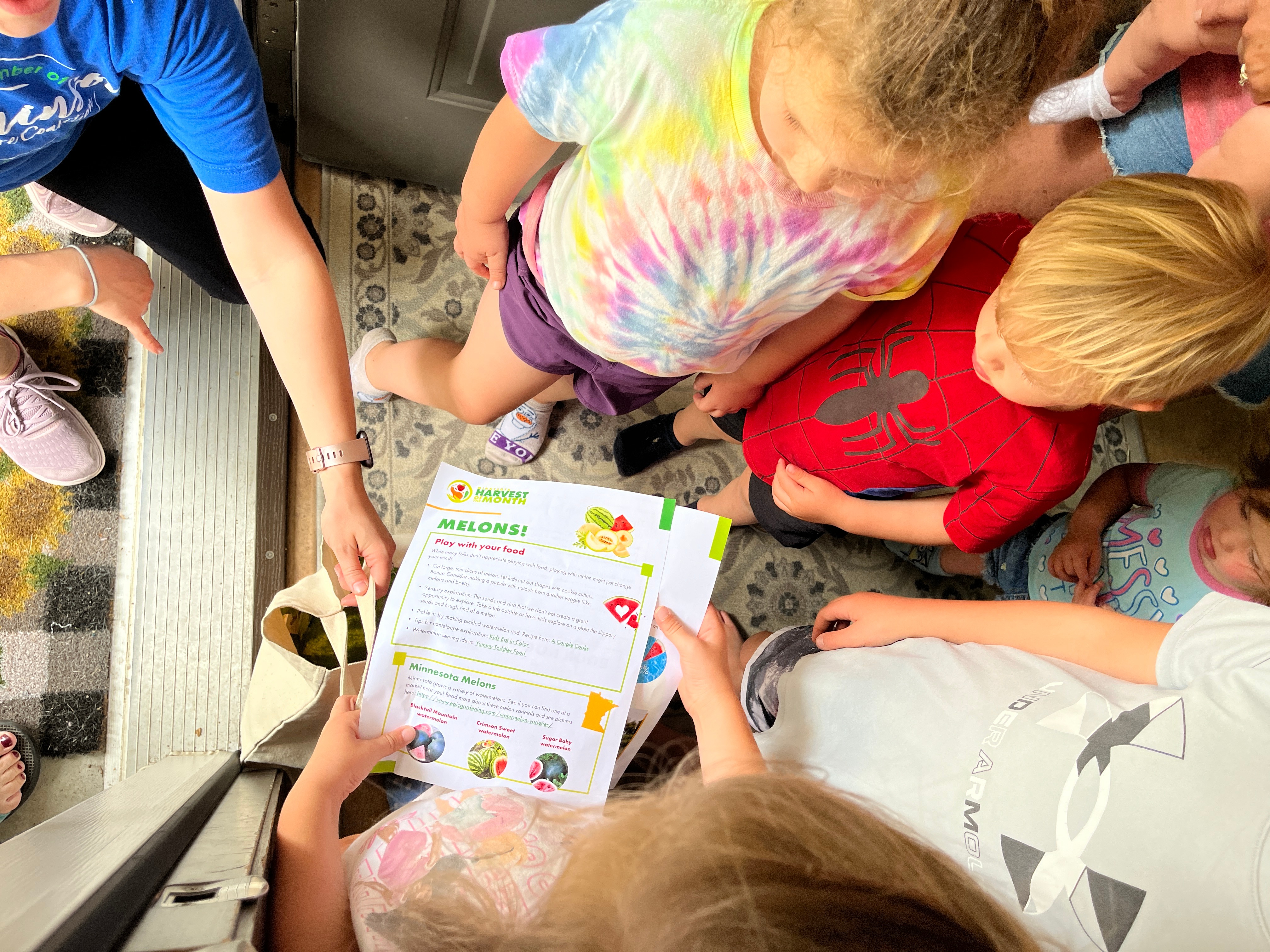
Early care providers support children learning about and consuming local foods. Some early care settings have implemented Community Supported Agriculture (CSA) boxes to support kids exploring local foods. In Minnesota, both the Hmong American Farmers Association (HAFA) and Renewing the Countryside have supported CSA boxes at early care sites.
School nutrition staff
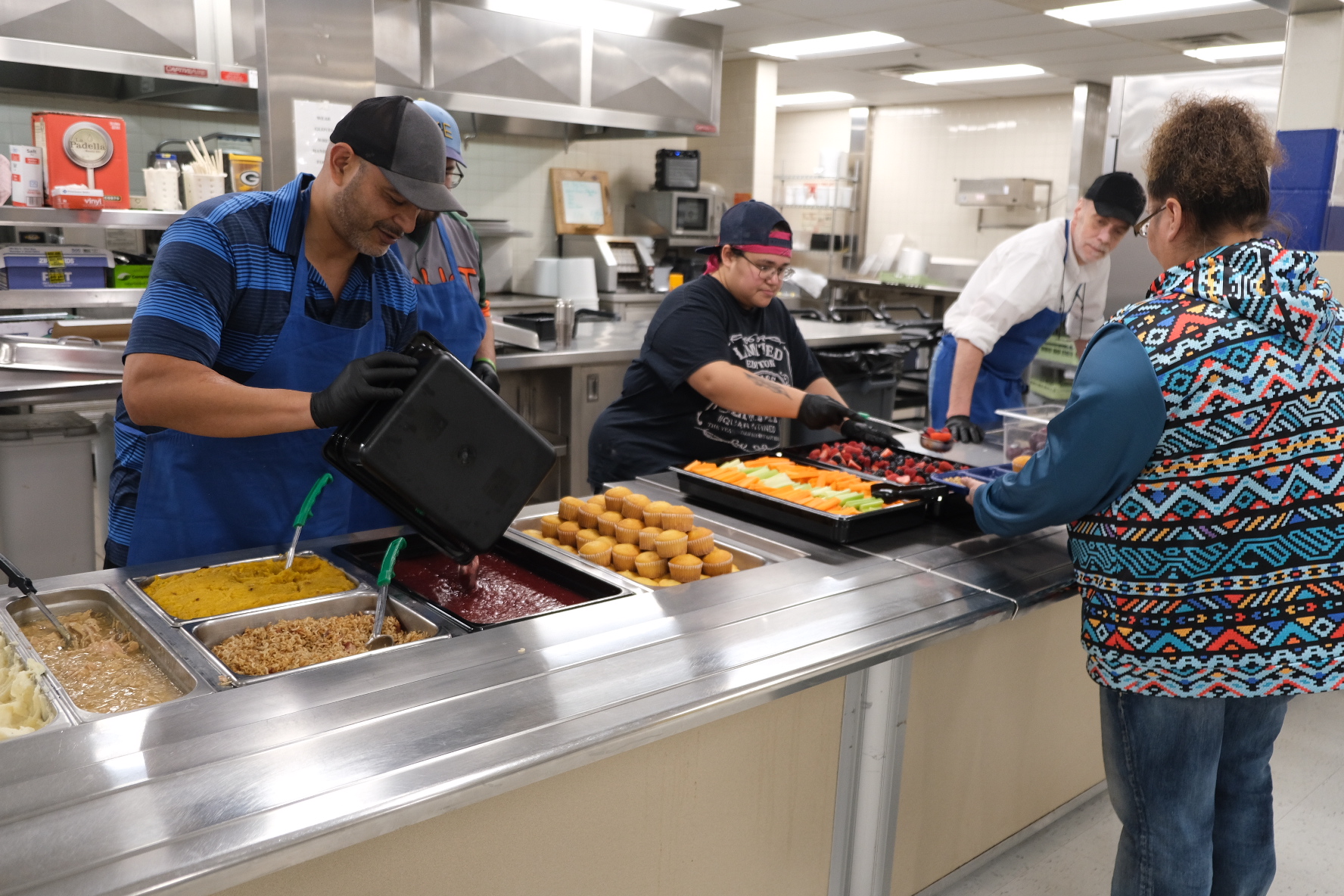
School nutrition staff are key drivers of local food purchasing. They often take on the heavy lifting of identifying, sourcing, and preparing local foods for the kids they serve. Especially in districts with smaller staff capacity, and areas without food hubs or other infrastructure support, the school foodservice director can be maneuvering relationships with farmers, ordering and preparing food for service, and balancing the budget to make it all work. Schools indicate staffing as one of the biggest barriers to furthering farm to school efforts, so ensuring kitchens have sufficient staff, equipment, and training is a priority!
Mace Fonoti of Fond du Lac is one such school foodservice staff who, along with his team, sources and serves local products. Read more about their Farm to School efforts in a spotlight here.
Photo credit: Mace Fonoti, Fond du Lac School
Farm to School coordinators
Farm to School coordinators can significantly expand the local purchasing possible with local districts. They can take on many of the logistical pieces of sourcing local foods to make serving those foods easier for school foodservice staff. Bringing all of the pieces together, our friends at Renewing the Countryside are running a pilot program with local food coordinators in each region, showcasing a great way to help get schools, farmers, early care providers, and others connected and make their way through this puzzle.
Aimee Haag coordinates local food purchasing for Hutchinson, Litchfield, and Dassel-Cokato school districts in central Minnesota — in 2025 so far, Aimee has coordinated with 20+ farmers and food businesses for the districts to purchase approximately $175,000 in local produce, including meat, grains, dry beans, syrup, honey, and other products.
Funding
Funding for Farm to Kids programs is critical to ensure districts can purchase local foods. Funding is consistently noted as a barrier for schools purchasing local products — in a 2023 Farm to School survey conducted by the University of Minnesota and IATP, budget constraints were noted as a significant barrier to purchasing local foods for school meals. This mirrored results from the 2023 National Farm to School census, where Minnesota schools participating in Farm to School noted one of their primary issues being that local foods were more expensive (30.1% of respondents).
The Minnesota Department of Agriculture (MDA) supports the AGRI Farm to School and Early Care grant program for schools and early care centers, as well as a Local Tots cost-share for home-based providers, which reimburse purchases of locally grown and raised products. With support from federal Local Food for Schools funds, MDA awarded $3.46 million in funds to local schools for reimbursement of local products. Economic impact analysis indicates that this investment generated over $3 million in additional economic activity.
Educational resources, recipes, and other support
Educational resources, recipes, and other support are key components of Farm to Kids efforts. From easy-to-use recipes to activity ideas for kids of all ages, schools and early care settings have implemented a variety of resources. Minnesota has a set of Harvest of the Month resources that include resources for both schools and early care settings to explore foods that grow in our state!
Find some other great Farm to Kids Resources here:
Supporting local farmers is one of the main goals of Farm to Kids purchasing. Schools and early care settings have purchased products all around the tray, from local produce to proteins, grains, honey, dried beans, and more. In IATP’s evaluation of Farm to School grant purchasing in fiscal year 2023, local proteins represented the single largest purchasing category (48%). Fruits (23%) and vegetables (17%) also represented a significant portion of purchasing. Grant purchases impacted over500 farmers and food businesses in fiscal year 2023 — which is likely lower than the reality, as Farm to Kids purchasing is much more extensive than what is documented through the MDA grant program.
Other school staff
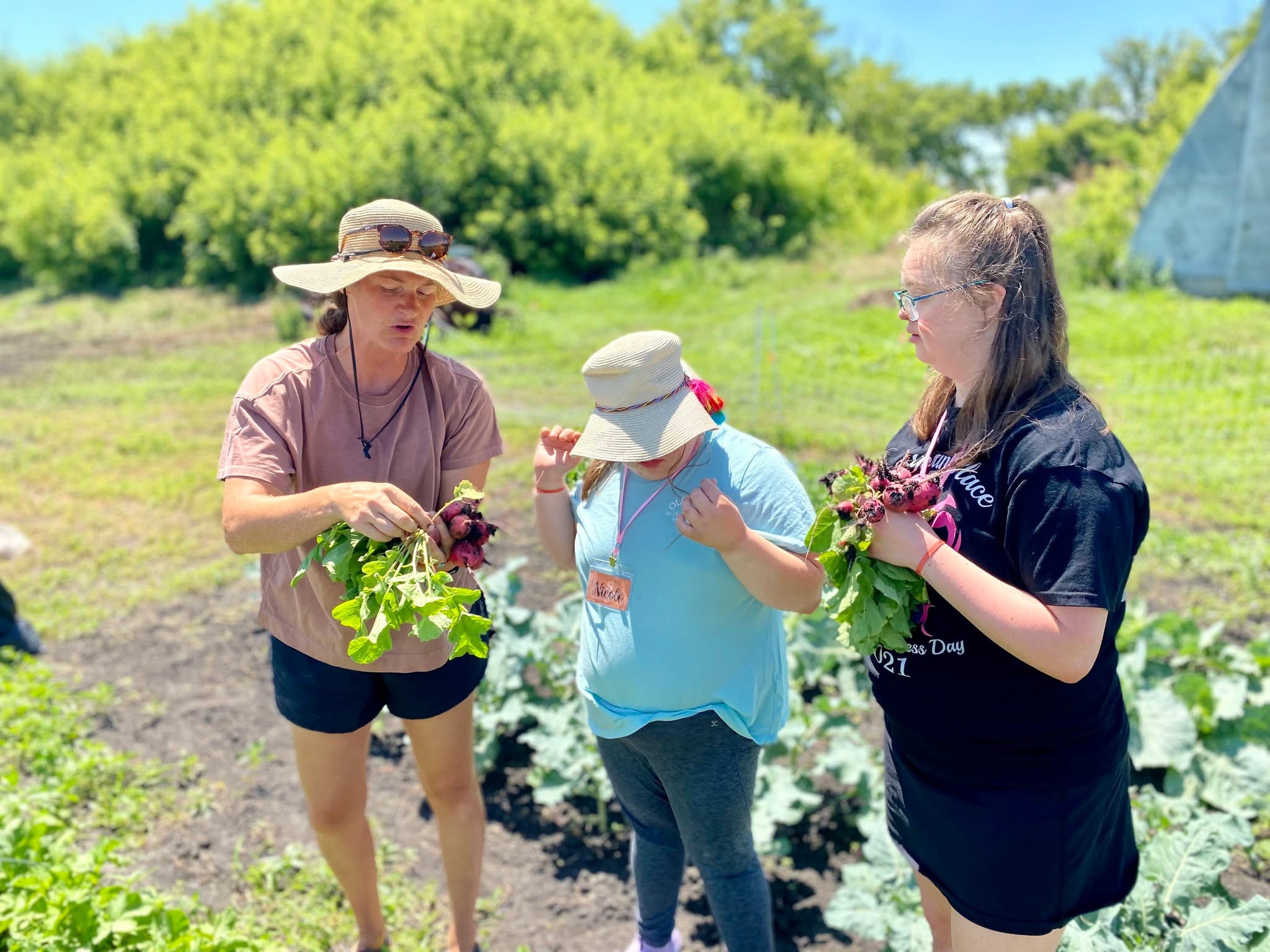
Other school staff including ag teachers, family and consumer science staff, classroom teachers, garden coordinators, and so many others round out the Farm to Kids experience, ensuring the education and gardening components of Farm to Kids give kids an understanding of how food grows and where it comes from.
State agency and other staff support
State agency and other staff support: For a Farm to Kids system to succeed, it requires positions embedded in state government that see the whole scope of these efforts throughout the state. These positions can educate, make connections for other settings just getting started, and celebrate all the great work happening in the state.
In addition to state agency positions, inspectors, University of Minnesota Extension staff, and others are critical to building knowledge and processes to safely source, store, and serve local products. Partners support schools in updating food safety plans and preparation processes, ranging from new food safety plans to safely freeze fresh produce for future use, to processes to efficiently cook raw meat in tilt skillets.
Food hubs
Food hubs: While these are not available everywhere in Minnesota, schools note the huge help that one streamlined ordering process can have on their school foodservice purchasing. Minnesota has two brick-and-mortar food hubs: The Good Acre and Sprout. Farmers market food hubs also aggregate produce from multiple farmers to offer a streamlined ordering and pickup process.
Kids
Kids make the whole complex network worthwhile. Every person and element of the Farm to Kids network works tirelessly toward one common goal: raising kids who are nourished and educated on our locally grown food!