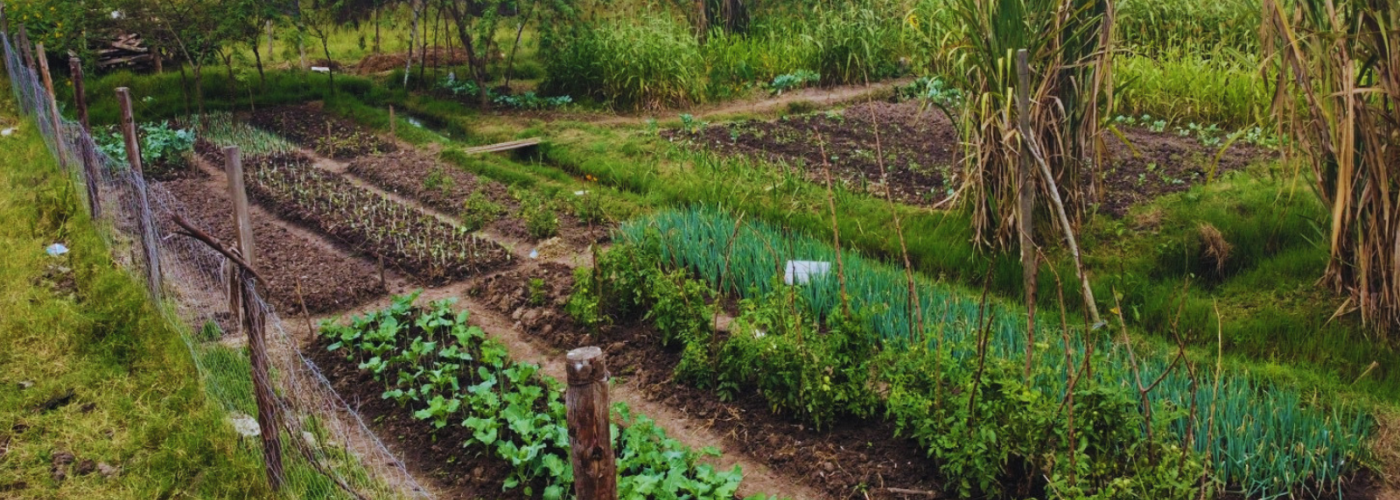
Around the world, farmers adopting agroecological practices are rebuilding their soil, growing an abundance of food, and decreasing their reliance on external inputs. As war and political turmoil disrupt fertilizer and fuel supplies globally, agroecology is a way to build resilience in a destabilized world.
In episode two of Agroecology Uprooted, hear from Raj Patel on how the war in Iran is impacting global food systems, Sam Nderitu on teaching agroecology to smallholder farmers at the Grow Biointensive Agriculture Center of Kenya, and Jonathan Lundgren on connecting with farmers across America to research the real outcomes of agroecology and regenerative agriculture.
Listen below or on Spotify, Apple Podcasts or wherever you get your podcasts.
Did you miss Episode One? Listen to it here.
Episode Guests
- Raj Patel is an award-winning author, film-maker and academic. He is a Research Professor in the Lyndon B Johnson School of Public Affairs at the University of Texas, Austin. He has worked for the World Bank and WTO, and protested against them around the world, and has testified about the causes of the global food crisis to the US, UK and EU governments. He is a member of the International Panel of Experts on Sustainable Food Systems and a member of the council of Progressive International. He has supported sustainable food policy from the municipal to international levels, and in 2016 he was recognized with a James Beard Foundation Leadership Award. His books include Stuffed and Starved: The Hidden Battle for the World Food System and The Value of Nothing, was a New York Times and international best-seller. With Zak Piper, he co-directed the award-winning documentary The Ants & The Grasshopper.
- Sam Nderitu is a community development and agroecology professional with over 26 years of experience working with smallholder farmers. He is the founder and director of the GROW BIOINTENSIVE Agriculture Centre of Kenya (G-BiACK), where he has trained over 30,000 farmers locally and internationally in Agroecological agriculture practices. His work focuses on agroecology, seed saving, and community empowerment for poverty reduction. He serves as the African representative for Multinational Exchange for Sustainable Agriculture MESA, partners with Ecology Action (USA), and holds leadership roles as a master trainer in Knowledge Centre for Organic Agriculture KCOA, Knowledge Hub for Organic Agriculture and Agroecology in Eastern Africa KHEA. He serves as a board member of Community Sustainable Agriculture and Healthy Environment Program CSHEP and the Institute of Culture and Ecology (ICE). Sam is deeply committed to seed sovereignty, having established several banks in Kenya and beyond and continues to advance his expertise in seed systems, including multiplication, processing, and distribution.
- Dr. Jonathan Lundgren is a renowned agroecologist, Executive Director of Ecdysis Foundation, and CEO of Blue Dasher Farm. After much of his research focused on assessing the ecological risk of agricultural practices, he now focuses on developing a framework for long-term solutions and building regenerative food systems. Jonathan received the Presidential Early Career Award for Science and Engineering by the White House and has served as an advisor for the US and international regulatory and granting agencies. A priority of Dr. Lundgren is to make science applicable to end-users, regularly interacting with the public and farmers around the world. His research demonstrates that increasing biodiversity and reducing disturbance fuels healthy biological communities within agroecosystems that increase resilience and profitability while invigorating rural communities.
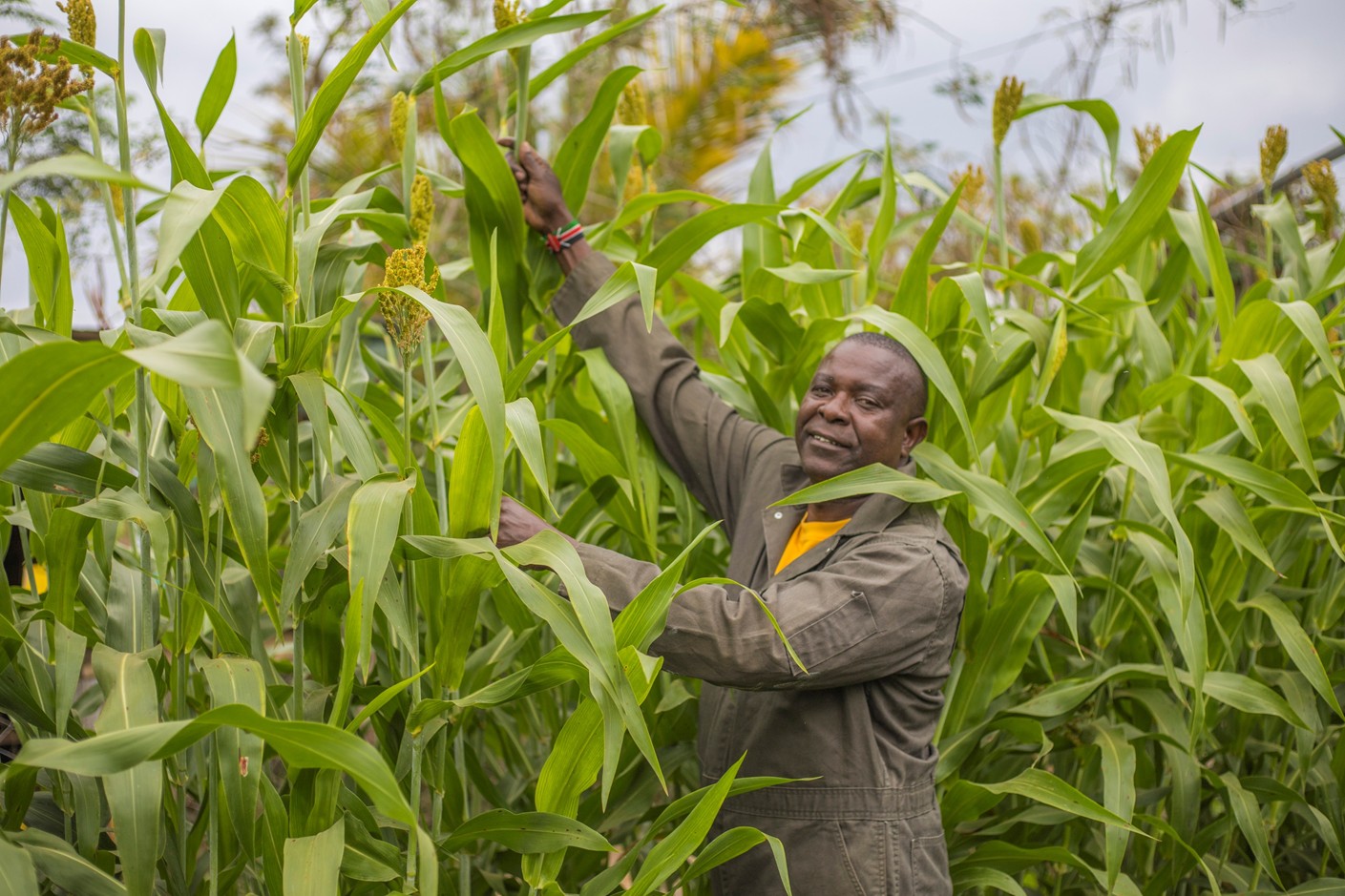
Sam Nderitu growing maize at G-BiACK.
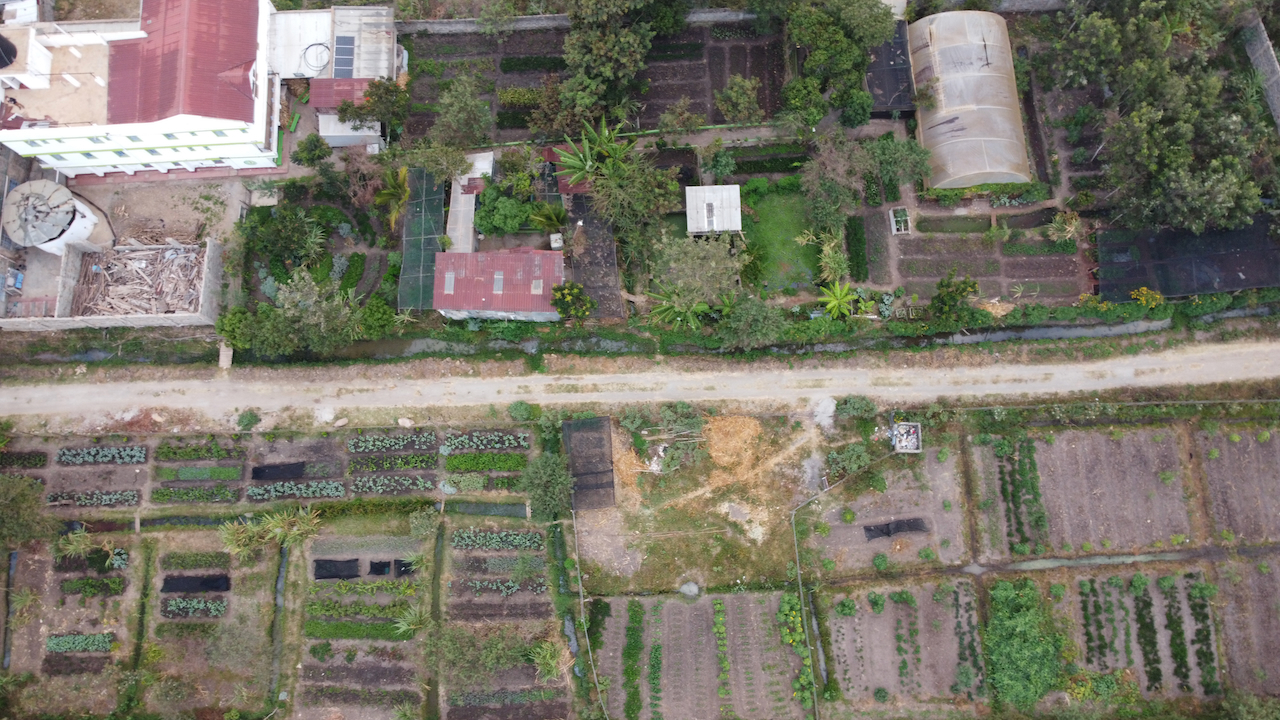
G-BiACK's two-acre farm and campus from above.
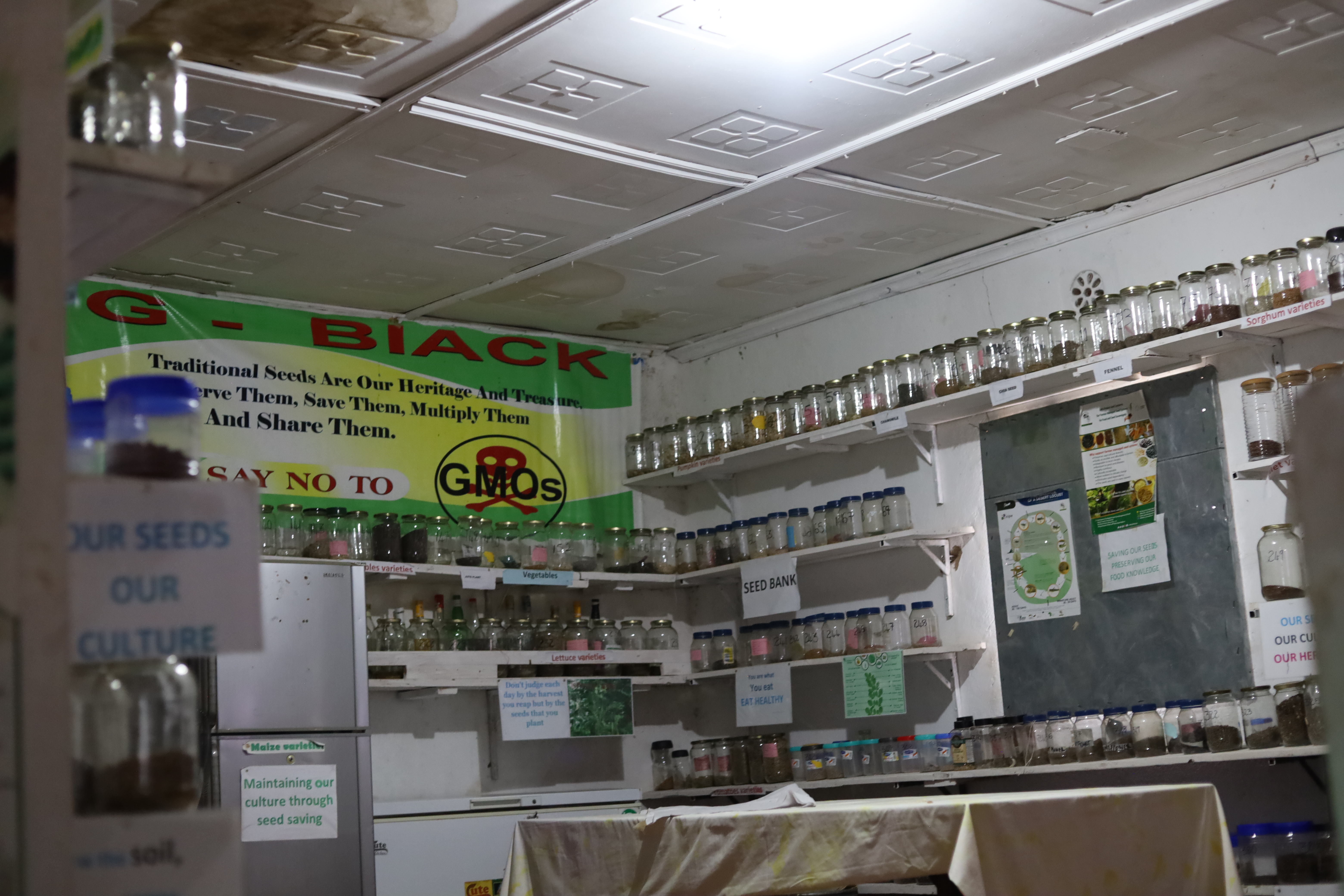
Seed bank and learning center at G-BiACK.
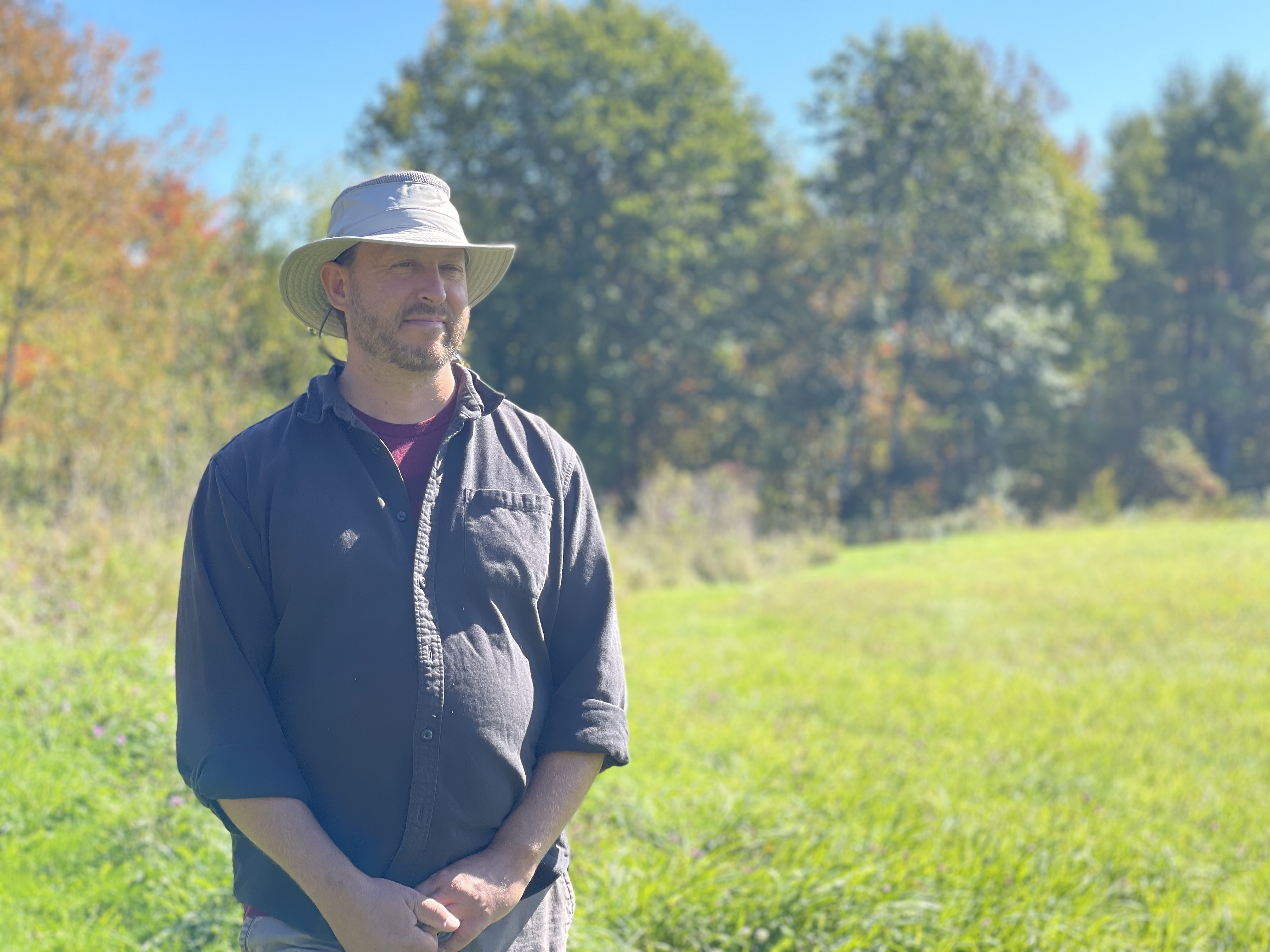
Dr. Jon Lundgren
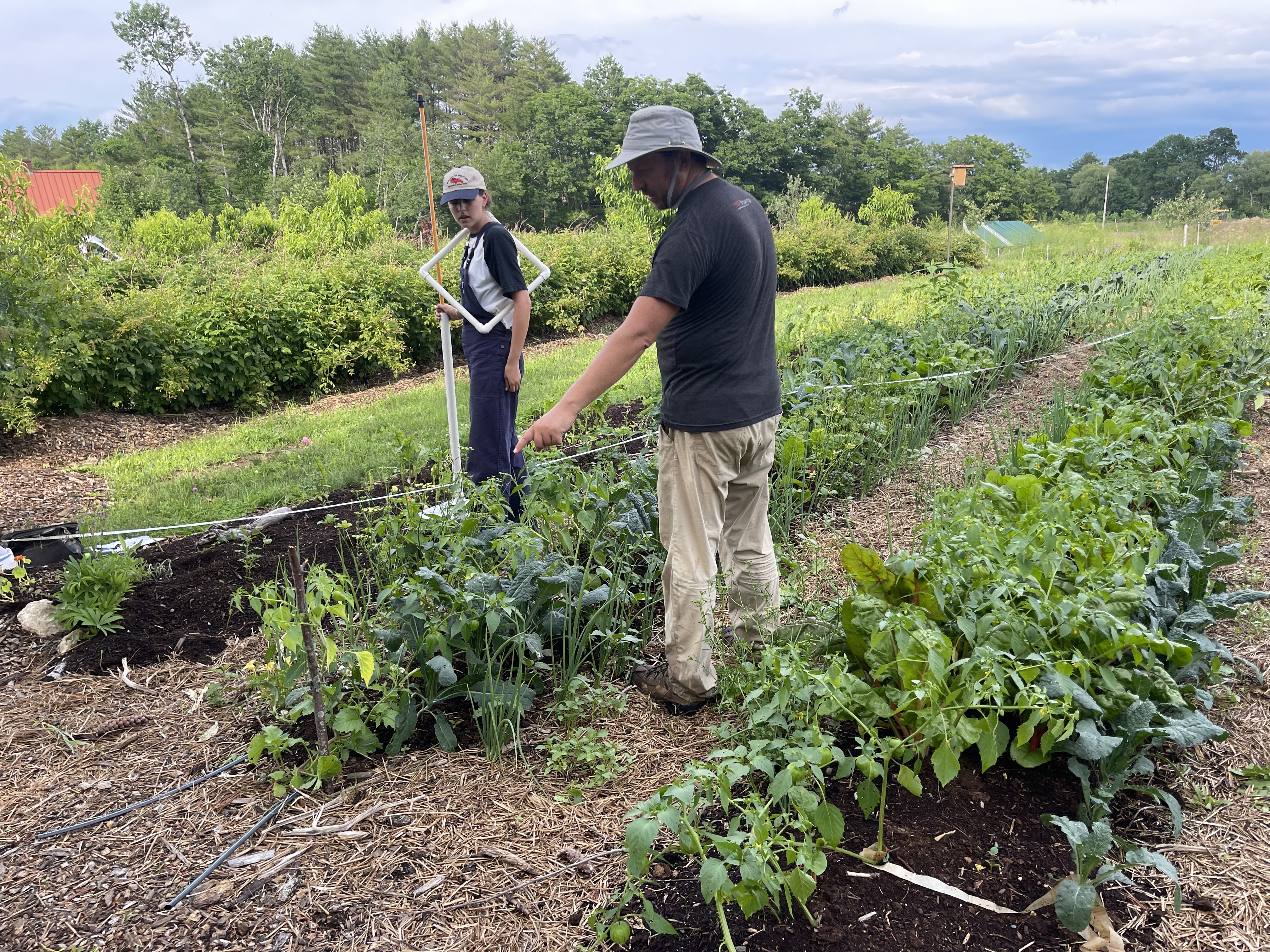
Field research on a no-till vegetable farm in Maine.
Transcript
00:00:01 Jon Lundgren
We're finding farmers out there that are reducing water use by 30 to 70% in those regenerative systems. 90% of them had abandoned all insecticides and fungicides. Two-thirds of them had abandoned all herbicides and synthetic fertilizers. And they're not sacrificing yields doing it.
What would be the impact on our water system and on our own community health if we were to scale that up? You can grow just as much food, and you don't lose money doing it.
00:00:44 Lilly Richard
For years, we've been sold the story that the only way we can feed the world is through industrial agriculture, a system that depends heavily on chemical inputs and global supply chains. But as we covered in episode one, that corporate-driven system is not successfully feeding the world. In fact, it's endangering it.
Agroecology is a framework for a different type of system, one that's more localized, more resilient, more diverse, more just, and less polluting. On farms all around the world, the transformation is already happening, producing an abundance of benefits that go well beyond yield. And as war and political turmoil put global food security at risk, a broader transition to agroecology may be more urgent now than ever.
From the Institute for Agriculture and Trade Policy, I'm Lily Richard, and this is episode 2 of Agroecology Uprooted.
00:01:52 Lilly
Farming is full of challenges, from the labor required for planting, tending, and harvesting crops, to the unpredictability of the weather, to the constant price squeeze between costs and prices received from the market. And that's on top of the fundamental challenge of consistently growing crops, making sure they aren't out-competed by other plants, also known as weeds, or consumed by other creatures, also called pests.
And then there's soil fertility. Plants rely on nutrients in the soil to grow, especially when they've been bred to produce large amounts of grain or fruit. But when crops, particularly in annual mono-crop systems, are harvested each year, those nutrients don't return to the soil, and the soil's fertility is depleted, making it less able to support life.
One way to address these challenges is through chemical inputs, herbicides, pesticides, and, of course, fertilizers. These inputs, which are often manufactured using fossil fuels through energy-intensive processes, are an essential part of industrial agriculture. They're also tied to a host of health and environmental threats, including water pollution in rural communities around the globe. According to FAO data, the world consumed 183 million tons of fertilizer in 2023. And this dependence is a problem, not just because of the environmental impacts.
Inputs like fertilizer can be expensive, eating into farmers' already narrow profit margins. And now, fertilizer prices have risen even more because one-third of the world's fertilizer trade passes through the Strait of Hormuz at the center of the war in Iran.
00:03:34 Raj Patel
The problem around nitrogen fertilizer is really at the heart of what is being precipitated by the US-Israel war in Iran, because so much natural gas comes through the Strait of Hormuz and so much fertilizer is manufactured there. And then there are a few other choke points that are important, but all of them are at the moment in play, more or less because of the importance of fossil fuels for the modern industrial food system.
00:04:02 Lilly
That's Raj Patel, an author, filmmaker, research professor at the LBJ School of Public Affairs at the University of Texas in Austin, and a member of the International Panel of Experts on Sustainable Food Systems. I talked to him about some of the ripple effects the war in Iran will likely have on global food systems, and how that's already playing out.
00:04:23 Raj
There are a number of ways that the war at the moment is going to affect people. First of all, you will, particularly as this conflict drags on, see higher fertilizer prices reflected in the, you know, in the costs that farmers face. But as we saw in the war in Ukraine, you don't need actual costs to go up in order to see price rises. We live in a time of food system oligopoly. And what that means is that companies can use these price spikes as an alibi to raise their own prices and to be able to walk away with higher profits. So an immediate rise in the price of fertilizer doesn't mean the fertilizer is causing a rise in the price of food because, fertilizer takes a while to apply and then, you see the results a few months later.
In the US, we're fairly lucky that we import about 1/3 of what we need and the rest is produced domestically. So that, I mean, that still matters here in the US for farmers, particularly for farmers who've been holding off buying fertilizer, not knowing quite what it was that they were going to put in the ground because there's so much uncertainty around the tariffs.
But actually, the way that most people in the world right now are experiencing food price spikes is because of the price of diesel and the price of natural gas and cooking fuel.
I mean, countries like Brazil and India are going to be really badly hit because they're so dependent on vast quantities of fertilizer. And when they're hit, world food markets feel the pain.
But the other vulnerability really that matters is poverty. So countries like Sudan, Tanzania, Somalia are countries that are really import dependent, that import a vast amount of food in order to be able to feed their populations.
And what are you seeing in this war? Well, you're seeing a couple of things. First, you know, we're seeing the dollar getting stronger. I think, again, we forget too often that a large number of countries in the Global South are impoverished through an ongoing dynamic of extraction through debt. That debt is invariably denominated in dollars. When the dollar gets stronger, the debt becomes yet more onerous, much more expensive. And so these indebted countries have to spend yet more on paying back this onerous debt and have less available to be able to feed their populations.
00:06:45 Lilly
But hunger isn't only a problem in the Global South. An estimated 50 million people in the U.S. are food insecure, and that's likely going to get worse in the short term as food transport costs rise, especially with recent changes to the Supplemental Nutrition Assistance Program, or SNAP.
00:07:04 Raj
The other thing, and I don't think this gets talked about enough, is that because of the “One Big Beautiful Bill,” I'm sort of using air quotes around that, SNAP has become much more restrictive. And for a number of families who were on social benefits to be able to just put food on the table, that's becoming much, much harder to do. And all of that is going to be pretty difficult in June, July, when if we see simultaneous food price spikes and we see sort of enrollments becoming increasingly difficult in that period, then all of a sudden more and more Americans are going to be going hungry.
00:07:41 Lilly
So what does this all have to do with agroecology? Well, everything. Under the industrial model, we have a food system that doesn't do a great job of actually feeding people. At the same time, it's dependent on fragile global supply chains, deeply tied up with fossil fuels, and controlled by a handful of companies that can exploit supply shocks to inflate their own profits, while farmers and consumers pay the price. The current crisis shows us just how urgently we need to transition toward more resilient agro-ecological systems, and that can start with farmers.
00:08:18 Raj
If you are facing an emergency of food prices, that's because your food system has been hitched both to a regime of low wages and to a regime of fossil fuels, and we need to end both of those.
But one way of stopping that is to keep fertility local and to be able to cycle biological fertility not through the extraction of fertility from elsewhere in the world, but instead to be able to use mechanisms to keep the nutrients that you need on the farm and to get nutrient cycling over and over again. And that means, you know, legumes, compost rotations, mixed, you know, crop and livestock systems, and a patient work of rebuilding living soils. And agroecology does that.
So, I think that there are farming systems that have been quite resilient to these input shocks, because if urea is not one of your inputs, then it doesn't matter if the price of that has spiked by, 30, 40, 50%.
And agroecology isn't sort of magic. It is an incredibly scientific and experimentally robust series of ideas around reducing reliance on external inputs.
00:09:25 Lilly
Resilience is a word you'll hear a lot on this podcast, because the type of food systems we're going to need in a stressed, disrupted world are ones that can weather disasters, adapt, and bounce back.
Even before the latest fertilizer and fuel price spikes, agroecology has been helping people not just survive, but flourish in places where poverty, hunger, and climate impacts are already huge concerns.
00:09:52 Sam Nderitu
My name is Sam Nderitu. I'm the founder and executive director of the Grow Bio-Intensive Agriculture Center of Kenya, in short, GBiACK. GBiACK is a non-profit making organization that was founded in the year 2008 in order to respond to the ever-growing challenges of extreme poverty and declining of food production in the country. And I'm an agroecologist for the last 27 years, working with the smallholder farmers, teaching them how to grow food using the most sustainable agricultural practices, and that is agroecology.
00:10:28 Lilly
I talked to Sam Nderitu about how he's putting agroecology into action at the Grow Biointensive Center of Kenya, or GBiACK, helping farmers wean themselves off expensive chemical inputs and thrive even under some really difficult circumstances.
GBiACK, located an hour outside Nairobi, is an active agroecological farm, a research facility, and a life skills training center for student cohorts of all ages. The center houses a seed library, a dormitory that can accommodate 30 people, and classrooms where the offerings have expanded to include coding and sewing classes. But the heart of GBiACK 's mission is teaching people to grow bountiful food agroecologically, using a set of techniques called Grow Biointensive.
00:11:16 Sam
The Grow Biointensive technique is a form of agriculture where farmers focus on small pieces of land in order to produce maximum food, you know, using the resources that are available. What we look at is the future, not only the future, but even at the present time, because farmers should eat right now, but at the same time, we should focus on the future. What kind of food or how will I be producing my food in the next 20 years?
In Grow Biointensive at GBiACK, we don't use any external inputs. We have everything. We are sufficient. Apart from sometimes water which is supplied by the municipality, then everything else has to come from our farm. Fertilization of the soils, all the seeds; labour has to come from our farm and all that. So it has to be sustainable. If a farming system is not sustainable, then it has no future.
00:12:18 Lilly
Some of the key strategies practiced and taught at GBiACK include composting to retain soil fertility, deep digging so that plant roots can reach water and nutrients deep underground, and using heirloom open-pollinated seeds that adapt to their environment and can be saved and replanted each season.
This system was developed through years of experience. Sam grew up on a small farm and went on to study at Manor House Agricultural Center in western Kenya, where he began learning agroecological and biointensive farming methods in the 1990s before finding work at an NGO for several years. But following post-election turmoil in the country in 2007, he was forced to flee violence in the region and settle in central Kenya, where he founded GBIAC in 2008.
The majority of farmers in Kenya are smallholders, but many struggle to produce sufficient food. And Kenya, already a mostly arid country, is facing severe climate impacts like increasing drought, making farming even more difficult. The government, along with multinational agribusiness companies, have been aggressively pushing genetically engineered seeds and expensive agrochemical inputs as the solution.
00:13:35 Sam
And if you look again at the prevalence of cancer, central Kenya is leading because of excessive use of agrochemicals. And so my main aim was to help farmers to reduce the usage of agrochemicals so that they can grow at least some healthy food and to show farmers that it is possible for them to grow sufficient food in their small areas of small pieces of land.
The average acreage of farms around central and eastern and neighboring counties is one and a half acres. And the average family members is eight people in a family.
So here GBiACK, I have two acres, which if I remove where the buildings are, I remain with one and a half acres. And that's where I'm demonstrating the farmers that it is possible for them to grow sufficient food using the resources that are available in their farms, not importing from outside.
And so in the one and other acres, we have some livestock, we have goats, we have chicken, we have two fish ponds, and then we have 200 growing beds. So we are doing different types of food, food crops, in all those beds.
And we collect data because we want to teach farmers on practicalities, what is practical. what is working and what is not working. If it is not working, we show farmers that here we grill this type of a crop, like say carrots, and it never worked because of A, B, C, D. So it's kind of our research that we're carrying out here that is very practical in 1 1/2 acres of land.
00:15:14 Lilly
The center hosts workshops and classes for current or aspiring farmers and has also started a year-and-a-half-long life skills program for recent high school graduates, teaching in-depth agro-ecological methods alongside computer classes, sewing, and cooking.
00:15:31 Sam
We have become a center of excellence now. We focus on all categories of people, from the elderly to the youngest. So we have tailor-made our schedule into different classes. So for the elderly, we know the way to teach them, because the elderly don't like sitting, we cannot teach them in classrooms, because they will sleep, they will doze in the classrooms. So those ones, we take them straight to the garden and show them practically, this is how it's done.
00:16:05 Lilly
This might be a good time to return to the definition of agroecology: a holistic approach to agriculture that works with ecological systems and puts the well-being of people and the planet at its center. It draws on traditional ecological knowledge and overlaps a lot with regenerative and other types of sustainable agriculture.
But agroecology prioritizes some core principles that expand the vision while keeping it intentional. The formal version, as defined in a 163-page report by the Committee on World Food Security of the United Nations High-Level Panel of Experts on Food Security and Nutrition, includes 13 key principles, and I'm going to read them out now.
They are: co-creation of knowledge, social values and diets, fairness, connectivity, land and natural resource governance, participation, recycling, input reduction, soil health, animal health, biodiversity, economic diversification, and synergies. (Whew)
Agroecological transitions can cover a wide spectrum, and not every project, farm, or system will meet all 13 principles. It's an aspirational vision, but GBiACK hits a lot of them, including finding synergies between principles. Here's what that looks like in practice:
00:17:33 Sam
So here at GBiACK, we have different strategies. The biggest strategy here is composting, because compost carries all the nutrients that are needed, as long as you know how to make good compost pile. We teach farmers on how to make compost known as cold compost, compost that matures slowly within 6 to 8 months.
We also teach farmers on how to make fertilizer out of black soldier flies. Black soldier fly is a special insect. It doesn't eat any food. It only drinks water. So it doesn't transmit any disease. The larva stage of a black soldier fly is food to the chicken and to the fish. But at the same time, the byproduct will be the fertilizer that we call frass.
But also, again, in the farms, we teach farmers how to make terraces and capturing water, during the rainy season so that water goes deep into the soil so that your soil stays moist for most of the time.
And now the other challenge is this challenge of seed, lack of seed. We are losing our seeds at a very high rate because the multinational companies have told our farmers that our seeds, our seeds are bad and their seeds are good. They are better than ours. But we have realized the indigenous seeds actually are the best because of the changing climate, because we don't have sufficient water. And conventional seeds are, number one, water guzzlers. They require a lot of water for them to grow, and they also require a lot of fertilizer. The indigenous seed don't require all those. You just need to kickstart them with just a little water and some compost and you'll grow something in your farm.
So we have a seed bank here. We have collected the seeds that are disappearing and multiplying them and then taking them back to the farmers. Our seed bank holds only heirloom varieties. And we teach farmers how to grow the seed and how to save the seed.
And most of these techniques actually are indigenous; techniques like growing calorie crops, like sweet potatoes, which are indigenous to Africa, using manures. Because agroecology is farming using nature. It is combining indigenous knowledge plus modern science.
I have a mentor. My mentor is called John Jeavons. John Jeavons is the executive director of Ecology Action based in the United States. All those techniques I've learned from John Jeavons and also from college and also visiting other farmers. We share knowledge. I can be able to go visit a farmer out there and see something that they're doing that is so good. So I can borrow some ideas from there and modify it. And that is agroecology.
00:20:39 Lilly
GBiACK has now graduated over 600 young people from its life skills empowerment program, and through its regular classes and workshops, has reached over 30,000 farmers from Kenya as well as surrounding countries. Collectively, these farmers have reduced their usage of synthetic inputs by an average of 60% and increased their incomes by 30%.
In places where smallholder and peasant farming still dominates, agroecology can have an immediate impact on farmer livelihoods and food security, while also protecting and sharing the precious resources of local seeds and indigenous knowledge that are threatened by the expansion of industrial agriculture.
But the lessons of GBiACK don't just apply to Africa. Agroecological farming might go by different names in the U.S., and it might go against the grain in a landscape dominated by the industrial model. But many farmers understand the urgency of reducing dependence on chemical inputs and working with nature rather than against it. And they're seeing real results.
00:21:46 Jon Lundgren
I'm Dr. Jonathan Lundgren. I'm the executive director of Echidasis Foundation, and I'm a farmer, a beekeeper, and a rancher.
00:21:59 Lilly
Jon Lundgren worked as a scientist for the USDA Agricultural Research Service for over 10 years, assessing agricultural pest management strategies. But he eventually became disillusioned with the work, the ARS, and the whole system.
00:22:15 Jon
Well, they hired me to be a soybean entomologist in eastern South Dakota, right? And the reality was that I was never going to solve the soybean aphid problem under those constraints, because it was never an aphid, it was never an entomology problem to begin with, right? It was always a soils problem.
And I think that there's a real value to having partitioned disciplines within different sciences, that you can really get the depth of knowledge needed to address pretty complex problems. But we're missing the forest for the trees right now, and I think we need to be developing a successful system. Or rather, we need to be humbly respecting that farmers have successfully developed a new system and learn from them.
It's like, boy, scientists were never meant to be the experts on farming, were we?
And so you just kind of like, start to ask yourself the question of, what am I doing this for? And I was doing science for other scientists. I wasn't doing them for the farmers. So I quit and started something a little bit different.
00:23:31 Lilly
That something different turned out to be the Ecdysis Foundation, a non-profit organization researching the impacts of agroecology and regenerative agriculture in practice, not just on their own land at Blue Dasher Farm in Estelline, South Dakota, but on farms all around the country through a project called the Thousand Farms Initiative.
In the U.S., the term regenerative agriculture is used more than agroecology. Regenerative tends to focus more on on-farm practices and the biophysical aspects of agroecology than the social principles. It doesn't necessarily have the same connection to food sovereignty and peasant movements, and in some cases, the term has been co-opted by agribusiness corporations and regressive political movements, capitalizing on the public demand for healthier, more sustainable food production without addressing the wider issues of injustice in the food system.
But many farmers who practice regenerative agriculture do share a vision for broader system transformation. Even farmers who practice conventional industrial agriculture understand that the system is broken.
The Ecdysis Foundation's approach to that transformation includes conducting comprehensive scientific research on the outcomes of different types of farming systems, but also centering farmer experiences and perspectives.
00:24:54 Jon
So back in 2021, 22, there's this growing head of steam behind this thing called regenerative ag. Farmers were making bold claims as far as what they were producing on their farm, what they were able to do with their farm as far as solving planetary scale problems. The question on everybody's mind was, is it real?
And science had a role to play.
And so we started to contrive what would an experiment look like that could help to fill that gaping chasm, that data chasm, between what the farmers say were possible and what science said could be done. So that thought exercise said, well, this experiment would have to be big, simultaneously addressing all food systems, all ecoregions. It would have to examine farmer-developed best management practices, not something that an academic came up with behind their desk, you know, writing some sexy grant. It had to measure all of the different outcomes that regenerative agriculture was supposed to be doing. It would have to use redundant methodologies because it had to stand this test of time – probably develop entirely new technologies because doing things like bioinventories at scale is really challenging. So that's what we did.
And so far over the last four years, we've measured from, I think, 600 different data types on 1,700 farms across North America, trying to put data behind what these farmers are experiencing. And the data is one thing, and it's extremely important, but the style of science that made Thousand Farms successful was different than what's traditionally been done with in this space.
We meet the farmers. We ask them what they're worried about, what they're proud of. We meet their families. When we leave that farm, I hope that the farmer knows that we care about them. We care about their families. We care about their farm.
And that's much different style, and that's a much different connection with the data than what's currently informing global food policy about the potential of our food system.
00:27:24 Lilly
We'll hear more from John about the results of their research in the next episode, from the measurable differences in on-farm biodiversity to the nutritional content of foods produced on the agro-ecological end of the spectrum.
But they also found that farmers using regenerative or agroecological methods were still able to produce high yields while reducing dependence on external inputs, which maybe even helped wrestle back some control from the corporations that currently dominate our food and agriculture system.
00:27:55 Jon
I once was talking with a farmer friend. He's like, “I'm a farmer. Every year I borrow $850,000 to make $50,000.” And the farming community is so stressed. They're shouldering all of the risk for these corporations, and they're being convinced that it's an honor to do so.
Yeah, this has been, I mean, ultimately the goal isn't just for us to collect data. The goal is to change agriculture.
In places like the Central Valley of California, we're finding farmers out there that are reducing water use by 30 to 70% in those regenerative systems. 90% of them had abandoned all insecticides and fungicides. Two-thirds of them had abandoned all herbicides and synthetic fertilizers. And they're not sacrificing yields doing it.
What would be the impact on our water system and on our own community health if we were to scale that up? You can grow just as much food, and you don't lose money doing it.
00:29:06 Lilly
The key to many of these changes, as I heard from Raj, Sam, and John, was in restoring life to the soil and biodiversity on the farm. Increased organic matter and healthy microbes in the soil improved water retention and soil fertility, and supported other beneficial species, creating positive ripple effects on the farm and beyond.
This doesn't just matter for farmers or even for our food, because industrial agriculture is a major cause of biodiversity loss, driving a mass extinction that threatens all of life on Earth. And through agroecology, we can start to reverse it. We'll dive into this challenge next time on Agroecology Uprooted.
00:30:05 Lilly
Agroecology Uprooted is produced by the Institute for Agriculture and Trade Policy. If you enjoyed this podcast, please rate and subscribe on your preferred podcast platform and share the show with a friend. IATP works at the intersection of policy and practice to advance just, sustainable food systems. You can support our work at iatp.org/donate.