Food systems and biodiversity are deeply intertwined. Agroecology is grounded in biodiversity, taking advantage of ecological processes and relationships to improve farm resilience and productivity. But the dominant industrial agriculture system works against biodiversity in ways that are harming human health, driving mass extinction, and threatening all of life on earth.
In episode three of Agroecology Uprooted, hear from Dr. Claire Kremen, Courtney Tchida, and Dr. Jonathan Lundgren on what's at stake under the industrial system, and how restoring biodiversity can have surprising benefits on the farm and beyond.
Listen below or on Spotify, Apple Podcasts or wherever you get your podcasts.
Did you miss the first two episodes? Find the full series here.
Episode Guests
- Claire Kremen is President’s Excellence Chair in Biodiversity and Professor at University of British Columbia in the Institute for Resources, Environment and Sustainability and the Department of Zoology. Her current research focuses on how to improve the connectivity and sustainability of farming landscapes through agrobiodiversity and agricultural diversification practices. At UBC, she teaches courses on social-ecological systems and the connections between biodiversity, human and planetary health, and leads the Interdisciplinary Biodiversity Solutions Collaboratory (IBioS), which conducts community-engaged research to advance just, equitable, and inclusive interdisciplinary solutions for biodiversity and people to thrive. Before coming to UBC, she was a professor at Princeton University and then University of California, Berkeley, where she co-founded the Center for Diversified Farming Systems and the Berkeley Food Institute. Prior to her university appointments, she worked for over a decade for the Wildlife Conservation Society and the Xerces Society, designing protected area networks and conducting biodiversity research in Madagascar.
- Courtney Tchida is a program associate with Wild Farm Alliance where she helps farmers create habitat for birds, wildlife and pollinators on their farms. She brings with her over two decades of experience as an organic farmer, community organizer, educator, researcher, and collaborator. Her influential contributions include playing a key role in establishing and overseeing the Cornercopia Student Organic Farm at the University of Minnesota. While at the Minnesota State Horticultural Society, Courtney provided support to community gardeners, school gardens, and growers throughout the region. She co-founded the MN SEED Project, aiming to facilitate people's access to free, locally adapted, native seeds.
-
Dr. Jonathan Lundgren is a renowned agroecologist, Executive Director of Ecdysis Foundation, and CEO of Blue Dasher Farm. After much of his research focused on assessing the ecological risk of agricultural practices, he now focuses on developing a framework for long-term solutions and building regenerative food systems. Jonathan received the Presidential Early Career Award for Science and Engineering by the White House and has served as an advisor for the US and international regulatory and granting agencies. A priority of Dr. Lundgren is to make science applicable to end-users, regularly interacting with the public and farmers around the world. His research demonstrates that increasing biodiversity and reducing disturbance fuels healthy biological communities within agroecosystems that increase resilience and profitability while invigorating rural communities.
Visit Blue Dasher Farm at their Field Day on August 8, 2026!
Photos

Jon Lundgren and an Ecdysis Foundation researcher testing a patch of soil.
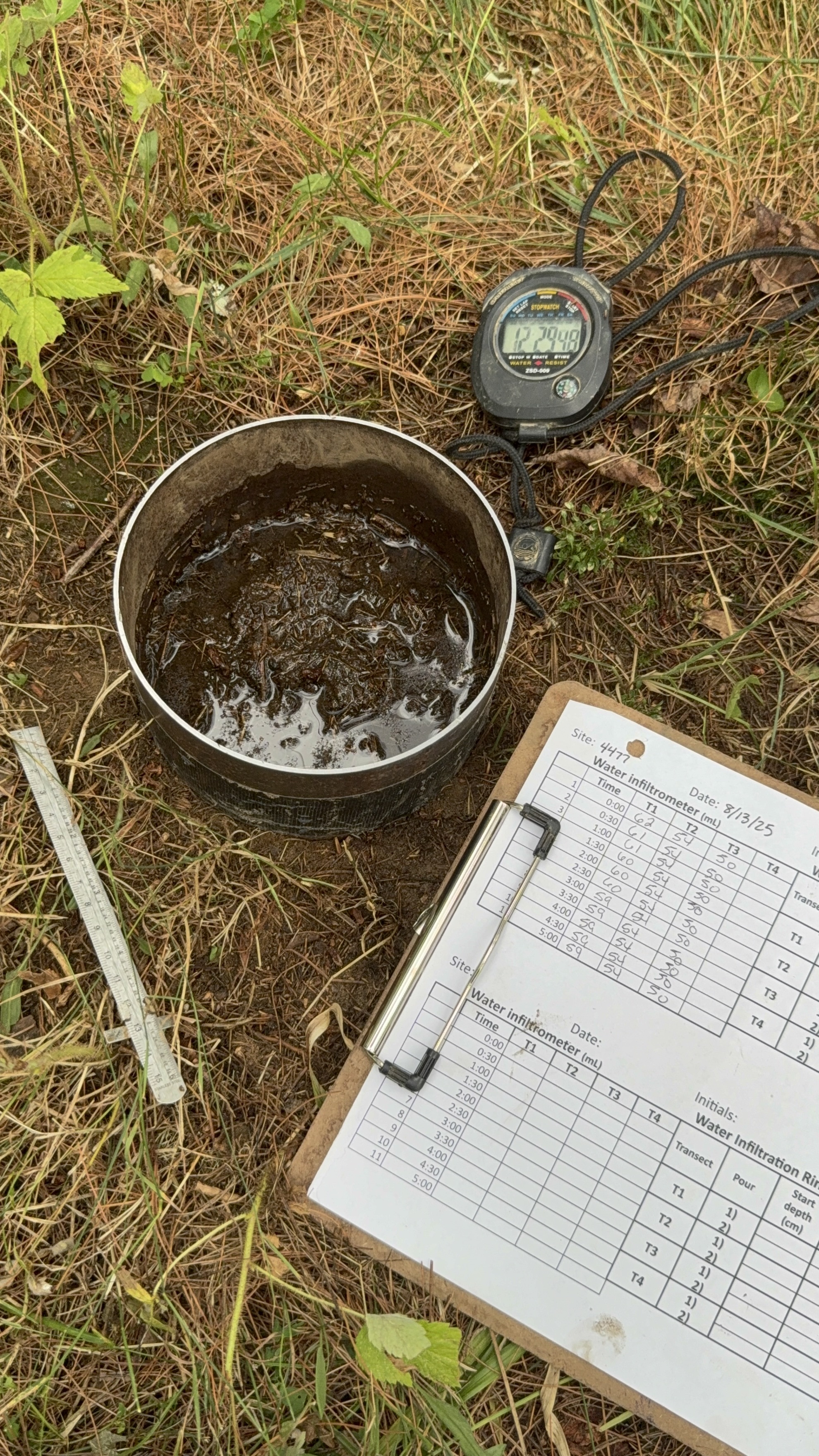
Ecdysis Foundation measuring soil water retention on a farm.
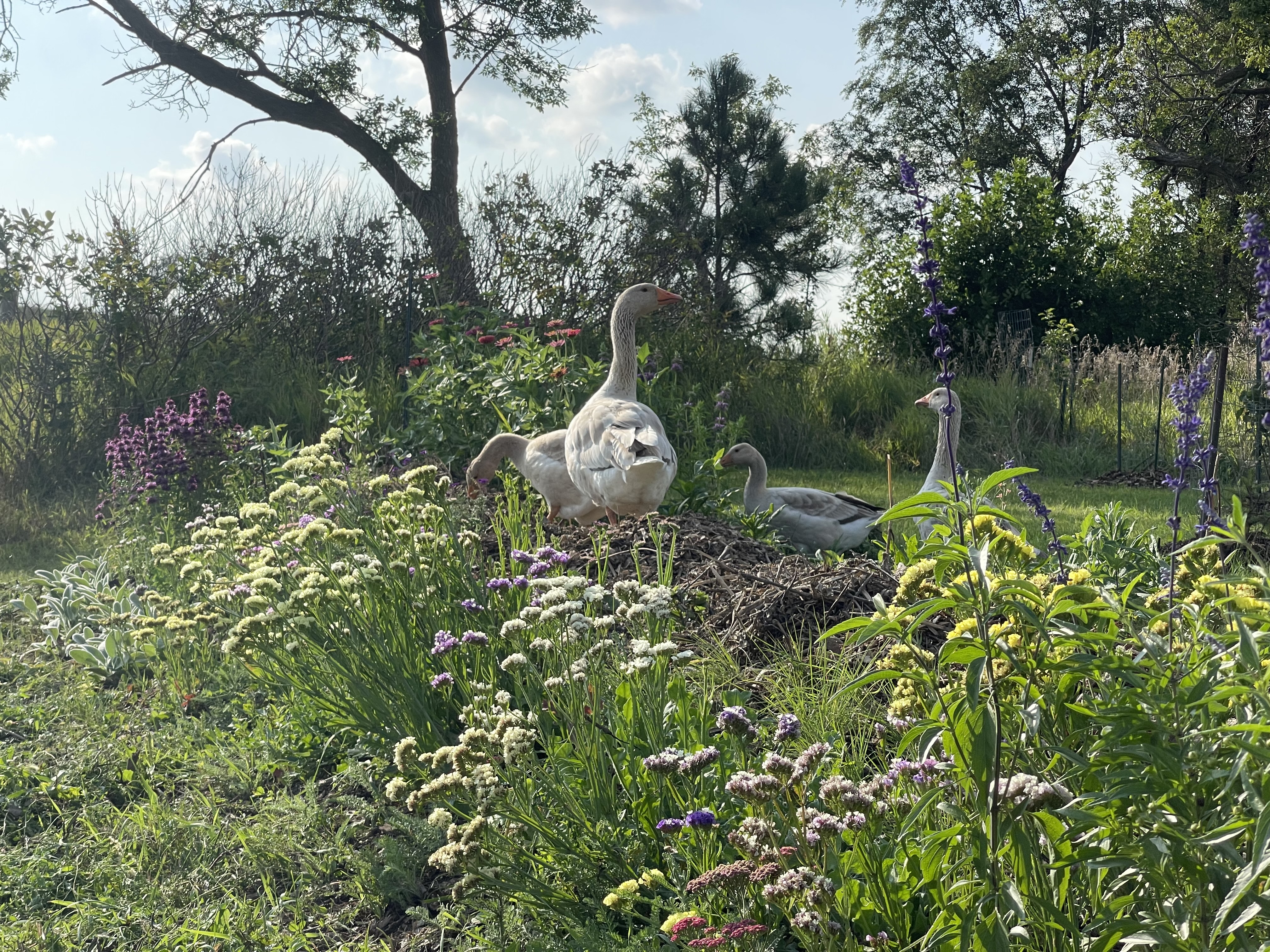
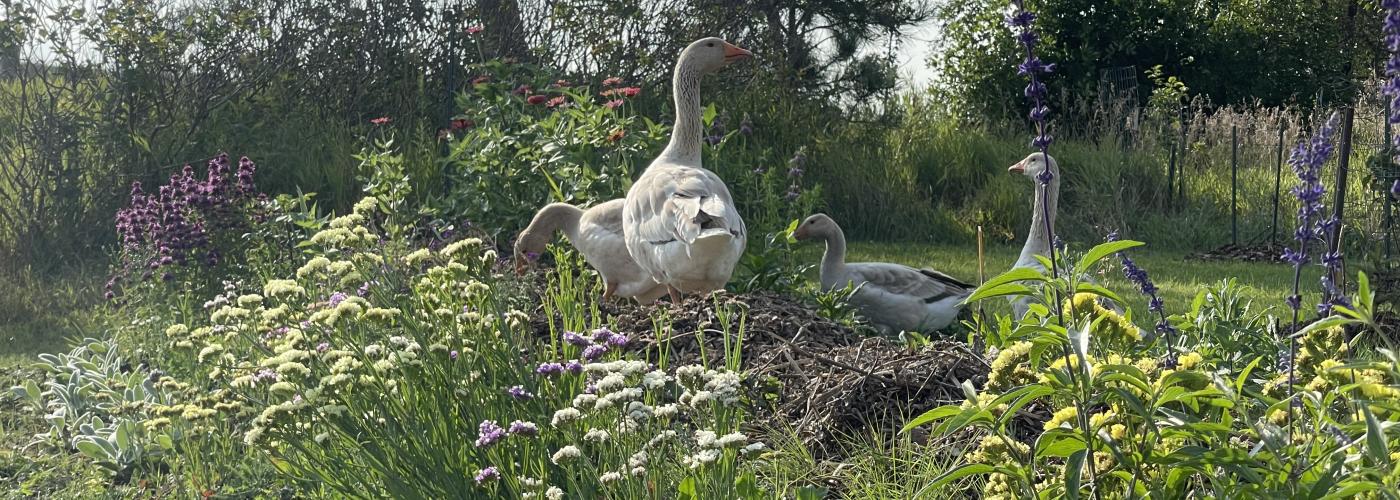
Geese and flowers at Blue Dasher Farm.
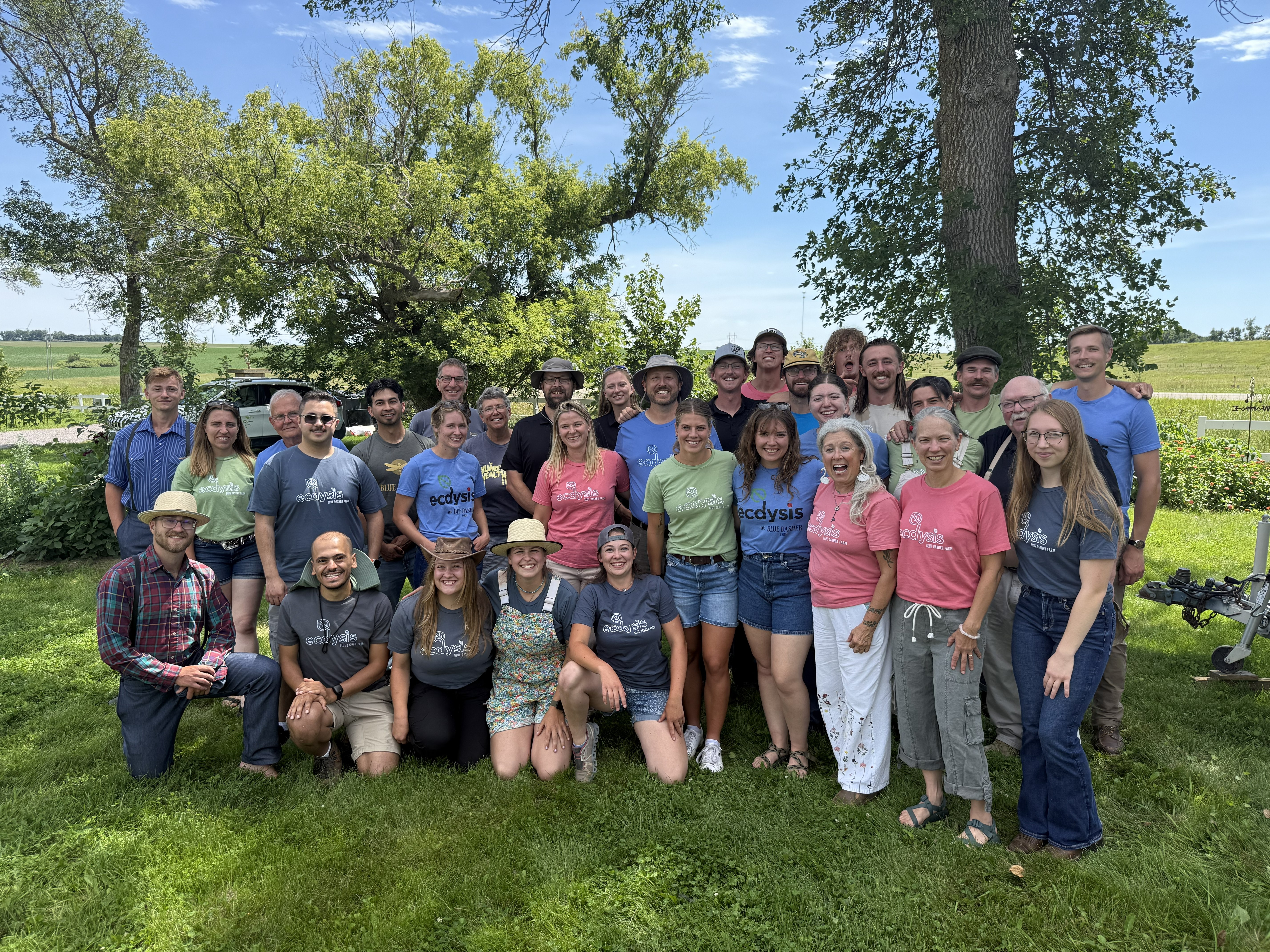
Ecdysis Foundation team.
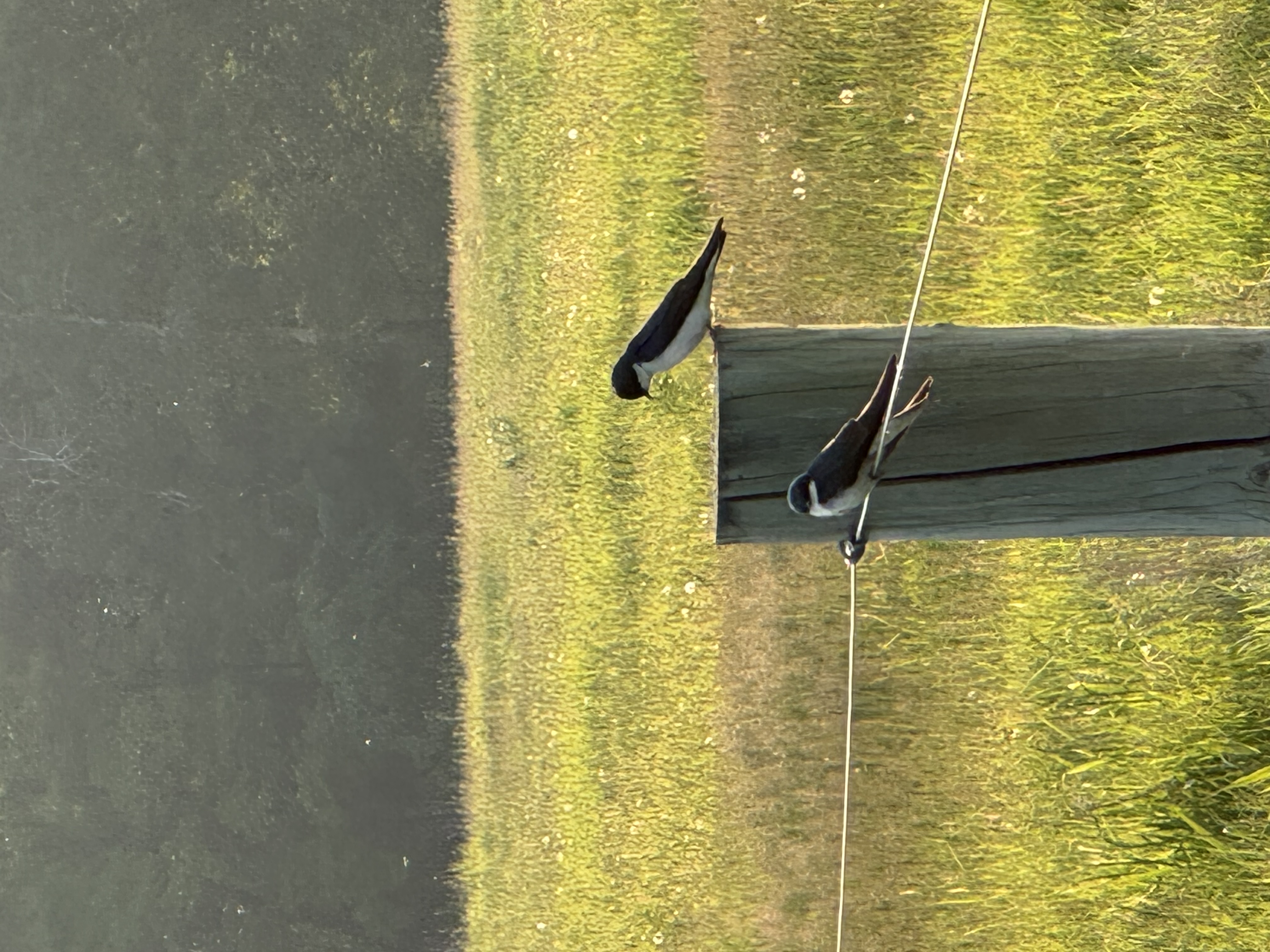
On-farm wildlife (via Courtney Tchida)
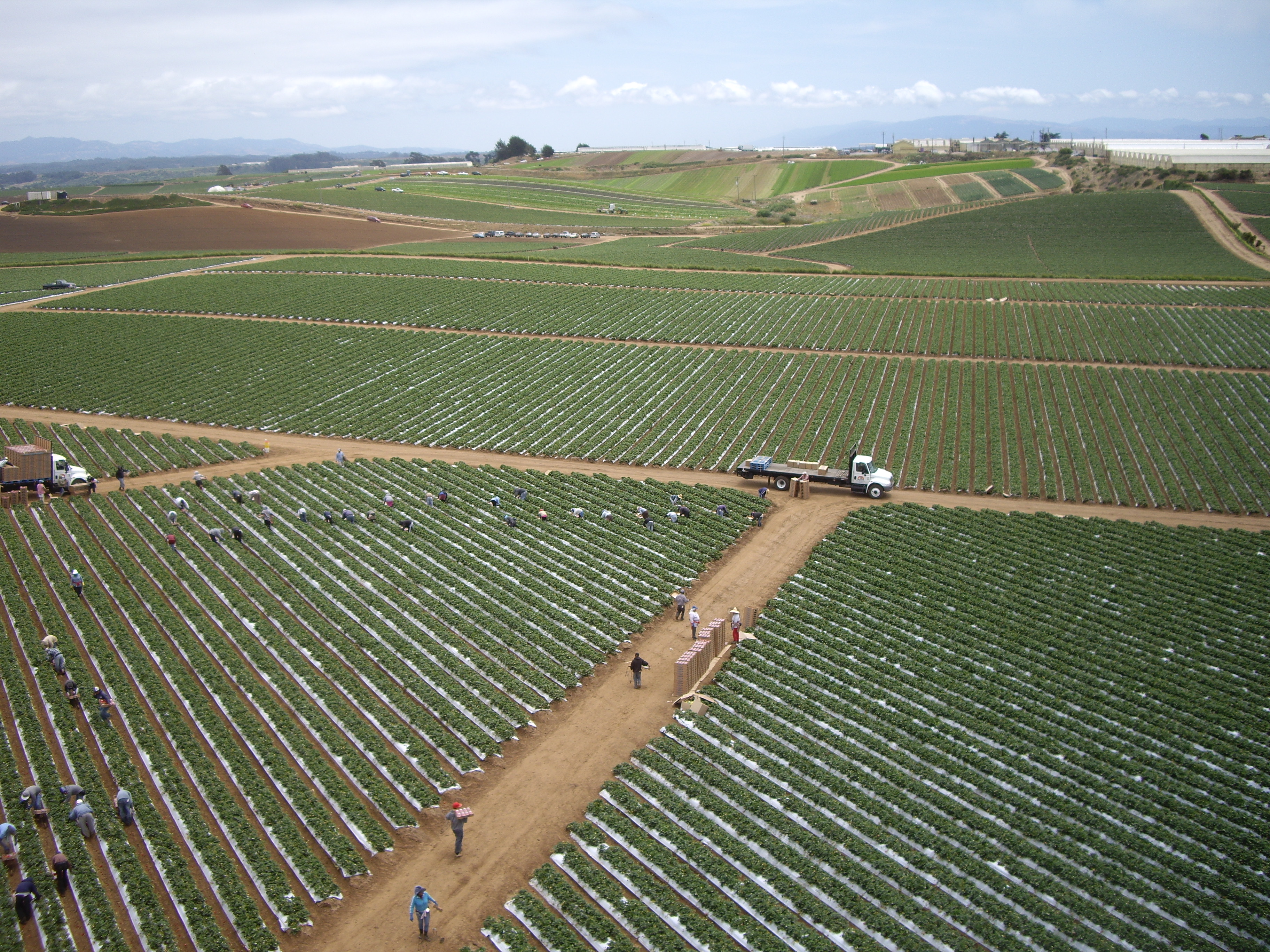
Monoculture organic strawberry farm (via Claire Kremen)
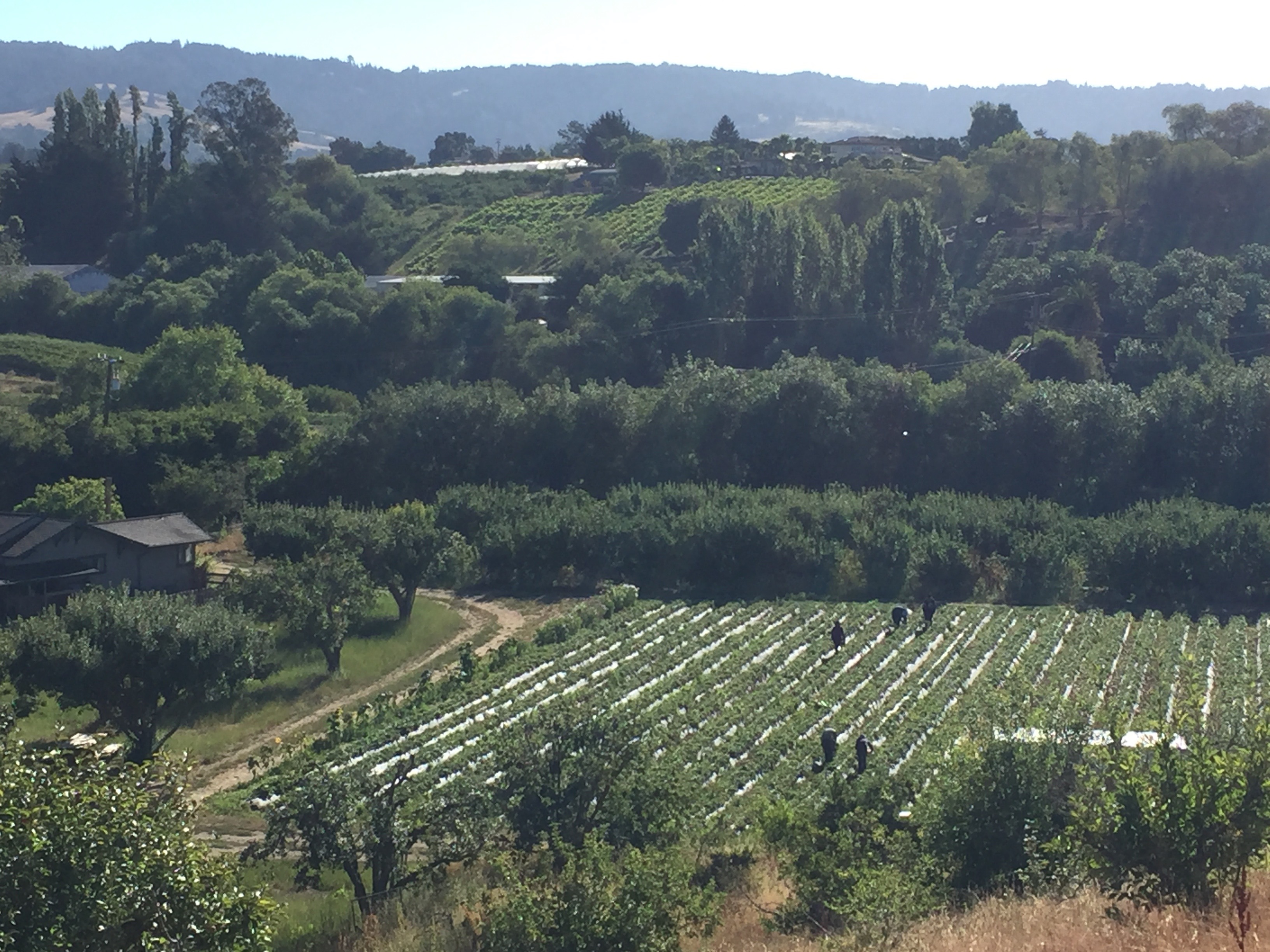
Diversified organic strawberry farm (via Claire Kremen)
Transcript
00:00:02 Claire Kremen
We can't exist without biodiversity. There's so many species that are important for keeping us alive. Whether we're talking about microbes that fix nitrogen in the soil or decompose waste, create soil fertility, that's the basis of food. If we don't have that, we can't grow food. Plants that breathe in carbon dioxide and create sugars and starches and then breathe out oxygen, again, it's at the base of the food chain and it creates the atmosphere we breathe.
We can't live without them.
00:00:46 Lilly Richard
Food systems and biodiversity are deeply intertwined. Agroecology is grounded in biodiversity, taking advantage of ecological processes and relationships to improve farm resilience and productivity. But the dominant industrial agriculture system works against biodiversity in ways that are harming human health, driving mass extinction, and threatening the future of the planet.
From the Institute for Agriculture and Trade Policy, I'm Lilly Richard, and this is episode 3 of Agroecology Uprooted.
00:01:31 Lilly
We began our first episode by talking about systems, which are characterized by interactions, relationships, and feedback loops. One of the most fundamental, but certainly not simple, examples is an ecosystem, which is a system comprised of living things. In a healthy, balanced ecosystem, typically full of organisms that co-evolved in specific climatic conditions, you see predictable cycles, processes, and functions. Plants grow in the soil. Insects feed on the plants and drink nectar from their flowers, fertilizing them and helping them reproduce. Larger animals eat the plants and insects, controlling their populations, while also recycling nutrients back into the soil through their droppings. Plants and animals die and are consumed by other creatures and broken down over time by microbes, returning their nutrients to the soil, which feeds the growth of more plants, and so on and so on.
Of course, these cycles aren't perfectly consistent. In fact, they'll probably look different every year. Diseases, fires, different weather patterns, or the overgrowth of certain species can throw things off. But ecosystems that are balanced, complex, and redundant are also resilient. That's one reason why biological diversity is so important. Different species play different roles in an ecosystem, or sometimes overlapping roles. For example, two plant species might exist within a similar ecological niche, but if one gets wiped out by disease for a season, the animals that depend on them for food can eat the other one.
Humans are part of ecosystems too. Unfortunately, we're often the source of disruption.
00:03:16 Claire
I'm Claire Kremen, and I'm a professor at the University of British Columbia. I am a conservation biologist turned agroecologist.
00:03:26 Lilly
Claire Kremen got her PhD in zoology and spent years working on conservation and biodiversity protection in Madagascar. Later, she moved to California and turned her focus to one of the biggest threats to biodiversity globally, agriculture and food systems. She was also one of dozens of scientists involved in producing the EAT-Lancet report in 2025, an ambitious, comprehensive global evaluation linking diet, food systems, human health, and planetary boundaries.
00:03:58 Claire
So really the sort of big, major impact of any kind of agriculture is the transformation of a natural habitat into a very different kind of habitat, an agricultural habitat. And so there's this loss of the more natural habitat.
And it depends a lot – the impact of that on biodiversity depends a lot on what happens in the farming system.
Agricultural land makes up somewhere between 40% to 50% of the ice-free land. So it's a really large amount of land. And so if we could do better on it, make it more sustainable, that will be really impactful because in general, when we think about biodiversity, it's a lot of it is related to how much area. So, you know, if you have a larger area of forest, you'll find more species in it. That means area is really important. Here we've got almost half of the terrestrial area is devoted to farming. So if it's done in a scorched earth way, that's going to be really bad for biodiversity.
So with the very conventional industrial style, we do have a very, very simplified farm and often a very simplified landscape because we do find that with conventional and industrial agriculture, because of supply chains and because of efficiencies, we get these very, not only simplified fields, but also landscapes. So that kind of habitat loss is quite impactful. You're not going to find a whole lot of biodiversity able to tolerate those conditions because What happens is that in those kinds of farm fields, there's really sort of very few different plant species growing. I mean, especially if it's like fence row to fence row farming, you won't even see a weed on that farm. And weeds are just plants that farmers don't want, but they can be very valuable to other organisms, especially when we're thinking about different kinds of insects, for example.
00:05:57 Lilly
A lot of the habitat loss caused by agriculture has already happened, but it's still a growing threat. Alongside industries like mining and logging, agriculture is one of the biggest drivers of deforestation and habitat loss in some of the most biodiverse places on Earth, like the Congo Basin and the Amazon, where the forest is being actively raised and converted to soy plantations or grazing land for cattle.
In places like the U.S., where a lot of land has already been converted to farmland, even the scraps of habitat left on marginal land are threatened by the expansion of commodity production.
Habitat fragmentation is also an issue. As species get squeezed into smaller areas of land, cut off from food sources, migratory routes, and other members of their species, populations collapse, and conflicts with humans can increase – think elephants trampling farm fields or predators attacking livestock, and even an increase in zoonotic diseases being spread to people.
Another big threat to biodiversity is toxic pollution, particularly from input-heavy industrial agriculture.
00:07:08 Claire
It's first that habitat loss. The second piece really is pollutants. And you are going to see more pollutants from a conventional industrial system than from a more wildlife-friendly or diversified system. And there's a bunch of different types of pollutants.
One is the nutrients that come off of farm fields and go into streams and oceans. Nutrients like nitrogen and phosphorus lead to real changes in the freshwater and marine environment that can devastate the biodiversity in those systems. And I do want to emphasize that nutrients can come off of any farm fields and not just in conventional and industrial.
The second category I would say would be pesticides and antibiotics. And those are going to be, you know, we just, we've created so many novel compounds that we're putting into our systems, into the soil, into the water, into the atmosphere. And so that affects a lot of organisms.
And the simplification of the farm field is definitely a key consideration here. That is going to often lead to fewer natural predators in the environment, whether we're thinking about raptors and owls that are controlling mice to other birds and songbirds and insects and spiders. With that simplification, there's going to be the tendency and the need to rely much more heavily on pesticides, whether those are synthetic pesticides or they are organic pesticides. It's just, you know, putting a lot more toxins into the environment.
And then the final pollutant that we need to be concerned about with farming is greenhouse gas emissions. Farming is a big contributor to greenhouse gas emissions, and that is a form of pollution as well that's leading to climate change. And climate change has impacts on biodiversity.
00:09:00 Lilly
And agricultural pollution doesn't just impact ecosystem health. It also hurts humans. As you might expect, chemicals designed to poison insects and plants can also be poisonous to human health. Some of these chemicals end up in our food, but the people with the highest exposure are farmers, farm workers, and often the people who live downstream from farmland or anywhere in the vicinity of where pesticides are sprayed widely.
Pesticides have been linked to Parkinson's disease, Alzheimer's, asthma, reproductive issues, cancer, and many other diseases. High nitrate levels in drinking water, caused by fertilizer runoff and groundwater leaching, are known to increase cancer risk. Iowa, America's top producer of corn, as well as home to the majority of the country's confined animal feeding operations, or factory farms, has the second-highest cancer rate in the country. Bayer Monsanto, the company that manufactures the widely used glyphosate-based weed killer Roundup, has settled nearly 100,000 lawsuits from people who developed cancer after being exposed to that product. The company is currently arguing a case at the U.S. Supreme Court trying to ban state warning label requirements and preempt future lawsuits against them so they can no longer be held accountable for the health impacts of their products. They're arguing that Roundup is too important for agriculture to be subject to stronger regulation.
And it's true, in an industrial system, farmers depend on these toxic inputs to increase their yields and protect their crops from pests. But in agroecology, understanding the farm field as part of an ecosystem can start to reveal the way out of this trap.
00:10:49 Courtney Tchida
My name is Courtney Tchida and I'm a program associate with Wild Farm Alliance. So Wild Farm Alliance is all about helping farmers create habitat on their farms for birds and other wildlife, including pollinators. And we help farmers see that their farms can actually benefit from creating habitat where the birds they invite onto their farms can help control pests and reduce pesticide use.
00:11:11 Lilly
Wild Farm Alliance is a U.S.-based organization founded in California, but now working in the Midwest as well. They use birds and bird habitats as an entry point for increasing on-farm biodiversity and reducing reliance on chemical pesticides, even on conventional farms.
00:11:30 Courtney
So conventional agriculture tends to focus on excluding or eradicating pests rather than looking at the farm as a living ecosystem. So by utilizing predator species, farmers can manage pests without large volumes of chemicals being necessary. Pesticides, especially conventional ones, pose serious risks to birds and other wildlife, either through direct exposure or by reducing the insect food base.
We have 3 billion fewer birds in North America than in 1970. And the insect species are in decline as well. There was a 2019 review that found over 40% of insect species are threatened with extinction over the next several decades, which is kind of terrifying.
00:12:11 Lilly
To those of us who care about wildlife, numbers like these are already devastating. But this loss of life, especially insect life, represents an even bigger threat. Here's Claire Kremen again.
00:12:25 Claire
We can't exist without biodiversity. There's so many species that are important for keeping us alive. Whether we're talking about microbes that fix nitrogen in the soil or decompose waste, create soil fertility, that's the basis of food. If we don't have that, we can't grow food. Plants that breathe in carbon dioxide and create sugars and starches and breathe out oxygen Again, it's at the base of the food chain and it creates the atmosphere we breathe. We can't live without them.
You know, there have been mass extinctions in the past where huge numbers of species died out. But, you know, what looks like a moment that was a geological moment. So it was still happening over a long time span. And so there have been five periods of what we call mass extinctions. And the science says now that we're basically at having the sort of similar rates of extinction to those. And the real difference here is first, it's pretty rapid. And second, we are engineering it. It is what we are doing that is causing so many changes that is leading to species not being able to keep up. They can't keep up with those changes. They can't adapt to them, and so they die out. So this is like the sixth mass extinction.
00:13:43 Lilly
A lot of this biodiversity loss is being driven by agriculture and food systems, but our food systems also rely on biodiversity, from the insects that pollinate food crops to the microorganisms that feed soil fertility. Diversity in crop species is also essential to food system adaptability and resilience, so that we're not putting all of our eggs in one basket, so to speak, as growing conditions change.
One of agroecology's key principles is restoring biodiversity, on the farm and beyond.
Since habitat loss is one of the major causes of biodiversity loss, creating habitat is one of the first steps toward reversing it. Under the industrial system, especially in the U.S., farmers are encouraged to plant fence row to fence row, covering every inch of ground in monoculture crop production. Allowing other species to share the land is considered a waste of water and soil nutrients on a competing plant. But carving out a portion of land, especially marginal land that's already less productive, to return to native habitat can have compounding benefits.
Environmental economists call these ecosystem services, tangible and valuable benefits that we can get just by supporting healthy ecosystems and letting them do their thing. One of those benefits is natural pest control. It turns out that birds like to eat many of the insects that like to eat farmers' crops, so creating habitat for birds and inviting them onto the farm can reduce the need to spray toxic pesticides.
00:15:23 Courtney
So planting native plants on farms in the form of hedgerows or prairie stips or even pacu prairies, small refuge areas can really have a big impact in terms of supporting pollinators and insects and then a whole ecosystem of services. So putting up nest boxes can help invite cavities nesting songbirds onto farms too. So that's another practice that's really easy to implement. The more farmers that implement habitat, the more impact we can have at the landscape level. And then, you know, creating corridors for wildlife that stretch across regions is really important in terms of big systematic change.
So birds are really valuable partners on the farm as voracious insect eaters and even rodent hunters. Raptors can help manage voles and mice, and the majority of songbirds are insectivorous, so they eat insects that are pests like grasshoppers, aphids, cutworms, cabbage moths, leafhoppers, the list goes on and on. This can be especially helpful during nesting season. So one nest full of baby chickadees, for example, can eat up to 9,000 caterpillars as they're growing. And that can be super effective pest control.
There's also the effect that birdsong has on humans, where studies have shown that their songs can actually help calm our nervous system.
And so a healthy ecosystem has biodiversity both above and below the ground. And different species have specific needs, but often native plants are what the insects depend on for the various life stages, which then feed birds. So for example, like goldenrod plants host 88 different species of insects, all of which feed birds. So having those native plants is really crucial to creating an ecosystem that supports everybody.
00:17:03 Lilly
Wild Farm Alliance works with many different types of farmers, including conventional industrial farmers, taking the first steps to restore life on their land and reduce their dependence on chemical inputs.
Agroecology takes the transition further, with crop diversification, composting, and other strategies that utilize ecological processes and relationships to support productivity without costly and toxic inputs.
Here's Jon Lundgren, who we heard from in Episode 2. With his team of scientists at the Ecdysis Foundation, he's been studying the actual impacts of implementing regenerative and agroecological practices on farms across the U.S.
00:17:45 Jon Lundgren
Well, I mean, regenerative ag is supposed to do certain things, right? It's supposed to produce outcomes. Things like... carbon capture and storage and mitigating greenhouse gas issues. Regenerative ag is supposed to reverse desertification or at least correct water cycling within agricultural lands. It's supposed to reduce pollution. It's supposed to increase the nutrition of food. It's supposed to improve farmer and community wellness, physical and mental health.
All of those are outcomes of one thing, growing life on farms. Biodiversity is the fundamental lever that farmers have that they can manage on their operations, that produces all of those things.
And we can talk about all the mechanisms whereby that happens, but to simplify it down, regenerative ag celebrates life. When you change your mentality towards that, the carbon behaves itself, the water behaves itself. Human health and communities thrive.
00:18:55 Lilly
With their Thousand Farms Initiative, Ecdysis has established scientific methodologies for measuring these outcomes, including on-farm biodiversity, from the birds to the soil.
00:19:07 Jon
Well, there's a lot of species out there, and essentially what we're trying to do is measure a lot of those species, put names on them, so all of the microbes, all of the fungi in the soil, invertebrates, birds, plants, things like that. More or less an inventory of the biology of a farm.
And one of the largest differences between conventional and regenerative farms is that every single organismal group that we measure ends up being enhanced through regenerative management. And that life does things. It helps to increase the level of soil inorganic and organic carbon deep down into the soil.
When you stop tilling the soil, that seems to be a really important first step that allows life to kind of colonize and reside within your agricultural system, your farm. Planting covers the abundance and biomass and diversity of just about every organismal group scales with how many plants are in a habitat. But that's not enough.
What we found when we looked at what eliminates biodiversity from a farm, especially invertebrates in this case. You know, if you want to kill a bug, spray an insecticide. If you really want to kill a bug, spray an herbicide or synthetic fertilizer. That tends to have a much bigger impact on biodiversity. And so unless we're limiting or eliminating these agrochemicals, you will not attain what's possible within a regenerative system.
And then the data is – We give a 35-page book about each farm back to the farmer at the end of the year that tells them what we're finding and conceptualizes it relative to other farmers in their area.
So one of the problems that we sometimes face experimentally is in order to study transition farms, we have to have a conventional control. And so every year we give that 35-page book to the farmers. And they're, I mean, it's a competitive bunch, right? I mean, they want to have the biggest numbers. And one of the problems is that once those conventional farmers see what the regenerative ones are doing, we tend to lose our conventional farmers, which is exactly what's supposed to happen. But from an experimental design point of view, it's kind of a pain in the neck.
00:21:37 Lilly
Beyond increasing soil fertility and supporting wildlife populations, more biodiverse systems can have positive impacts on human health as well, from the nutritional content of foods to the mental health and well-being of farmers and their communities.
00:21:53 Jon
It's also improving the nutrition of foods. We find that wheat from regenerative farms ends up having twice the protein content. And half of the micronutrients that we've analyzed so far, I don't know, we've done like a battery of just an ionomics kind of thing with maybe 20 different chemicals. And half of them are increased just through regenerative practices in our wheat.
When we're on a regenerative farm, morale is higher. There's more laughing. People get more stuff done. When I go out onto a farm, a regenerative farm, the green reflectance is hitting my eyes, and that goes into my brain. And the smell of plant volatiles ends up going into my brain. And the feel of insects pinging off of my flesh, and the sound of birds and crickets chirping, or just the wind through the plants moving those leaves together. And all of this information simultaneously goes into my brain, and my brain works it out and says, “you're happy.”
And it's my job as a scientist to turn that into a number so that somebody that has never experienced that before will believe me that it's real.
00:23:19 Lilly
Those health impacts could be amplified even more under a broader transition to agroecology. And it's not just a nice bonus, it's a transformation that's vital to sustainably feeding the planet. But changing the food system also means changing the way we eat. And that's actually a good thing.
Agroecology is not prescriptive about diet. Part of food sovereignty is allowing people and communities to make their own choices about what they eat. But in many ways, the industrial food system only offers the illusion of choice, producing an excess of nutritionally poor foods that are profitable for big food companies and costly for the rest of us, at least in terms of our health and the health of the planet.
The EAT-Lancet Commission was an independent scientific body that set out to study the planetary-scale challenges of food systems through the lens of diet. They did a huge survey of existing scientific data to identify what types of diets are healthiest for people, and which types of diets could be supported on a large scale by food systems that are actually sustainable. They released their first report in 2019 with recommendations for what they called the planetary health diet. In 2025, they released an updated report, digging deeper into the social implications of what dietary change implies and how the recommended diet could be adapted across cultures and regions.
Here's Claire Kremen again, who is one of the co-authors of the 2025 report.
00:24:54 Claire
For 2019, the first one, the aim was to identify what is a healthy diet for people and what are the environmental consequences if everyone were to adopt that healthy diet. It was particularly in the conception of the planetary boundaries, and that's a concept of, there's like an environmental safe space in which humans can do well. So the planetary boundaries look at things like land, land use, how is it land being used, biodiversity, climate. And we already know that six of the nine planetary boundaries, that there's been, that we’re kind of already outside of that safe space. We call that transgression.
We kind of already knew this, but we quantified it. Food systems are the largest contributor to the transgression of five planetary boundaries, five of the six that have already been transgressed.
For example, they contribute to 30% of total greenhouse gas emissions globally. But if we could transform food systems, that includes adopting the planetary health diet. And we also could reduce food loss and waste and improve production practices with sustainable measures, we could cut those emissions by more than half.
So in 2025, it was revisiting those recommendations with a lot more dietary data in particular. And then additionally, seeing how the recommendations can be very flexibly applied to many different cultures and regions. For example, you know, if you're in India or if you're in Zimbabwe or if you're in Colombia or if you're in Italy, you know, how can you eat this planetary health diet with your own cultural foods?
And then another important piece was to look at this from a justice lens. So quantify the social foundations that enable people's right to food, a healthy environment, and decent work. Again, so many people are involved in food system work, whether it's agriculture, all the way up to serving meals in restaurants and working in canneries or et cetera. But it's not always a good work environment. So quantify the social foundations on all aspects of food and a healthy environment as well, because If we don't have a healthy environment, then we can't ourselves be healthy. So that's a direct impact on people's rights, especially since so often the people that are most affected by unhealthful environmental conditions are marginalized or poor people.
So then we wanted to explore in detail how much is the food system currently leading us out of the safe space? And what scenarios are there for reducing the impact of the food system on these planetary boundaries? And then bringing it all together, how do the scenarios affect the social foundations? Is there a space that's both safe and just for food systems? And how do we get there?
And the really amazing thing about this is that what is healthy for individual people is healthy for our planet.
00:28:13 Lilly
The EAT-Lancet report found that the types of diets that could be supported by sustainable food systems, including agroecology, are also correlated with the best outcomes for human health. Those are diets heavier in diverse fruits and vegetables and lighter in animal products and processed foods.
Under the industrial system, the diversity of food crops has been reduced dramatically, while a handful of commodity crops are overproduced, providing the basis for many processed foods as well as cheap feed for factory farms, which are hotspots for pollution and greenhouse gas emissions.
Animals can be integrated into agroecological systems in less cruel, more sustainable ways, even creating beneficial synergies since animals play important roles in natural ecosystems. But the scale of meat and dairy production enabled by the industrial system can't be sustained while staying within planetary boundaries. In many parts of the world, we need to scale down livestock production and consumption. And for the sake of our health, maybe that's okay.
00:29:20 Claire
Basically, to put it into terms that you can understand in your own life, it translates to a diet of abundant choices of fruits, vegetables, nuts, legumes, in other words, beans, and whole grains. But it still allows for red meat once a week, poultry and fish twice a week, dairy once per day. That is, if desired, because it's entirely compatible with vegan and vegetarian alternatives. But the key is, first, greatly increasing the consumptions of vegetables, fruits, and nuts.
00:29:55 Lilly
Of course, it matters how that food is produced. It's possible to eat a healthy diet within the industrial system, but the production systems behind that diet are still driving biodiversity loss and making all of us less healthy.
Changing food systems and diets on a large scale is a major challenge, but the stakes couldn't be higher. And for farmers already practicing agroecology, the results speak for themselves.
00:30:23 Claire
Well, I do find hope. I mean, I think the most exciting thing is always when you find these incredible, amazing farmers that are doing all this. And they're doing it, you know, often they're doing it against the odds, and they're being successful.
00:30:37 Lilly
Here's Jon again, describing his own farm, Blue Dasher Farm in South Dakota.
00:30:43 Jon
We raise honey, and cut flowers and lamb, and half of the farm is native unbroken prairie and wetlands that we started managing when we moved out here. It started, you know, it was like a solid brome, you know, monoculture, which is a grass, an exotic grass. Once we started burning out there, I think we've got a hundred plant species now, and flowers, and the honey is like, it's so interesting. Because, in wine production, we talk about terroir, the flavor of land. And that's true of every farm product. Our honey tastes totally unique than any other honey out there.
00:31:31 Lilly
There are limits to how much biodiversity can be restored and maintained within a system dominated by industrial agriculture. At Blue Dasher Farm, neighboring farms still use pesticides.
00:31:44 Jon
The bees die every year. They get sprayed out. I mean, we can't, there's nothing we could do about it. It's, yeah, so sometimes I, yeah, there's hush money that comes from the government to, you know, help the beekeepers stay quiet. So we try to use some of that to rebuild the hives every year and stuff.
00:32:03 Lilly
But the tide may be turning – if we can do something about the chokehold that big ag has on our food system. Scientific studies have confirmed again and again that the industrial system isn't working for the planet. Farmers know that better than anyone.
00:32:19 Jon
I don't think change comes from on high. I think it's going to come from the bottom up. I think removing some of the hindrances to regenerative adoption, things that hand power over to consolidation and industrialization, I think those policies need to be gotten rid of. I think supporting community development and opportunities for communities to diversify their food systems, that's going to be huge moving forward. Prioritizing the transparency of agrochemicals and nutrition on food packaging, that would be huge.
I think that there has to be community, and that support there. It's a lot easier when you're not doing it all by yourself.
00:33:10 Claire
Agroecology is a really big concept. It's a very holistic concept that includes all of these social foundations that we were just talking about and social mechanisms for change and transformation, as well as biodiversity-based practices or diversification practices. And agroecology can sometimes sound to people like a very political beast, which is because it is, because it recognizes that politics are important. And if we want to change our food system, that there is a lot of policies involved as well as politics, and that has to, those have to change as well.
00:33:51 Lilly
Agroecology goes beyond the physical changes we need to make to protect life on Earth. It focuses just as much on that social foundation as on the planetary boundaries. And the movement for agroecology hasn't been led by scientists in the Global North, but by peasants, farmers, and civil society around the world, especially in the Global South. And it's not just about farming practices. It's about power, democracy, and food sovereignty.
That's next time on Agroecology Uprooted.
00:34:40 Lilly
Agroecology Uprooted is produced by the Institute for Agriculture and Trade Policy. If you enjoyed this podcast, please rate and subscribe on your preferred podcast platform and share the show with a friend. IATP works at the intersection of policy and practice to advance just, sustainable food systems. You can support our work at iatp.org/donate.