Download a PDF of this report.
Summary
IATP has been analyzing farmer participation in two of the United States’ most popular conservation programs since 2021. In our latest analysis, we find that in fiscal year 2025 (FY2025), approximately 24% of applicants to the Environmental Quality Incentives Program (EQIP) and 37% of applicants to the Conservation Stewardship Program (CSP) were awarded contracts.[1] This is a sharp dropoff from FY2024 in which approximately 43% of applicants to EQIP and 54% of applicants to CSP were awarded contracts,[2] and is similar to acceptance rates seen before the passage of the Inflation Reduction Act (IRA). This national dropoff in applications accepted is mirrored in most U.S. states and territories.
Between fiscal years 2024 and 2025, the number of EQIP contracts awarded in the U.S. decreased by approximately 17,650 and the number of CSP contracts awarded decreased by around 2,877.[3] This is a 38% and 21% decrease, respectively. Not a single state saw an increase in EQIP contracts awarded from FY2024 to FY2025, and only eight states saw an increase for CSP contracts.
This all occurred as a higher number of farmers applied to both programs from one year to the next. FY2025 saw 29,353 applicants to CSP and 118,377 applicants to EQIP, up from 25,719 (14% increase) and 106,794 (11% increase) respectively the year before.[4]
Why do EQIP and CSP matter to farmers?
Farmers have long used conservation methods to build soil health, prevent soil erosion, increase yields, protect water, and manage for pests and disease. Farmers implement conservation independently of public programs, but public financial support can help offset costs borne by the farmer, especially if there isn’t a clear financial return on certain conservation practices. In this current farm economy where costs are rising and many farmers expect to lose money, financial help is crucial, but a sense of stewardship of the land is perhaps more critical when a farmer seeks to improve environmental outcomes on their farm.[5]
For some farmers to take the first step on conservation, they need financial support. Conservation cost-share contracts through the Natural Resources Conservation Service (NRCS) can provide that help. An NRCS contract may be the only time some farmers implement conservation on their farm, or it could be the first step in a lifelong conservation journey. There are plenty of barriers to farmers implementing conservation, from fears of yield loss and a lack of peer farmers implementing conservation to policy barriers such as oversubscribed conservation programs, conservation practices that aren’t well suited to their size or type of operation, or payments that don’t keep pace with inflation.[6] Research has shown that EQIP in particular has had a measurable positive impact on cover crop adoption in the U.S.[7] Cover crops can be a good “gateway” conservation practice for farmers who wish to address natural resource issues across their whole farm. EQIP exists to address single-resource concerns,[8] and CSP acts as that next step, helping farmers address more long-term concerns like soil health, water quality, and wildlife habitat throughout their operation.[9]
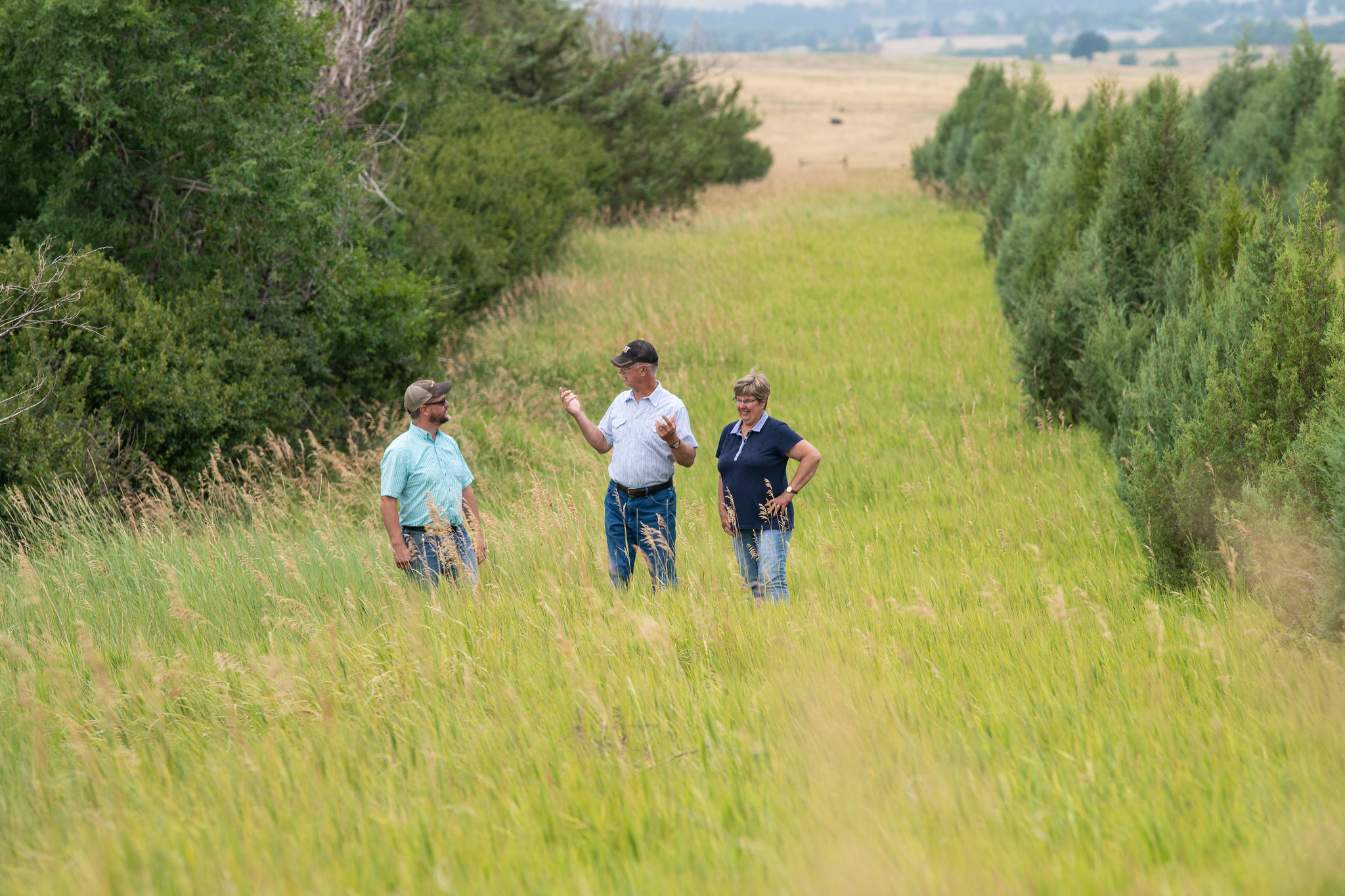
Windbreak restoration in Nebraska
Impacts of DOGE, IRA funding freeze, and OBBBA
In January 2025, state NRCS branches were instructed to pause on spending funds from the IRA. In July 2025, President Trump signed into law the budget reconciliation bill known as the One Big Beautiful Bill Act (OBBBA) that rescinded all unobligated IRA funds, instead incorporating them into the Farm Bill baseline. These IRA funds were in addition to existing baseline Farm Bill funds for EQIP and CSP, for the express purpose of funding “climate smart mitigation activities."[10] The rescission of IRA funds and their inclusion into the Farm Bill baseline removed the climate smart requirement, or the “guardrails.” These baseline funds can now be used for any practice or activity within EQIP and CSP, not just those deemed “climate smart.”
After a state NRCS’s deadline for applications to EQIP and CSP (each state has a unique deadline[11]), they begin the process of ranking applications and obligating funds, or determining which farmers will be funded for a conservation contract. Obligating funds happens continually after the ranking date. In many states, how quickly or slowly NRCS staff were able to rank and obligate funds had a large role in determining how many EQIP and CSP contracts were awarded.
The initial pause on IRA funds happened as billionaire Elon Musk’s Department of Government Efficiency, or DOGE, fired thousands of federal employees, including over 25% of NRCS staff.[12] With the reduction in staff, many of whom worked in farmer-facing county offices, the workload increased dramatically. Counties have adapted by opening offices only a few days a week and rotating staff between counties rather than leaving their offices empty. According to the Office of Personnel Management, there are now 141 counties in the U.S. without a single NRCS employee, all of which previously had staffing. Fifty three percent of counties saw a loss in staff between January 2025 and January 2026.
Theoretically, the inclusion of IRA funds into the baseline of the Farm Bill through the actions of the OBBBA would encourage more EQIP and CSP contracts in future years, at the expense of farmer applications in the near term.[13] As the IRA was written, funds allocated to programs such as EQIP and CSP stairstepped up until peaking in FY2026, then would stairstep down until the funds are extinguished in FY2031. Now that funding extends further into the future as permanent Farm Bill baseline, but not without tradeoffs.
Which states did well and which didn’t?
Nationally, approximately 24% of applicants to EQIP were awarded contracts in FY2025, down from 43% in FY2024. As in previous years, the percentage of farmer applicants able to access EQIP varied widely across states. States such as Rhode Island and New Jersey were still able to connect many of their EQIP applicants with contracts. In both states, we show that over 100% of applicants were awarded contracts. Similar to our tracking in a previous report, this percentage above 100% indicates that these states were able to address applications in their backlog in addition to those who applied and were ranked for FY2025. West Virginia awarded the smallest percentage of EQIP contracts — just 241 of its 1,864 applicants (12.89%) were awarded with EQIP contracts in FY2025. Other states and territories that awarded fewer than 20% of its applicants with contracts include Arkansas, Illinois, Iowa, Louisiana, Mississippi, Nebraska, New Mexico, North Carolina, Puerto Rico, South Carolina, South Dakota, Vermont, and Washington.
Note: For states with percentages above 100%, this indicates states that awarded more contracts than applications in a year. Many of the contracts awarded were deferred applications from previous years. For most territories, we only have usable data for FY2025 and were unable to compare acceptance rates to previous years.
With CSP, a few more states and territories were able to make progress on their backlog. Nationally, 37% of CSP applicants were awarded contracts, down from 54% in FY2024. Alaska, American Samoa, Idaho, Nevada, New Jersey, Rhode Island, and Wyoming were all able to award more contracts than applications this year. On the other end of the spectrum, North Carolina was only able to award contracts to 13.28% of its CSP applicants, just 227 out of 1,709. Other states and territories that awarded contracts to fewer than 20% of its applicants include Alabama, Mississippi, the Northern Mariana Islands, and Washington.
Note: For states with percentages above 100%, this indicates states that awarded more contracts than applications in a year. Many of the contracts awarded were deferred applications from previous years. For most territories, we only have usable data for FY2025 and were unable to compare acceptance rates to previous years.
Note: For states with percentages above 100%, this indicates states that awarded more contracts than applications in a year. Many of the contracts awarded were deferred applications from previous years. We provided ranges when exact numbers could not be determined from NRCS data. States and territories with ranges were ranked according to the average of the minimum and maximum values of their range. With more exact data, the rankings would likely shift.
Note: For states with percentages above 100%, this indicates states that awarded more contracts than applications in a year. Many of the contracts awarded were deferred applications from previous years. We provided ranges when exact numbers could not be determined from NRCS data. States and territories with ranges were ranked according to the average of the minimum and maximum values of their range. With more exact data, the rankings would likely shift.
What was the dropoff from FY2024 to FY2025?
In large part due to the freeze in IRA funds, there was a steep dropoff in EQIP and CSP contracts awarded between FY2024 and FY2025. From one year to the next, the number of EQIP contracts awarded in the U.S. decreased by approximately 17,650, or around 38%, and the number of CSP contracts awarded decreased by around 2,877, or around 21%. No state increased EQIP contracts awarded from one year to the next, and only eight states saw an increase for CSP contracts.
Looking at EQIP contracts awarded by state, the sharpest decreases in contracts awarded from one year to the next came in states like Iowa, Nebraska, New Mexico, and West Virginia. New Mexico saw the sharpest decline with 323 fewer EQIP contracts awarded between FY2024 and FY2025, a decline of 67%. Puerto Rico was the only state or territory where contracts awarded remained stable or increased slightly.
We see a similar story with CSP, though more states and territories were able to increase their contracts awarded from one year to the next. The sharpest dropoff is seen in New Hampshire, where nearly 52% fewer contracts went out the door in FY2025 than in the previous year. Again, Puerto Rico is a success story, with nearly 50% more CSP contracts being awarded in FY2025 than in FY2024.
How to conserve when federal funding is scarce
IATP and others have done plenty of work looking at the costs of different EQIP practices, showing that smarter implementation — even without more total funding for EQIP and CSP — can connect more farmers to contracts.[14] Paying 10 farmers $10,000 to address conservation needs on their farms can be more impactful than paying one farmer $100,000.
The kinds of conservation practices that are more expensive include structural practices like anaerobic digesters and manure lagoons,[15] while the practices most people think of when they think of agricultural conservation, such as cover crops, cost on average a little over $9,000 per contract.[16] Looking specifically at Minnesota, every federal dollar spent on conservation leads to a $1.81 return.[17] That means federal dollars for conservation are being spent in local communities, including on direct costs such as materials and labor, as well as indirect costs such as meals and transportation. Targeting EQIP resources to more farmers, with an emphasis on practices that serve small and mid-scale farms, can help keep farmers on the land and dollars in the local community.
In that regard, instituting lower payment limits on EQIP payments can spread finite resources to more farmers across the country. As policy currently stands, a farmer can receive up to $450,000 over the course of five years from EQIP — a limit that is impossible for most farmers to reach. USDA does not disclose exactly how many farmers reach the $450,000 limit, but only a small fraction of farmers who participate in EQIP get anywhere close to that number.
Without restored staffing in local USDA offices, however, contracts will continue to disproportionately benefit large farms. Researchers at the University of Wisconsin analyzed the relationship between county conservation staff in Wisconsin and the kinds of practices implemented on the ground and found that low levels of NRCS staffing leads to fewer, larger, more industrial-scale practices included in EQIP contracts, while higher levels of staffing lead to more, smaller-scale, and regenerative practices being utilized.[18] In order to truly serve farmers and the land, NRCS staffing needs to be restored across the country.
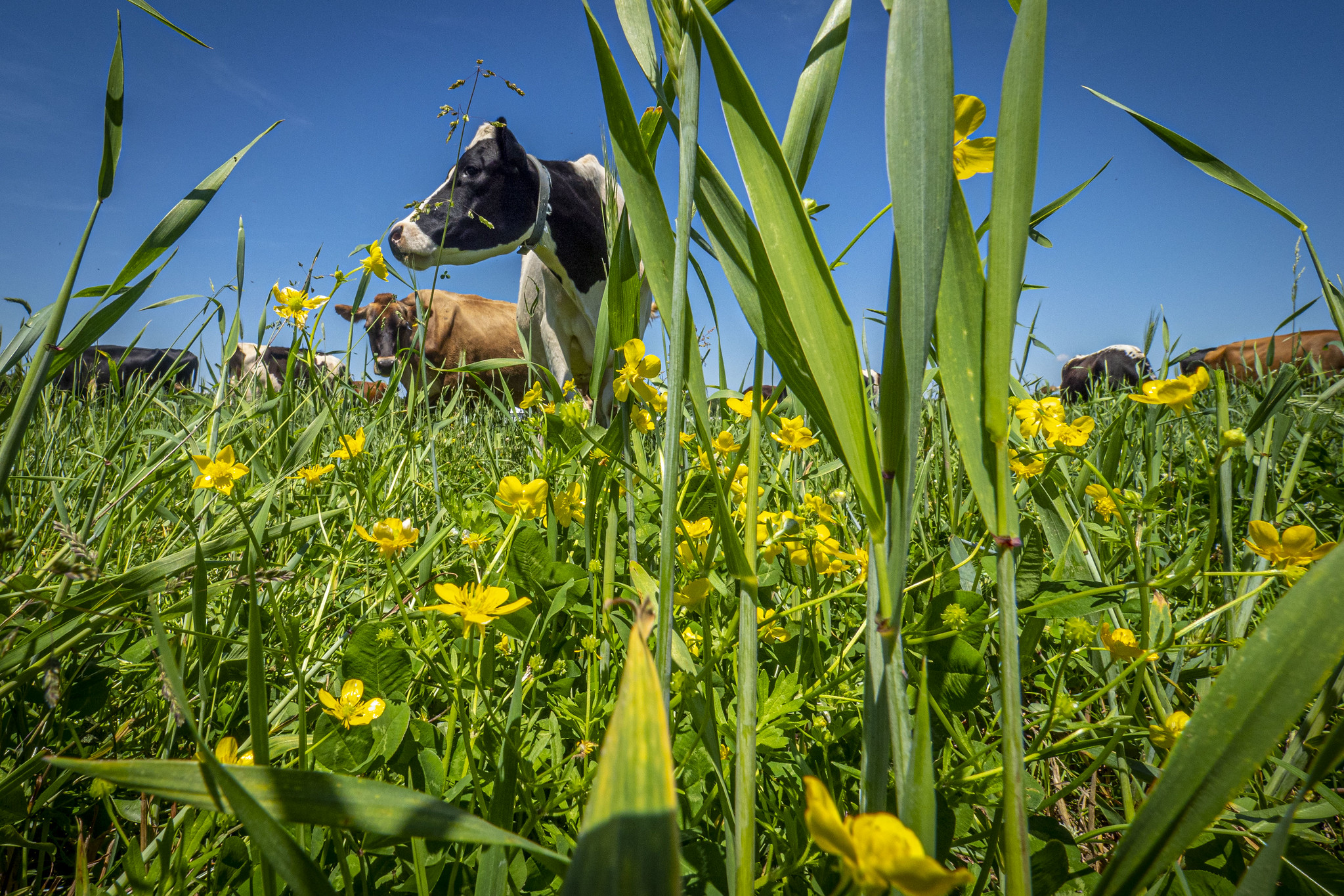
Managed rotational grazing, Maryland
A note from the author on the data used in this report
The data used in this report was obtained via a Freedom of Information Act (FOIA) request to NRCS. I calculated the number of applications to EQIP and CSP by adding together all categories of applications, including those classified as eligible, ineligible, cancelled, preapproved, and deferred. Regardless of their final status, all of these involve a farmer submitting an application to NRCS. The number of contracts awarded can include applications from previous years.
As noted in the graphics used in the report, there are instances where over 100% of applicants are shown as being awarded contracts. In situations where this occurs, it indicates that states were able to make meaningful progress on application backlogs from previous years. I had heartburn about displaying data in this way, but I chose to maintain consistency in methods between years. In a sense, it is to compare “apples to apples” from previous years’ data.
Additionally, for some states, NRCS did not give exact numbers. If there are four or fewer contracts of any category in a state, NRCS redacted this data in its response to our FOIA. For some states, this means that the number given is an average of the lowest and highest possible number of contracts. For example, in Alaska, the lowest possible number of EQIP contracts is 48, and the highest is 51. The average of those two numbers is 49.5, which we rounded up to 50 for the purposes of the graphs. In no state or territory is the range wider than this.
For EQIP, the states this applies to are Alaska, California, Delaware, New Jersey, and Ohio. For CSP, this applies to Colorado, Connecticut, Delaware, Hawaii, Maryland, New Jersey, Oklahoma, Texas, Utah, and the U.S. Virgin Islands.
Download a PDF of this report.
Endnotes
[1] Natural Resources Conservation Service, “2025-NRCS-01839-F Final Response Records,” acquired via Freedom of Information Act (FOIA) Request.
[2] Happ, Michael, Institute for Agriculture and Trade Policy. “Let‘s keep the door open: IRA funds most on-farm conservation in a decade.“ https://www.iatp.org/keep-the-door-open.
[3] Natural Resources Conservation Service, “2025-NRCS-01839-F Final Response Records,” acquired via Freedom of Information Act (FOIA) Request.
[4] Ibid.
[5] Prokopy, Linda S. et al. “Adoption of agricultural conservation practices in the United States: Evidence from 35 years of quantitative literature,” Journal of Soil and Water Conservation 74, no. 5 (2019): 520-534. https://www.tandfonline.com/doi/abs/10.2489/jswc.74.5.520.
[6] Arbuckle, J Gordon et al. “Understanding farmer perspectives on climate change adaptation and mitigation,” Environment and Behavior 47, no. 2 (2015): 205-234. https://pmc.ncbi.nlm.nih.gov/articles/PMC4359208/.
[7] Park, Byungyul et al. “Payments from agricultural conservation programs and cover crop adoption,” Applied Economic Perspectives and Policy 45, no. 2 (2022): 984-1007. https://onlinelibrary.wiley.com/doi/10.1002/aepp.13248.
[8] Natural Resources Conservation Service, “Environmental Quality Incentives Program.” https://www.nrcs.usda.gov/programs-initiatives/environmental-quality-incentives-program.
[9] Natural Resources Conservation Service, “Conservation Stewardship Program.” https://www.nrcs.usda.gov/programs-initiatives/conservation-stewardship-program.
[10] Natural Resources Conservation Service, “Climate-smart agriculture and forestry (CSAF) mitigation activities list for FY2025.” https://www.nrcs.usda.gov/sites/default/files/2023-10/NRCS-CSAF-Mitigation-Activities-List.pdf.
[11] Natural Resources Conservation Service, “Application ranking dates by state.” https://www.nrcs.usda.gov/ranking-dates.
[12] National Sustainable Agriculture Coalition, “USDA staffing crisis: Conservation staff losses will further undermine services to farmers and ranchers.” https://sustainableagriculture.net/blog/usda-staffing-crisis-conservation-staff-losses-will-further-undermine-services-to-farmers-and-ranchers/.
[13] Coppess, Jonathan and Yifan Peng, University of Illinois, “Taking a closer look at the conservation tradeoff issues,” farmdoc daily 14 (2024): 203. https://farmdocdaily.illinois.edu/2024/11/taking-a-closer-look-at-the-conservation-tradeoff-issues.html.
[14] Happ, Michael, Institute for Agriculture and Trade Policy, “Costly versus cost-effective: How EQIP can be improved to serve more farmers and the climate.” https://www.iatp.org/costly-versus-cost-effective.
[15] Happ, Michael, Institute for Agriculture and Trade Policy, “Payments for pollution: How federal conservation programs can better benefit farmers and the environment.” https://www.iatp.org/payments-pollution-how-federal-conservation-programs-can-better-benefit-farmers.
[16] Happ, “Costly versus cost-effective.” https://www.iatp.org/costly-versus-cost-effective.
[17] Natural Resources Conservation Service, “The economic impact of conservation funding: 2021 IMPLAN report results.” https://www.house.mn.gov/comm/docs/rpbKi7drGki58-4Z-PGR7g.pdf.
[18] Keady, Mia M. “Thinking like a prairie: Soil carbon to perennial conservation,” PhD diss., University of Wisconsin, 2025. https://jacksonlab.agronomy.wisc.edu/wp-content/uploads/sites/8/2025/12/Keady_Dissertation_August2025-1.pdf.