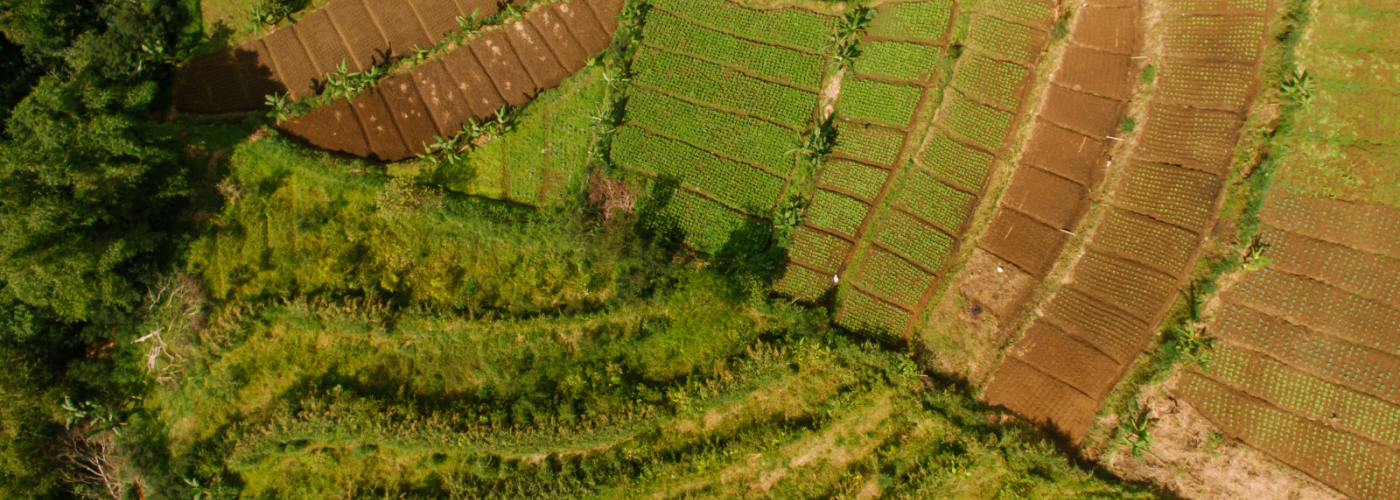
How do we transform food systems to make agroecological transitions possible on a large scale? In the final episode of Agroecology Uprooted, hear from Sophia Murphy, Ernesto Mendez, and Raj Patel on some of the policy changes that help agroecology thrive, and what it takes to make them happen.
Listen below or on Spotify, Apple Podcasts or wherever you get your podcasts.
Did you miss a previous episode? Find the full series here.
Episode Guests
- Sophia Murphy joined the Institute for Agriculture and Trade Policy (IATP) as executive director in October 2020. She is a food systems and international economy expert whose work is focused on resilient food systems and international trade. Sophia has worked with civil society organizations, as well as with government, intergovernmental organizations, and universities. She has a PhD in resource management and environmental science from the University of British Columbia.
- V. Ernesto Méndez is a Professor of Agroecology at the University of Vermont (UVM), where he also serves as faculty co-director of the Institute for Agroecology. His research and teaching focus on agroecology, smallholder coffee systems, participatory action research (PAR), and transdisciplinary research approaches. He has over 30 years of experience working with smallholder and Indigenous farmers in Latin America and collaborating in agroecology efforts around the world. Since 2022, he serves as vice-president of the board of directors of the Latin American Scientific Society for Agroecology (SOCLA). He has co-authored or co-edited 7 books, and over 75 scientific articles and chapters. Ernesto obtained a BS in Crop Science from California Polytechnic State University at San Luis Obispo, an MS in Tropical Agroforestry from the Tropical Agriculture Research and Education Center (CATIE) in Costa Rica, and a PhD in Agroecology and Environmental Studies at the University of California, Santa Cruz. He was born and raised in El Salvador and maintains deep connections with his Latin American roots. You can find more information about Ernesto here.
- Raj Patel is an award-winning author, film-maker and academic. He is a Research Professor in the Lyndon B Johnson School of Public Affairs at the University of Texas, Austin. He has worked for the World Bank and WTO, and protested against them around the world, and has testified about the causes of the global food crisis to the US, UK and EU governments. He is a member of the International Panel of Experts on Sustainable Food Systems and a member of the council of Progressive International. He has supported sustainable food policy from the municipal to international levels, and in 2016 he was recognized with a James Beard Foundation Leadership Award. His books include Stuffed and Starved: The Hidden Battle for the World Food System and The Value of Nothing, was a New York Times and international best-seller. With Zak Piper, he co-directed the award-winning documentary The Ants & The Grasshopper.
Transcript
00:00:02 Sophia Murphy
I think one of the core things about agroecology is that it is a systems view of things. And the importance of systems thinking is to me that, one, things are complex, so to beware of simple solutions. And two, complexity is an opportunity to make sense of the world because without it you often find you're dealing with the wrong problem, but also to find solutions in unexpected places.
00:00:38 Lilly Richard
In a time of global instability, biodiversity collapse and catastrophic climate change, we're not just experiencing the consequences of an unsustainable industrial food system, we're also witnessing it begin to break down. Agroecology offers an alternative vision to build sustainable, resilient food sovereignty from the ground up. But how do we actually get there?
From the Institute for Agriculture and Trade Policy, I'm Lilly Richard, and this is the final episode of our five-part series, Agroecology Uprooted.
00:01:26 Lilly
Over the course of this series, we've heard from experts and practitioners around the world about the ideas behind agroecology, what it looks like in practice, and how it can help address some of the huge challenges facing our food systems and our planet.
But we've only scratched the surface of what agroecology is and the dimensions that are being studied, negotiated, and grappled with across the globe. Agroecology is not a monolith. It's a framework that encompasses a huge diversity of context-specific approaches that share key principles and a vision for a just, sustainable future of food.
But one of the biggest challenges is how to make that vision a reality, how to make change on a large scale and transform the entrenched systems that are currently profiting A handful of large companies and harming the rest of us.
A transition to agroecology isn't something that can happen overnight. It takes time, education, funding, research, technical support, planning, market development, policy change, and the participation and hard work of a lot of people. The good news is, a lot of that work is already happening.
Ernesto Mendez, who we heard from in the previous episode, is co-director of the University of Vermont Institute for Agroecology, a hub for agroecology research and education. I talked to him about how the Institute approaches agroecological transitions and why it can be so difficult to make changes that go beyond the farm field. In the U.S. context especially, agroecology faces an uphill battle.
00:03:06 Ernesto Mendez
So given that industrial agriculture and industrial food are deeply entrenched in the United States, it is no surprise that agroecology hasn't taken on. It's been a lot harder for it to advance and deepen in this geography. Let's look at it in two ways. One, we can look at it in terms of the market and in the industrial system, like who decides how food is going to be produced, processed, transported, and sold. Right now, it's mostly corporate actors. So it's these really big companies that really have full control of the market and decide who they're going to support in terms of being suppliers, in terms of being retailers. But then they support these really big farms that again, the government subsidizes. Then they produce a lot and they have a lot of this production that serves their system really well. It doesn't serve consumers that well because a lot of this food is not very healthy and some of it is very processed and not fresh. It doesn't serve the environment that well because the production modes are contaminating and degrading soil, etc. But it serves those companies that are making good profits every year. So that's one side of it.
The other side is the government side where the government has decided to support again this industrial mode of production and interested in exporting and supporting those large farmers, some of them are also companies, to hold large tracts of land and produce commodities that are not usually feeding people, but they're feeding animals or getting transformed.
And so you have two very powerful actors controlling the food system and choosing not to support an alternative model, which would be of smaller farms that are more diversified, that are using agroecological practices, that are paying the farmers and the farm workers a fair price for their products, because that would result in a reduction in profits for these corporate actors. So those are some huge challenges that we need to confront.
00:05:25 Lilly
As overwhelming as these challenges are, understanding these problems as part of a system can reveal connections and opportunities for change. Sophia Murphy is the Executive Director here at the Institute for Agriculture and Trade Policy, or IATP. She's been working on fair trade and global governance issues for three decades and earned her PhD in resource management and environmental science, focusing on resilient food systems. I talked to her about how we make change happen on a large and small scale. Part of that involves global shifts in power that may seem beyond reach from where we stand now, but there are also real, workable policy interventions that can begin to rebuild localized food systems and make space for agroecology to thrive.
00:06:14 Sophia
A lot of the bigger actors in food processing and food distribution will say that you can't afford to eat a different way, that you can't produce enough food to eat a different way. It's also hard for us to imagine a radical decentralization of food, in our context in the industrialized countries – this is, of course, a normal food system in other parts of the world, some parts of the world.
But there are questions for how the transition would work. For a long time, we've had a system of low wage, cheap food, cheap energy kind of. And as that is threatened and we've seen that, actually it's been not possible to hold the system stable. Food is not cheap. It is rising in price. Among the other problems that have come, that promise is eroding.
I think that's where there'll be opportunities to say we could think about this whole problem differently, what it is we're trying to produce and how we do it and how that could make us better off in a more large sense than perhaps, you know, the bank balance.
And I was thinking of this in relation to the systems. A lot of the harms and costs of the system we have are not paid in the food system itself. We think we just have cheap food, but oh wow, the water's really dirty. I can't go fish anymore. Well, we need to be able to link these things in people's minds. And where they are linked, where you get like a county level discussion or a multi-county level discussion on water quality, suddenly you'll find a whole lot of things coming up. They may not talk about agroecology in the US context, but clearly agricultural regulation is going to be necessary if we want clean water that won't make our kids and ourselves sick.
And then I think obviously public investment is hugely important. And we come there again to public procurement and how do we spend our money?
00:07:57 Lilly
Some of the changes that are needed involve increasing regulation of agricultural pollution, enforcing antitrust laws against powerful corporations, and eliminating the incentives that currently help prop up industrial agriculture, funneling public funds into agribusiness profits. But that's not the only thing that needs to change.
Downstream from the power of big ag, there are real logistical challenges to implementing agroecology, especially in places where markets, food systems, and entire landscapes have been reshaped by the industrial system. In the U.S., food system consolidation has eliminated many local market options for farmers to sell and distribute what they produce. Agricultural markets are mostly limited to commodity trading and the industrial food chain. Buyers operate at a large scale and prioritize efficiency and consistency, which means they tend to source a very limited selection of products at low prices from large, specialized industrial farms.
Market opportunities for smaller, diversified farms are few and far between, which is a problem for agroecology. Options like farmers markets and community-supported agriculture exist, but they have their own challenges and don't always bring in a lot of money. In the U.S., the majority of small farmers don't actually make enough farm income to support themselves. They rely on other jobs and income streams and farm on the side.
Producing food sustainably is one thing, but if farmers can't get it onto people's plates and they can't earn a living doing it, will be difficult for agroecology to grow as a model or have much of an impact on the food system as a whole.
00:09:42 Sophia
And so one of the neglected areas, or I would say relatively neglected areas, are the markets for this agroecological production. Where and how do we obtain it? And I mean market in that very biggest sense. And that's why we, for example, do so much work on public procurement. That's why that whole idea of using public dollars where we buy food, which is actually in the billions of dollars, how is that spent and what kind of food is that? That's a place where we have a conversation because as taxpayers, we all feel entitled to have a say. And often governments are looking to appeal to voters by ticking more than one box, including economic stimulus in the locality where the food procurement is being dispersed, where is the food coming from that children would eat on a school lunch, for example?
00:10:26 Lilly
Public procurement is the term we use for regular large purchases made by public or government institutions. For example, schools that need to source and purchase food for school lunches. Often, contracts for these purchases go to big food wholesalers like Sysco that also supply many grocery stores and restaurants. But public procurement is also an opportunity to do things a different way.
One example is farm-to-school programs, which dedicate a portion of a school's procurement budget to local food purchases. These programs work best when they also involve funds for processing equipment and extra staff to coordinate between schools and farmers. It's a way to not just provide a reliable market for small farmers, but also to increase access to fresh, nutritious foods for kids and to keep the money spent on that food circulating in the local economy instead of going toward big food companies. In Minnesota, IATP and University of Minnesota researchers found that every dollar spent on farm-to-school purchases generated an additional dollar of local economic activity. And when farm to school programs are paired with policies like universal free lunch, they can also go a long way toward addressing food security. There's that idea of synergies, one of agroecology's key principles.
Another model for public procurement policy is the Good Food Purchasing Program, which sets additional standards for foods purchased with public money, from sustainability to animal welfare to fair wages and equity. When we start with the idea of directing public investment into public goods and intentionally supporting local, sustainable food systems, a world of possibilities opens up.
Here's food systems expert and University of Texas research professor Raj Patel, who we first heard from in episode 2.
00:12:24 Raj Patel
The sort of transition we need is not something you can shop for. And I think it's probably worth recognizing that although a generation ago we might have thought that if only we buy the right things at the farmers market, everything's going to be fine. I certainly think buying things from the farmers market is a good thing, but that's not going to create the kinds of transformative public policy that we need.
I'm excited by ideas like green economic populism, the kinds of ways that agroecological transitions are going to happen is not that they're sold as agroecological transitions per se, but they are sold as meeting the dignified emergency that the working class face wherever they are. We need a regime in which people are paid what their work is worth. And that will certainly involve taxing the wealthy in order to be able to make sure that people can afford to live with dignity.
And the other side of that is that we need food that is produced with dignity and that isn't vulnerable to these food price spikes and exogenous shocks. And that means transitioning to agroecology just by dent of the fact that we want to move to embracing green policy as part of this economic populism.
So the concrete example of that is public grocery. I'm excited about, for example, the Mamdani administration's gesture towards moving to make food available because it's one of the things you need to live with dignity in New York City. Mamdani himself floated the idea of sort of five grocery stores, one per borough. What we need is a public supply chain. And for that to work, you need volume. You need 20 stores minimum across New York. But once you have those 20 stores, you're in a position to be able to negotiate pretty hard with supply and to be able to create new markets for agroecological food. And so all of a sudden, what starts as we need dignity for the working class to be able to just get their food where they need it, we've created supply chains that are able to bring agroecological food into the city to create mechanisms to be able to support transitions from industrial to sustainable farming for farmers, not just in New York State, but more broadly.
00:14:29 Lilly
It might seem like a lofty goal, but agroecology challenges us to ask, what if good things are possible? Around the world, there are already government programs supporting agroecological transitions and markets, showing us that these changes aren't just possible, they're already happening.
00:14:48 Raj
You certainly see that in parts of Europe and in the Global South, particularly in India, where, for example, in Andhra Pradesh, the Andhra Pradesh Community Managed Natural Farming Project has been doing some incredible work in transitioning farmers away from industrial agriculture into agroecology. And farmers tend to do better as they shift to agroecological. And the main reason for that is because when they're in industrial agriculture, their input costs are very high. And that means that actually there's an incentive to move from industrial into agroecological farming for the farmers who are involved in this.
And one of the tricks of Andhra Pradesh community managed natural farming is that essentially from the first harvest, you're going to be making money. But one of the mechanisms they have is something called ATM farming. ATM stands for any time money. And with an ATM farm, you're growing 25 different crops. And at any given time, one of them is ready to be taken to market. So it may be cut flowers, for example. And then after the flowers are harvested, then there's more light getting down to another layer of, leafy greens, for example, and that'll be the next thing you harvest. And then you've got, a cereal crop or you've got another legume or you've got something else. And all the time there's going to be money coming in to the farm. And none of that is hitched to the fertilizer complex.
00:16:07 Lilly
In Brazil, despite the expansion of industrial agriculture that's devastating the Amazon rainforest along with the country's delicate savanna region, there's a wing of the government called CONSEA, or the National Council for Food Security and Nutrition, that's working to expand agroecology and eliminate hunger in the country.
00:16:26 Raj
Brazil is both a huge consumer of industrial fertilizer and is very much hitched to the industrial food system, but it is also taking more seriously its commitment for small, sustainable farmers. So there are two different ministries. You have the ministry that deals with small farmers and with sustainability, and you've got the ministry that deals with industrial agriculture. And obviously there's quite a lot of friction between them. But that's the way that the economy has been structured for a while And it is the ministry that deals with systems of food security, rather than the one that deals with export crops that drives some of the most interesting policy.
There are spaces where, for example, there's a public acquisition law in Brazil that was crafted on the first lunar administration through forces associated with the MST, the Brazilian Landless Rural Workers Movement, that won a 30% requirement for food being sold in schools to come from local farms and a 30% bump in the pay rates that farmers get if they farm agroecologically. So, you know, all of a sudden now you've created a market for local produce, grown agroecologically, and again, you know, you get to supply schools and it's a sort of win-win.
And there have been some other initiatives coming from other political areas. So a militant, Guillerme Boulos is his name, who is part of the socialist party there, one of the socialist parties, and a militant from the MTST, which is the Movement of Workers Without Roofs, so the unhoused workers movement, if you like. He has inserted some excellent language into public procurement policy so that now local kitchens or solidarity kitchens are what they're called, are being supported by the government through this public acquisition law.
And again, this is not something that comes through the Ministry of Agriculture, far from it. This comes through grassroots militancy and an understanding that actually urban food systems need support. And here's a way for the government to be able to fund local food systems and fund local kitchens.
00:18:33 Lilly
These successful programs and others like them around the world have been driven by popular movements by peasants, farmers, and civil society organizations. Thanks to the work of those movements, agroecology is also increasingly being recognized in international governance spaces like the UN as a promising strategy to meet sustainable development goals like protecting biodiversity, improving health, reducing inequalities, and combating hunger and climate change. But the difficult realities of money, power, bureaucracy and politics have held up progress.
00:19:11 Sophia
I think we’ve started to see the term used and recognized. It's certainly been a big discussion and subject of reports and finally recommendations at the UN Committee on World Food Security (CFS). And that CFS space has been an important intellectual center, if you like. It's not got much money to put things into practice, but it is an important reference for the system.
You've seen organizations like the Food and Agriculture Organization (FAO) in an argument with itself where its agroecology recommendations aren't necessarily picked up and reflected elsewhere. I think that's a challenge for the institution because it gets its funding in a piecemeal way and not all the funders are equally comfortable with the term and the ideas behind agroecology.
I feel like there are analogies with women's empowerment, where most parts of the multilateral system have some kind of program and interest, and even some countries then went so far as to say we have a feminist foreign policy, but it somehow remains in parallel with a whole lot of other things going on. You don't see it reflected in finance, in debt policy, you don't see it reflected in the way money's allocated in budgets, education. So you end up with an important space, but somehow not a space that is transforming the whole of government. And I think that agroecology is in that moment now.
00:20:25 Lilly
In other areas, we see international policy actively blocking the growth of agroecology. The development of agroecological systems happens at the local, regional and national level. But countries don't exist in isolation. In a globalized economy, trade agreements facilitate commerce between countries, which can have a huge impact on local economies and food systems.
One of the threats to agroecology comes from the imposition of so-called free trade. We can use the example of NAFTA, the North American Free Trade Agreement, which, among other impacts, decimated Mexico's farm economy with an influx of cheap corn from the United States, sold at below the cost of production, a practice known as dumping. Foods produced fairly and sustainably can't compete on price alone with goods produced cheaply through extractive, exploitative systems. Neoliberal policies like free trade can become a race to the bottom, hurting the economic viability of agroecology.
But some of the restrictions included in trade agreements can also be harmful. One example is a framework known as the 1991 Act of the International Convention for the Protection of New Varieties of Plants, or UPOV 91. UPOV 91 restricts farmers' ability to legally save, share, and sell seeds, a practice that's central to agroecology and food sovereignty. UPOV 91 is designed to protect seed companies' profits by requiring farmers to buy seeds from them every year, and many international trade agreements require that countries sign UPOV 91 into law. The US-Mexico-Canada Agreement, or USMCA, which is the trade agreement that replaced NAFTA in 2018, is currently being renegotiated, and the United States is pushing hard for UPOV 91 to be a requirement, which presents a major threat to Mexican farmers' seed sovereignty.
Trade agreements can play a huge role in shaping what's possible for our food systems and what gets mowed down under the power of global market forces. Which means to make space for agroecology to thrive, we'll need to rethink trade as well.
00:22:46 Sophia
A specific dimension of markets is international trade. And we are arguing that a reconsideration of not just the rules, but the principles under those rules, the basis on which we do that trade, would remove important barriers that exist now for agroecological production. And those barriers come in the form of unwanted, very cheap, often dumped imports. But it's also the market for agroecology that would go out.
And the whole premise of the trade agreements and the way that the trade works now is to commodify. And part of commodification is to erase the origin and to group like with like on the basis of how it will perform in the final, in the bread, say, the type of wheat that will make your bread. We distinguish kinds of wheat only on terms of what its properties are. You've erased where it comes from. And for agroecology, where it comes from is the heart of things. So what we need from the trade rules is to be able to validate that.
And it's one of the basic principles of fair trade. And it's a far from perfect system, but fair trade is a small but surviving and important piece of the trade system that is premised on us caring where food comes from and caring about who produces our food. And I believe we could expand that. It would offer an example of what would be different.
00:24:05 Lilly
Back in the U.S., agroecology is slowly making inroads. We don't have the same type of popular movements for agroecology and food sovereignty that are driving change and fighting to protect local food systems in other countries. But there's a growing recognition that the industrial system isn't working, and there are pockets of people in every corner of the country who are trying to build alternatives.
00:24:30 Ernesto
This is something that we are working a bit at the Institute for Agroecology is how do we bring together a network of universities, university centers, institutes aligned in a transformative agroecology to work together as a united voice? Because I think that's the piece that is really lacking. It's not that there's not a lot of people doing it, but they're isolated and almost like doing their own thing. So it's helping that there's this international recognition. So many institutions and organizations are also becoming interested, as well as some of the US social movements like the US Food Sovereignty Alliance, the National Family Farm Coalition, some of those that work with smaller and medium-sized farms.
There really isn't an incentive for larger farms to adopt agroecology given the system of subsidies that the US government has because it is very well designed for an industrial type of agriculture. So transforming that sector is a very different and enormous challenge. But working with smaller and medium-sized farmers that are already aligned or diversified, they're selling through alternative markets is a great opportunity for agroecology. I think as well as working with Native American groups and BIPOC communities that are wanting to engage with agriculture in a different way. So there is a lot of room for it to grow. It's just not an easy context.
00:26:04 Lilly
But conditions are changing. Erratic and disruptive actions on trade and tariffs by the Trump administration have resulted in lost markets for commodity exports and higher prices for chemical inputs, costing U.S. farmers billions of dollars and exacerbating what was already a growing farm crisis. The global fuel and fertilizer shortages caused by the war in Iran are poised to make things even worse, for farmers and consumers.
We shouldn't have to go through disaster to open up space for change, but that's often how it happens.
As more and more people recognize the failures of the industrial system, there may be new opportunities to build up alternatives, systems that are more localized, diverse, and resilient to the difficult and unpredictable conditions that we increasingly find ourselves in.
00:26:58 Sophia
For me, resilience, and it's a controversial word a little bit. Some people say resilient might mean surviving through hard times. Who wants to be resilient in the face of adversity if you could change the adverse conditions? But I personally think resilience is a very powerful word and I stand by it as it's not a bad thing to be resilient in the face of adversity. And I think part of resilience needs to include this agency, this idea that to be resilient, you need some control over your circumstances. So you're not just stuck there taking blow after blow. That's not resilience. Resilience needs to include this adaptive capacity. And adaptive capacity for me is a truly empowering sort of source of hope and political action as well.
And so to be resilient, those food systems need to be adapting. And at this time that means adapting quite rapidly to changes in uncertain rainfall, market uncertainty this year with trade disruption. And it means that they are able to do what we want them to do to produce the food, but also to change. It isn't necessarily resilient to be in monoculture for 40 years because actually you're probably undermining the soil, undermining your water supply. We know that. We know how US agriculture is in many ways very vulnerable, the opposite of resilient because of its insistence on not adapting. I think that's another word I could use in contrast, you know, brittle versus flexible. Adaptive capacity gives you some flexibility.
And I think that the farmers who are weathering some of the current economic crisis better are more diversified, have more local markets, have been actively looking for other products to round out their portfolio, you might say. And those are spaces in which agroecology ideas can thrive. How to cut money on your inputs, how to ensure your land is able to withstand climate change. How to offer the consumers something that they might be starting to ask for if you step out of the industrial processing supply chain.
00:29:01 Lilly
The changes we need to support agroecological transitions are big, but one of the advantages to a systems approach is that when we understand how things are connected, we can build solutions to multiple problems at once.
00:29:16 Sophia
I think one of the core things about agroecology is that it is a systems view of things. And the importance of systems thinking is to me that, one, things are complex, so to beware of simple solutions. And two, complexity is an opportunity to make sense of the world because without it you often find you're dealing with the wrong problem, but also to find solutions in unexpected places.
You may find, for example, that thinking about the health of the food that you provide to people has unexpected economic benefit for producers because it changes the patterns of marketing and distribution they've been in and gives them something new and another possibility.
And agroecology gives you a sense of what to look for from the project to see what it's achieving for you. We're looking at the climate resilience because that's of interest to government already in a way in which you can attract attention and investment. And we're trying to upend a little bit this idea that all the support should come from agriculture when maybe there are other rural investment, economic development, even health outcomes in terms of food diversity on offer. So you can look other places for your money and think differently about your investment and yet produce a food system that is answering a number of your system needs.
00:30:33 Lilly
Of course, many of those in power currently are not interested in solving the problems of our food system. Effective policy change can't happen without first moving power. Agroecology understands that food and farming systems are deeply intertwined with other systems, social, economic, bio-geophysical, and our movements for change should be connected too: Climate justice, racial justice, trade justice, gender equality, native sovereignty, workers' rights, movements against war and genocide, movements to protect democracy. We're more powerful together. And we all need to eat.
00:31:18 Ernesto
I like to say that agroecology is aspirational, and the aspiration is that we will someday attain socially just and ecologically sound food systems. And in my view, what would really make a big difference is a complete shift of priorities and support in funding and knowledge production and co-creation. that goes away from these larger agro-industrial complexes, from farms to corporations, to smaller farms, so more farmers, to more localized markets, and to alternative food systems that are not based on these industrialized models that require everyone to be big, like be big or get out at all levels, right? From the farm to the supermarket to the finances, because what that does is that it pushes out a lot of people and leaves all the resources and the wealth in the hands of a few.
So it is really not just about the food system, it's about our political economic system. And that is really what it's going to take.
00:32:31 Lilly
There's a lot more to say about agroecology that we couldn't fit into this series. Political nuances, implementation challenges, debates about how to make agroecology financially viable without reproducing harmful capitalist dynamics, discussions about technology, labor, gender, land reform. The story of agroecology is evolving and being shaped by people and communities around the world. And I hope this series has served as an effective introduction to the concept and an invitation to learn more about the work that's already happening and to be part of the work that still needs to be done.
I'm Lilly Richard, and this has been Agroecology Uprooted.
Agroecology Uprooted is produced by the Institute for Agriculture and Trade Policy. If you enjoyed this podcast, please rate and subscribe on your preferred podcast platform and share the show with a friend. IATP works at the intersection of policy and practice to advance just, sustainable food systems. You can support our work at iatp.org/donate.