Every day we read about the capricious tariffs being imposed on various countries by the Trump administration, along with vague references to the “deals” being made behind the scenes. It seems likely that most of these pacts are being made to satisfy particular corporate interests. The Trump administration has pushed hard on the EU, for example, to reduce barriers to digital trade that would benefit technology companies. That corporate focus has dominated U.S. trade talks for decades, and provisions on agriculture are no exception. They have been geared to open markets for U.S. exports around the world, with entirely insufficient attention to the impacts on food security, environmental protection or rural livelihoods in the U.S. or abroad.
IATP and the Biodiversity and Biotechnology Association of Kenya (BIBA) have worked together for years to confront that industrial model and push instead for agroecological solutions. We weighed in on the negotiations for a U.S.-Kenya free trade agreement during the first Trump administration, as well as the restructured talks for a U.S.-Kenya Strategic Trade and Investment Partnership (STIP) that followed. From the beginning, we heard from Kenyan farm groups who were concerned about floods of cheap imports from the U.S. that would disrupt local production, or, in the case of wheat, production from neighboring countries.
During the STIP talks, Kenyan meat and poultry producers raised concerns about the impacts of dumping on their market. We realized that we needed to understand how that production was structured. Is it highly concentrated, as in the U.S., where just four companies control 85% of meat processing? Or is it mainly smaller scale or pastoralist production, which can be more sustainable and benefit rural livelihoods? How is it changing?
With support from the Tiny Beam Foundation, BIBA and IATP commissioned research by Dr. Nehemiah Mihindo at the Jomo Kenyatta University of Agriculture and Technology (JKUAT) in Kenya. Dr. Mihindo and BIBA staff interviewed stakeholders in the government, farmers’ associations and processing companies and retail chains involved in beef, chicken and pork production, as well as surveying existing research lessons from experiences in South Africa. Together, we published Kenya Livestock Sector: Value Chain Analysis, Trade Impacts and Recent Trends. Several important lessons emerged:
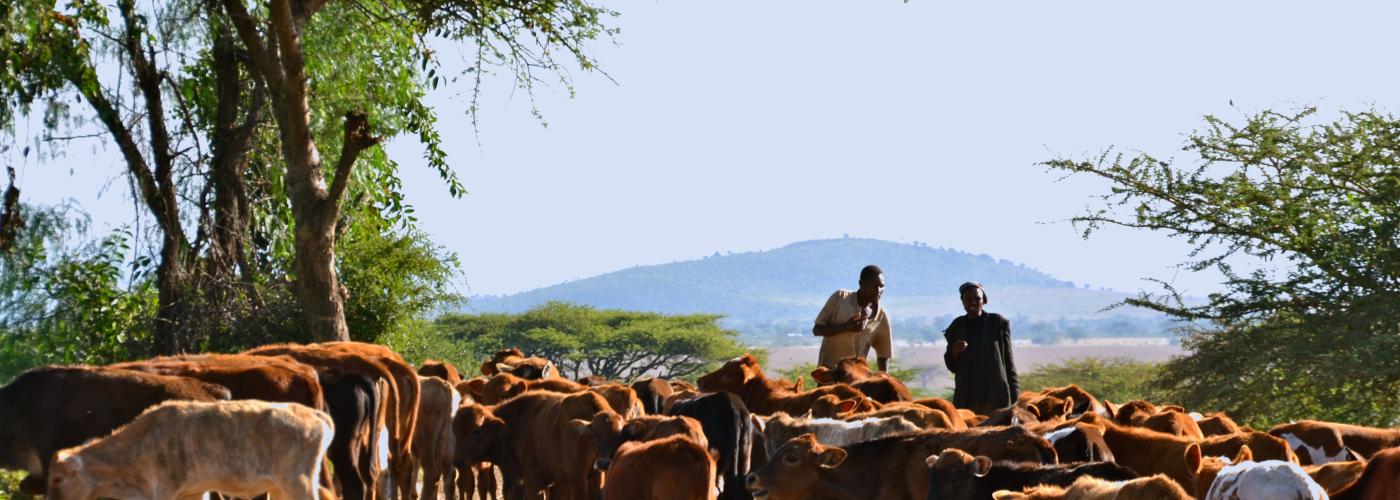
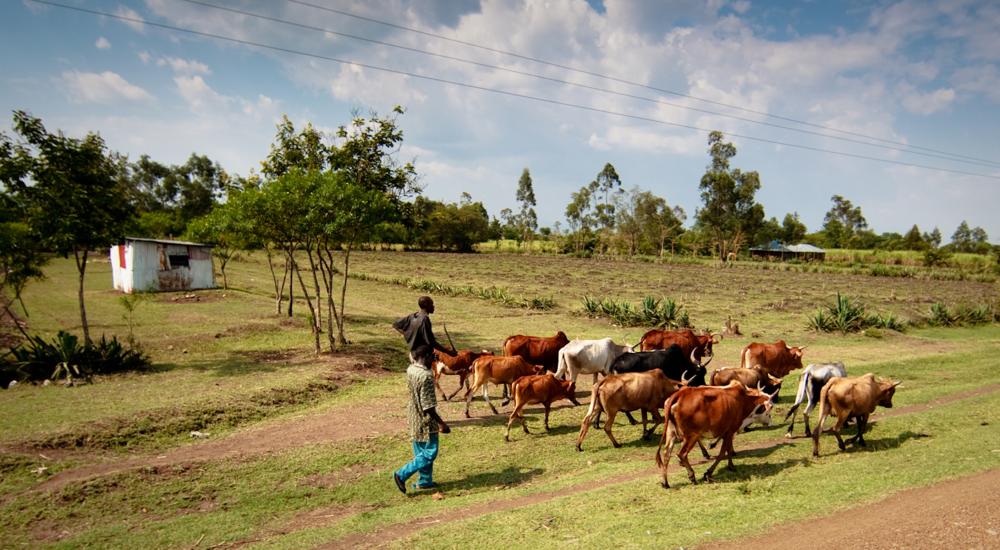
- Meat production in Kenya is dominated by small-scale and pastoralist production, which employs nearly half of the agricultural labor force and sustains the livelihoods of nearly 10 million Kenyans through farming, processing and trade activities. More than 72% of the 6.36 million households engaged in livestock farming are small-scale farms primarily producing for household or community production. Pastoralist producers manage 70% of the national cattle herd. The Kenyan government has dedicated resources to grow the sector and to emphasize new vaccination campaigns and veterinary services.
- Industrial agriculture is increasing across all livestock sectors, especially in beef and poultry production, driven in part by an increase in foreign investment.
- Meat production in Kenya is relatively low (about 15 kg per year) compared to average consumption in Africa (33 kg per year) and much lower than in North America (at 181 kg per year). There is a notable shift to poultry consumption in Kenya for a variety of reasons, including health and cost concerns.
- U.S. industry associations are pushing to remove market access barriers in Kenya, including changes to import licensing for meat. Experience in South Africa demonstrates the pressure to increase meat imports from the U.S. to maintain market access in other areas like apparel, as well as the importance of trade remedies to safeguard domestic producers from a surge in cheap imports.
- The Kenyan Peasants League and other smallholder coalitions also raise concerns about trade pressures to adopt genetically modified (GM) corn for animal feed. This has been the subject of legal battles for years. In March 2025, the Kenyan Court of Appeals upheld an interim injunction blocking GM corn imports, citing gaps in public participation and biosafety protocols.
BIBA’s National Coordinator Anne Maina commented, “The livestock sector in Kenya has seen a large leap in growth in the past few years with the poultry and pig sector growing tremendously. However, the cost of production of eggs, chicken and mutton for example is quite expensive, as the feeds are quite expensive with most raw materials being imported from neighboring countries like Uganda, Tanzania and Zambia. The costs of feeds is a lucrative market, and the USA is keen to bring in its genetically engineered corn, soya and even readily processed mutton, chicken and eggs to the Kenyan market. This will cause unfair competition and may in turn kill local production already suffering from high input costs.”
While Kenya is currently confronting a relatively low (compared to other new tariffs) 10% tariff on its exports, there is undoubtedly considerable pressure to open its markets for imports, including on meat. It’s hard to know how to influence the entirely opaque process happening now, other than continuing to publicize demands for better trade rules grounded in evidence. Those rules must support smaller-scale, agroecological production that advances rural livelihoods and offers healthy choices to consumers at affordable prices. The current trade mayhem in the U.S. must not cut off those options in Kenya or other countries.
Read the full report here.