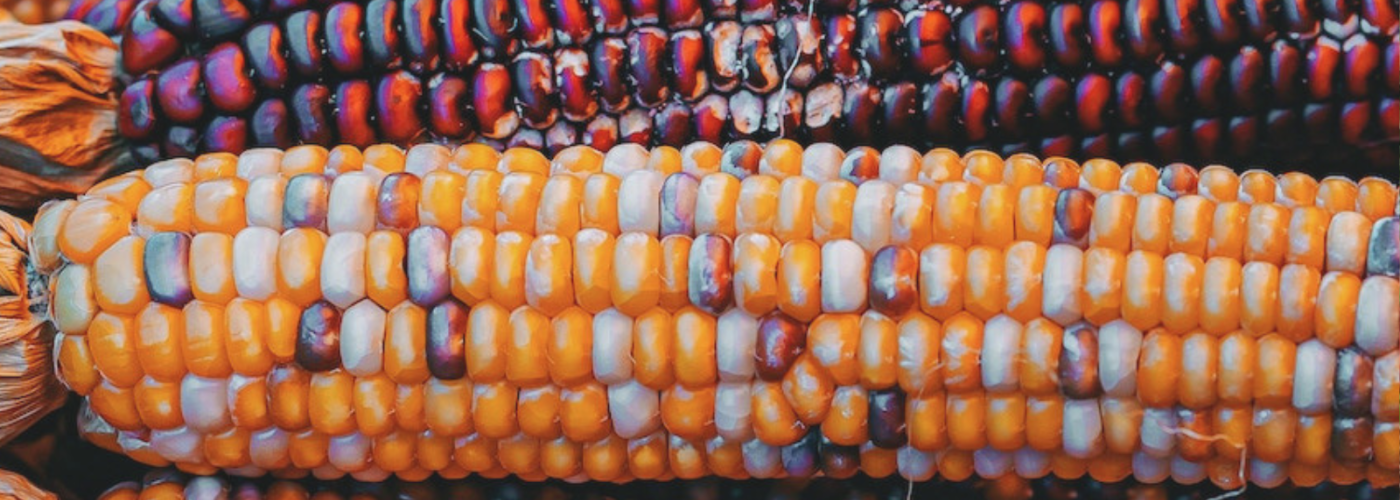
Food is about more than just the calories we need to survive. The expansion of corporate-controlled industrial agriculture has meant the loss of traditional knowledge, diverse genetic resources, and communities’ power to control their own food systems.
In Episode Four of Agroecology Uprooted, hear from Ernesto Méndez, Sagari Ramdas, and Leticia López about why food sovereignty is central to agroecology, and how farmers and peasants around the world are working to rebuild power together.
Listen below or on Spotify, Apple Podcasts or wherever you get your podcasts.
Did you miss a previous episode? Find the full series here.
Episode Guests
- V. Ernesto Méndez is a Professor of Agroecology at the University of Vermont (UVM), where he also serves as faculty co-director of the Institute for Agroecology. His research and teaching focus on agroecology, smallholder coffee systems, participatory action research (PAR), and transdisciplinary research approaches. He has over 30 years of experience working with smallholder and Indigenous farmers in Latin America and collaborating in agroecology efforts around the world. Since 2022, he serves as vice-president of the board of directors of the Latin American Scientific Society for Agroecology (SOCLA). He has co-authored or co-edited 7 books, and over 75 scientific articles and chapters. Ernesto obtained a BS in Crop Science from California Polytechnic State University at San Luis Obispo, an MS in Tropical Agroforestry from the Tropical Agriculture Research and Education Center (CATIE) in Costa Rica, and a PhD in Agroecology and Environmental Studies at the University of California, Santa Cruz. He was born and raised in El Salvador and maintains deep connections with his Latin American roots. You can find more information about Ernesto here.
- Sagari Ramdas is a veterinary scientist, a member of the Food Sovereignty Alliance, India and is learning to be an agroecological food-farmer. She is a popular educator at the Kudali Learning Centre, in Telangana, India where she designs and facilitates transformative popular education processes on social justice, food sovereignty and Buen Vivir, with Bahujan (Dalit-OBC-Muslim) and Adivasi youth and women. Through the alliance, she works closely with pastoral, adivasi and other small and marginal farming communities organizing for food sovereignty. She writes on her interests concerning social justice, food sovereignty, livestock and ecological governance. Sagari holds a degree in veterinary science and animal husbandry from the College of Veterinary Science, Haryana Agriculture University, India, and a master’s in animal science specializing in animal breeding and genetics from the University of California, Davis, U.S. She was founder and a former director of Anthra, an organization of women veterinary scientists. She is an Honorary Research Fellow at the Centre for Agroecology, Water and Resilience (CAWR), Coventry University, U.K.
- María Leticia López Zepeda is a rural sociologist with over 45 years of experience working and organizing with rural communities and peasant economic organizations in Mexico. Her work has focused on managing agroecological production, designing and implementing government programs for rural development, and public policy analysis and advocacy aimed at transforming the agri-food system and advancing Food Sovereignty. Holding a degree in Rural Sociology from UNAM, she served until 2024 as the Executive Director of the National Association of Commercialization Enterprises of Rural Producers (ANEC). She is a member of the "Plan de Ayala Century XXI Peasant, Indigenous, and Afro-Mexican Movement." Currently, she is an active participant in the national campaign "Without Corn, There Is No Country" (*Sin maíz no hay país*), the "Collective Lawsuit Against the Planting of Transgenic Corn," and the "Alliance for Food Health," among other initiatives. She currently works with the Mexican government program "Corn Is the Root" (*El maíz es la Raíz*) as a member and liaison for its Advisory Council.
Thank you to our interpreter Cassandra for her assistance with this episode.
Photos
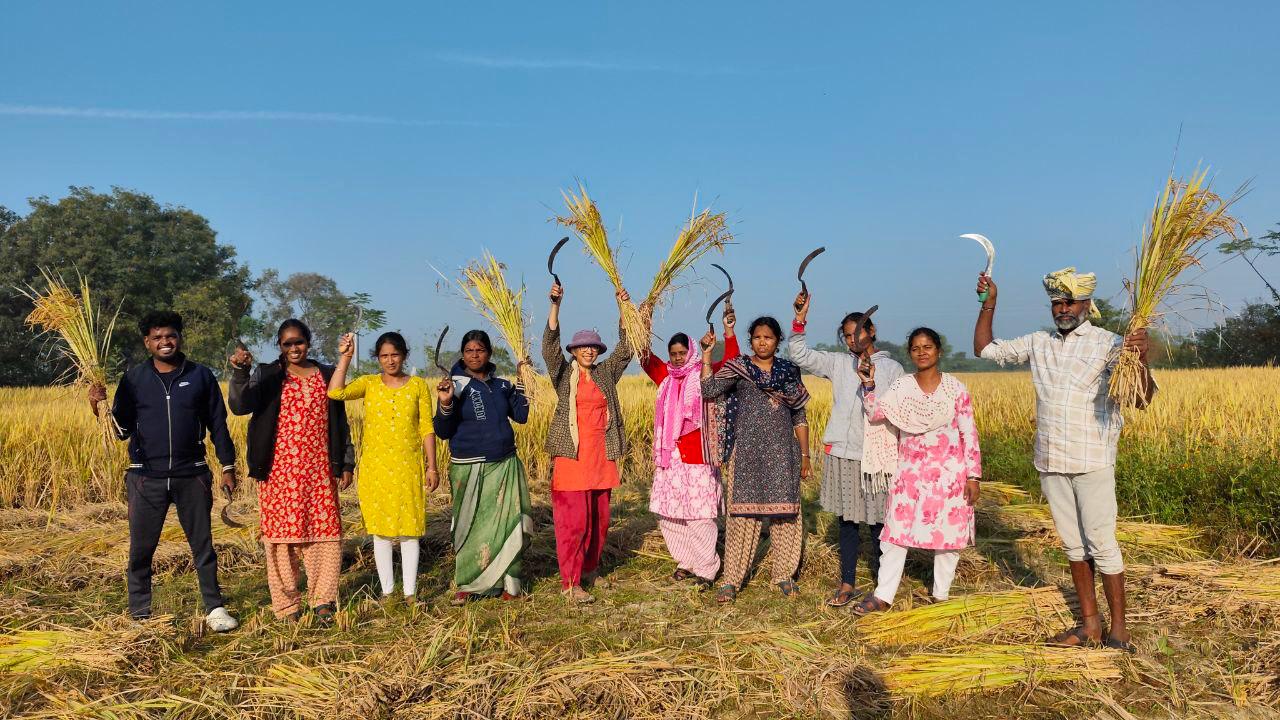
Sagari Ramdas (purple hat, center) with fellow workers on her agroecological farm.
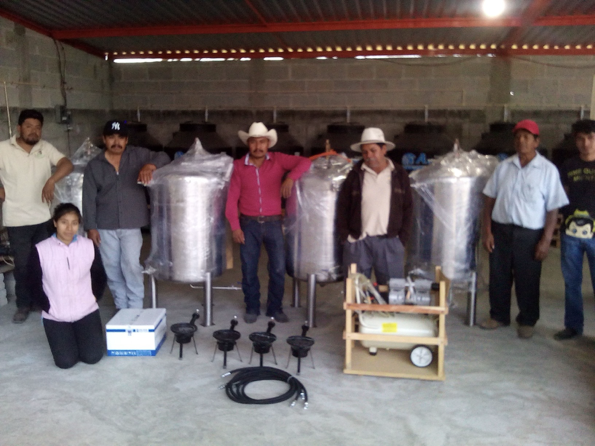
Mexican farmers in a "biofactory" for producing locally-sourced organic fertilizers, part of Mexico's agroecology strategy.
Transcript
00:00:02 Ernesto Mendez
The reality would be that we would all be better off if we could work together. But if you ignore the political economy of the food system, it is really hard to aspire to make deep and systemic transformations. It's just not enough to conserve soil or improve practices on the farm to bring about the change because it's all interconnected.
00:00:36 Lilly Richard
What does it mean for food to be political? If industrial agriculture isn't working for people or the planet, why is that the dominant system? Why do corporations hold so much power in the food system, and how does that relate to agroecology? Whose knowledge gets taken seriously? Who gets to decide what we eat and how we farm? And why does it matter? And how do we change it? From the Institute for Agriculture and Trade Policy, I'm Lilly Richard, and this is Episode 4 of Agroecology Uprooted.
00:01:24 Lilly
The term agroecology is relatively new. It was coined in 1928 by Russian agronomist Basil Bensen and studied as a science starting in the 1960s. But its roots go back much further. Many of the concepts and practices central to agroecology have been part of traditional food systems for thousands of years, based on centuries of trial and error and indigenous scientific knowledge accumulated over time and passed down through the generations. Traditional food ways were and are deeply tied to culture, identity, and place.
But the expansion of European colonization and the development of capitalism began to reshape food systems throughout the 18th and 19th centuries, in some cases violently. The advent of the Industrial Revolution in the 1800s and industrial agriculture around the turn of the 20th century introduced new technologies that made it possible to produce large quantities of certain commodity crops using less labor and to start shipping them over longer distances.
The consequences of these developments weren't just about the new technologies. They were about the emergence of those technologies within the context of a system that was increasingly centered around extraction, expansion, and the eradication of alternative systems. And that continues to this day.
00:02:53 Ernesto
I am Ernesto Mendez. I'm a professor of agroecology and also co-director of the Institute for Agroecology at the University of Vermont in the Northeastern United States.
00:03:05 Lilly
I talked to Ernesto about the history of agroecology as a science and its connection to indigenous traditions and peasant-led movements for food sovereignty.
00:03:15 Ernesto
So Latin American agroecology, I like to say, has been going on for thousands of years because it was being practiced by indigenous farmers since before the conquest and colonization. But the agroecology we hear about today, which is more academic, that started around, I would say around the 1920s, mostly in Europe, where some people conceptualized it. However, it didn't really take on within the academy until a resurgence in the 1960s and the 1970s.
And here we see a lot of movement, I would say around the world, but here I will talk more about what was happening in the US and Latin America, where people started to pay attention to indigenous and smallholder agricultural systems in Latin America because they were looking at how ecologically sound they were. Sustainability was becoming an area of interest, because we were seeing the impacts of the Green Revolution. So this very intensive industrial type of agriculture was starting to show that the higher yields also came with higher levels of pollution, inequality supporting more the larger farmers than smallholders, and a lot of other different problems.
00:04:35 Lilly
The Green Revolution refers to the development and global implementation of new agricultural technologies in the mid-20th century, especially the development of higher-yielding hybrid plant varieties led by scientist Norman Borlaug at the University of Minnesota. At that time, global population growth was outpacing the ability of existing food systems to feed people.
With the new high-yielding crops, along with lots of fertilizer and increased irrigation, cereal grain production in developing countries more than doubled. It's an achievement that's credited for preventing over a billion deaths from starvation. But it's complicated. The Green Revolution also massively expanded industrial agriculture and all of the problems that come along with it.
As governments incentivized farmers to adopt industrial farming practices and begin producing these high-yielding staple grains, they did so at the expense of food system diversity, and they introduced a dependence on external inputs and proprietary seeds that would come to be exploited by multinational agribusiness corporations, ultimately undermining farmers' self-determination.
And the environmental consequences of expanding industrial agriculture, including increased use of agrochemicals, quickly became clear. Rachel Carson's seminal book, Silent Spring, was published in 1962, documenting how pesticides were devastating the environment and harming human health. You might recall from our previous episode that those are still huge issues in the food system. But in the 1960s, there were some attempts to address the damage, including banning the toxic insecticide DDT. That's also about when Western researchers started looking into sustainable agriculture practices, including agroecology.
00:06:35 Ernesto
So these early scientists in the US and Latin America started to look with more curiosity at indigenous agriculture, which is alive in a lot of the Latin American regions. And developed the more academic side of agroecology, focusing on the ecology of indigenous agriculture. So ecology being how living organisms relate to themselves and their environment had not been a part of more traditional agronomy. And these pioneers were bringing this different vision to agriculture and saying, oh, look, these Milpa systems of corn and beans and squash in Mexico and Central America have been around for thousands of years, which tells us that they have some characteristics of sustainability. And look, agroforestry systems really look like the forests that are the natural ecosystems of an area. There's something really interesting there.
So you started to look and try to explain in a more scientific way what was going on in those systems and why they were more sustainable. And to bring attention to, there's a lot of value in indigenous knowledge that people have been developing over millennia and are now showing us in these living agricultural systems.
And I will say that one key development was the formation of the Latin American Scientific Society for Agroecology in 2007. So SOCLA is the acronym. And it was the first organization of its kind. And even though it has scientific in it, goes way beyond science. Also inviting a variety of actors from farmers to people from nonprofits, from rural movements and peasant movements to be a part of it. And I'm very proud of SOCLA and I'm now acting vice president for the last few years.
In addition, there is this connection with social movement. So one of the characteristics of agroecology has been this manifestation of this field of knowledge, not only in the academy, so as a science, but also within social movements. So social movements using it as a platform to advocate for more just and ecological food systems across the world. And we see La Via Campesina using agroecology as the way that they are advocating for their members to practice agriculture and many other movements similar to La Via Campesina.
00:09:08 Lilly
La Via Campesina is the largest peasant or small farmer organization in the world, a global coalition of grassroots movements representing around 200 million farmers. They actually coined the term food sovereignty in 1996, recognizing the danger of handing over control of the food system to agribusiness corporations.
The conversation in international governance spaces around global hunger, especially since the Green Revolution, had been focused on food security, specifically the idea that we need to produce adequate calories to support the world's population – which is true, but it matters where those calories come from, and it matters who decides. Under the industrial system, food security means producing large amounts of commodity crops, simple, efficient, and profitable for big ag, and squeezing out small farmers, local food cultures, and food system diversity. Of course, that system is also dangerously unsustainable and extremely vulnerable to, let's say, a global fertilizer shortage.
Food sovereignty was the counter to that model. It's food security achieved not through policies imposed by outside forces, but through protecting and strengthening local, diversified food systems, with decisions being made by the people who are impacted by those systems.
00:10:39 Sagari Ramdas
I am Sagari Ramdas, and I'm a veterinary scientist by profession and training, but currently I'm also a member of the Food Sovereignty Alliance. And I'm a popular educator at the Kudali Learning Center. I'm based in India, in the southern state of Telangana.
00:10:59 Lilly
I talked to Sagari about agroecology and food sovereignty in the Indian context and her own journey toward becoming an agroecological farmer. She started off as a veterinarian, co-founding A nonprofit organization called Anthra, which worked with small farmers to improve the health and productivity of their livestock.
00:11:18 Sagari
We were working very closely with both indigenous communities and rural communities, and we were interested in understanding the reason why people rear animals. or rear the breeds that they rear? Why do they have very clear practices and very clear relationships of animals with farming? Because I was educated in veterinary school, right? It was always this very colonial approach to animal farming. It began with a narrative that what people know is wrong and has to be replaced with a quote unquote knowledge which came out of universities, which was largely informed by a very colonial past in our context, in the Indian context. And that colonial narrative was that the breeds which people reared were unproductive, non-productive, which of course, if you take it out of the context of people and their environment, the purpose of keeping animals should be largely a productivist aim, right? It was a very productivist paradigm.
So obviously with my entire interaction with people, I unlearned a lot and I understood that it's not about you as a scientist knowing everything and coming in to tell people they don't know anything, but that you as a scientist, you are a subject to engage and dialogue with people. And through that dialogue, you can actually understand much more deeply and much more holistically the reasons and the purposes and the knowledge which people hold as to why they do something the way they do. And then you can actually arrive together at ways of addressing solutions which are much more realistic.
For me, there was a very strong realization through this work that for people, it's not just animals or it's not just crops, but there's a whole relationship between people the environment, their crops, their animals, their forests, their land, their water. So it's only when it's been taken out of the context where it has become fragmented into, you know, you're a veterinary scientist and someone else is a crop person and someone else is a forest person, you know?
And I'll never forget, there's a wonderful saying or a proverb. This was a farmer in one village who said, you know, and I say it in Telugu, that's the language I speak. He said, “Pashu Leka Penta Ledu, Penta Leka Pantaledu, Pantaleka Kasu Ledu, Kasu Ledu, Kasu Ledu,” which basically means without animals we don't have dung, without dung we don't get crops, without crops you don't get crop residue, and without crop residue you won't have animals. So it was like this amazing inherent appreciation of the connectedness of us with our environment around us.
And I think that really led me to moving away just from a very narrow, I mean, as a veterinary scientist, I should have technically only been working with animals, right? But that led me to the centrality of food and the concept of food sovereignty, the whole philosophic moorings of food sovereignty, which I really realized through my work with indigenous people that is somehow so integral. The fact that you control, you have the power to decide what you will grow, when you will grow it, how you will grow it, and how we meet our food needs. They're not necessarily just from cultivated crops. They could be from something you forage in the forest or something you collect, or it could be from your animals. And so I think that's what then led me to the concept of food sovereignty.
00:15:25 Lilly
Part of the colonial thinking that Sagari described is the tendency to place more value on a particular kind of science and knowledge, often called Western science, from institutions like universities, and to discount other forms of knowledge like indigenous traditions and the on-the-ground experience of farmers.
And science is extremely essential. That's important to note, especially when many scientific institutions in countries like the U.S. are currently under attack. But science can come with its own biases and limitations, especially when subjects are studied in isolation rather than as part of a system. Or when it's weaponized to support corporate interests and present industrial agriculture as the only modern, viable system, and traditional knowledge as backwards and inferior.
Agroecology is about bringing both systems of knowledge together to create synergies that can save labor, increase productivity, protect the environment, and preserve local knowledge and biodiversity, enhancing traditional food systems instead of replacing them.
00:16:37 Sagari
I think what is so critical and core for us is that instinct of curiosity and observation, which historically farmers have always held. That's how they generated knowledge. And what capitalist farming has done is to take that away.
You've been told that what your knowledge is insignificant, or if your knowledge is there, it's actually just to be extracted and to be commodified. But you as a generator of knowledge yourself is something which I think that's so integral a part of agroecology, right? Then the whole element of labor, so the collectivizing and sharing of labor, it is again so core to this. Sharing of knowledge and sharing of labor are so core to agroecology in our understanding.
And I wanted to also be a practitioner to understand what does this really mean in terms of being able to grow your own food, keep your own chicken, rear your own animals. And so roughly about 13 years ago, I got – my partner and I, we have a 2 1/2 acre piece of land. And I continue to say I'm just learning. I am still a learner to be an agroecological farmer. But what I can say today is that I draw immensely from that continuing lived experience of actually making decisions every year.
We have a small piece of land, but we are able to produce enough food from that very diverse kinds of food to feed both ourselves and also – our land is also linked to the learning center where I'm a popular educator. So part of that food is also going into, it's a community collective. It's not just us who is consuming that food, but many others.
00:18:25 Lilly
Activist and cooperative agroecological projects are growing all over the world, helping to strengthen food sovereignty. But again, it's not just about inspiring projects. Food sovereignty is a political movement that demands the reorganization of power, because in many places, existing policies and international trade agreements reinforce the dominance of corporations and financial institutions and undermine any attempts to build a more just, sustainable food system.
On the other side of the globe in Mexico, the movement for agroecology and food sovereignty is very prominent and has even won some support from the Mexican government. Because Mexican farmers know exactly what's at stake after the North American Free Trade Agreement, NAFTA, devastated local food systems starting in the 1990s.
With the help of an interpreter, I talked to Leticia Lopez, a rural sociologist who has worked with farmer and peasant movements for 47 years. She was previously the executive director of the farm marketing organization ANEC and is currently collaborating with the Alliance for Food Health, the No Corn, No Country campaign, and working as a consultant with the Mexican government, focusing on initiatives to protect native corn varieties.
00:19:49 Leticia Lopez (All answers translated through the interpreter)
First of all, agroecology is a central demand of the small scale and medium scale farmers and peasants of Mexico. And we need to ask ourselves, what kind of food and agricultural system do we want? How do we want to feed ourselves? How do we want to live and interact with the environment? And what are the corresponding policies that we need to do so well?
The Industrial Revolution, as well as the so-called Green Revolution, coupled with neoliberal policies have undermined our traditional food and agricultural system and converted food into a commodity with a very reductionist lens. The alternative is agroecology.
Really what happened in the case of Mexico with the free trade agreement and NAFTA was that these two models of agriculture clashed and competed. Our traditional agriculture in Mexico, our food systems are not quote unquote efficient in the US worldview. It's not that we're inefficient, it's that we're different and we have such a rich history and culture which shapes that difference. Our worldview of our agriculture is not that we are generating commodities it is not the commodification of nature.
I mean, if we talk specifically about corn, which of course is a basic staple of Mexico and its diet, we see that the Mexican corn was unable to compete with the U.S. corn producers who don't conceive of corn as a staple, but as just a raw material and a business venture. So the Mexican farmers and peasants were at a huge disadvantage in terms of the viability of their business and couldn't compete with the corporations and the prices of the imported corn.
00:22:35 Lilly
Small-scale farming is common in Mexico, but it was more widespread before the adoption of NAFTA in 1994. One of the consequences of that free trade agreement was that Mexican markets were flooded with cheap corn from U.S. grain companies, where it was being industrially overproduced.
About 2 million Mexican farmers lost their livelihoods, forced to quit farming because they could no longer earn a living. And large-scale industrial farming began to expand in Mexico, along with all of its accompanying social and environmental harms.
00:23:15 Leticia
So the consequences have been absolutely devastating. Massive migration, worse poverty, entire towns that are depopulated. Because of the immigration and depopulation, organized crime has flooded into these evacuated spaces and taken over. And obviously their agenda is contrary to the wellbeing of the communities.
Ancestral practices of growing food have been abandoned and replaced by the extractive practices of agro businesses and extractivism itself. We're seeing that this in turn is changing the climate in very adverse ways. And of course, this is a vicious cycle, which makes it much harder for peasants to grow food.
00:24:15 Lilly
One of the impacts that sparked widespread support for food sovereignty and agroecology was the way industrial agriculture and the introduction of genetically modified corn began to threaten Mexico's treasured diverse native plant species, especially corn or maize. GM corn inserted new genetic material into the plants to make them herbicide and pest resistant. GM crops were also patented by global seed companies, which made it illegal for farmers to save seeds or sell them or breed them. Essentially, these companies patented the genetic material of corn that had been developed in Mexico for centuries, a practice critics called biopiracy.
00:25:01 Leticia
The loss of economy of native seed production has been the point of the spear for cracking open Mexican agriculture and submitting it to corporations. When we lost control over the seed production, we lost the autonomy and the agency to control our seeds but also the whole body of traditional knowledge systems related to agriculture and the environment. By undermining our power to control our native seeds, the doors were flung open to impose dependency upon us.
Who controls native seeds is also a question of who controls the genetic resources that the peasants and farmers of Mexico have been caring for and shaping for thousands of years based on these profound traditional knowledge systems. But it is not just about the past. The importance of our native seeds is also the key for our future because that legacy is already shaping our power and capacity to adapt to climate change.
I am endlessly amazed by the adaption of native seeds that indigenous peoples and local communities and peasants have been achieving for millenniums, not just in Mexico, but in the world. The capacity and the know-how to adapt a native seed to all conditions is a miracle. But that miracle is precisely what is at risk of being lost.
00:27:06 Lilly
In the fallout of NAFTA, organizations like ANEC have been working over the last three decades to rebuild food sovereignty. And they've had some success, including the creation of government programs that provide financial and technical support for small farmers to adopt agroecological practices. But the vision goes further than that.
00:27:34 Leticia
So since 2019, the Mexican government has been implementing agroecology programs with peasants and small farmers who have 5 hectares or less. Originally, the program was called Sowing the Seeds of Life, Production for Well-Being. And now the latest incarnation of this program is called Corn is the Root. So the government is supporting agroecology and this is important, but it is not sufficient given the magnitude of the problem and the challenges that agroecology currently faces. We're still basically following a commercial agricultural model.
Agroecology requires that the state also participate in this transformation in so far as it must change from conceiving of agriculture as a source of profit for corporations and multinationals and understand agriculture as something that is necessary to benefit the peoples of the country. And that really requires that the state commit to a completely new role with regard to agriculture and its citizens.
The greatest challenge of all is to find a way to recover the control of our food systems with a focus on agroecology at the local, regional, and national levels at the same time that we have the foot of the United States economy on our neck. We're talking about controlling the decision making process of the entire food chain from production to consumption, but we're also talking about respecting the environment, which includes caring and respecting and conserving genetic resources and biological resources.
Agroecology is an opportunity to heal and to reintegrate and unite all of these fragmented dimensions according to a holistic worldview that was chopped up and violently divided by neoliberal policies.
00:30:05 Lilly
The reason food sovereignty is central to agroecology is because when you start looking at food and agriculture as a system, the political dimension becomes impossible to ignore. Here's Sagari again.
00:30:20 Sagari
Here at the Food Sovereignty Alliance, we look at agroecology as a pathway to dismantle this corporate capitalist food farming system and really take back control. For us, it's not merely at the level of, let's say, input substitution. It's not just about working at the level of the soil. And of course, we know the soil is so important and you have to start at the level of the soil. But I think when we use the term agroecology, it's about a restructuring.
So for instance, for me, agroecology without genuine land reforms makes no sense at all. So when we have a situation where we continue to have large inequality in land ownership, then the question of agroecology on land, right? And you're talking about you're working with land, you're working with communities. It's not just an individual effort. This is a collective process. So in a context where your base itself is an unequal base of land ownership, for us, therefore, that is so, vital.
00:31:28 Lilly
Land access and land ownership can be huge barriers to agroecology. Land prices are often inaccessibly high, and agricultural land is being bought up by larger farmers, corporations, and developers. Many peasants and small farmers don't actually own land, they rent it. And it's much harder to invest in the long-term process of building up soil health, establishing perennial crops, and transitioning to agroecology without the security of knowing you'll still be on that land next year. In India, gender inequality and caste discrimination are major issues in land access, but it's a problem that exists all over the world in different forms, and one that can't be solved without political intervention.
00:32:15 Sagari
The second for me is that our final goal is food sovereignty. It is not food security. For us then, agroecology is about shifting away from this productivist paradigm. We're redesigning to cultivate these diverse foods and grow diverse animals on our land to feed both our home, our family, our neighbors, our community, our village, and therefore the structure is horizontal. It's not vertical. It is about can we begin to localize? So it's about relocalizing our system, right? And in this relocalizing process, we're bringing in our own knowledge. It's drawing from your ancestral knowledge. There's a lot of peer sharing and peer learning of that knowledge.
And finally, at the end of the day, this is about reestablishing principles of justice. So when I think of food sovereignty, that is the way I look at it, right? Food, at the end of the day, is so central for any human being. Any human being has a right to food. And to determine and shape that right to food is about you being an active participant. It's your agency to be able to define that. So whether it's food justice, whether it's social justice, or whether it's climate justice, it's justice which is at the core of this agroecological transformation.
00:33:39 Ernesto
So I like to say, and this is a question that I get a lot about what is the difference between agroecology, organic, and regenerative. And when I'm presenting about it, I usually do a Venn diagram with three circles. And these three approaches, because I consider them approaches to agriculture and food, have a lot of overlap. And I think most of the overlap is all of them are interested in a more ecological, environmentally sound way of agriculture. And organic and regenerative seem to have stayed at the agricultural side of things, where agroecology, even as long as 20 years ago, was already talking about food systems.
It was a realization that to bring about the transformation that we are seeking, you have to step out of the farm, not put the farm aside, but include other food system components and policies if you want to have a more systems-wide change and transformation.
There's different ways that people approach agroecology. So the more transformative one, just the one that we use at the Institute for Agroecology, really has equity as a core value, as a core principle. And these notions of equity and justice along with ecological production, along with supportive policies, is something that we see mostly in agroecology and we don't see in regenerative, organic. It's mostly about biophysical dynamics at the farm and the landscape level. And the reality would be that we would all be better off if we could work together. But if you ignore the political economy of the food system, it is really hard to aspire to make deep and systemic transformations. It's just not enough to conserve soil or improve practices on the farm to bring about the change, because it's all interconnected, right?
00:35:42 Lilly
Food sovereignty is both a principle being put into practice through agroecology and an aspirational goal that faces impossible headwinds under our current political and economic systems. So how do we make deep and systemic transformations?
That's next time on the final episode of Agroecology Uprooted.
00:36:19 Lilly
Agroecology Uprooted is produced by the Institute for Agriculture and Trade Policy. If you enjoyed this podcast, please rate and subscribe on your preferred podcast platform and share the show with a friend. IATP works at the intersection of policy and practice to advance just, sustainable food systems. You can support our work at iatp.org/donate.