
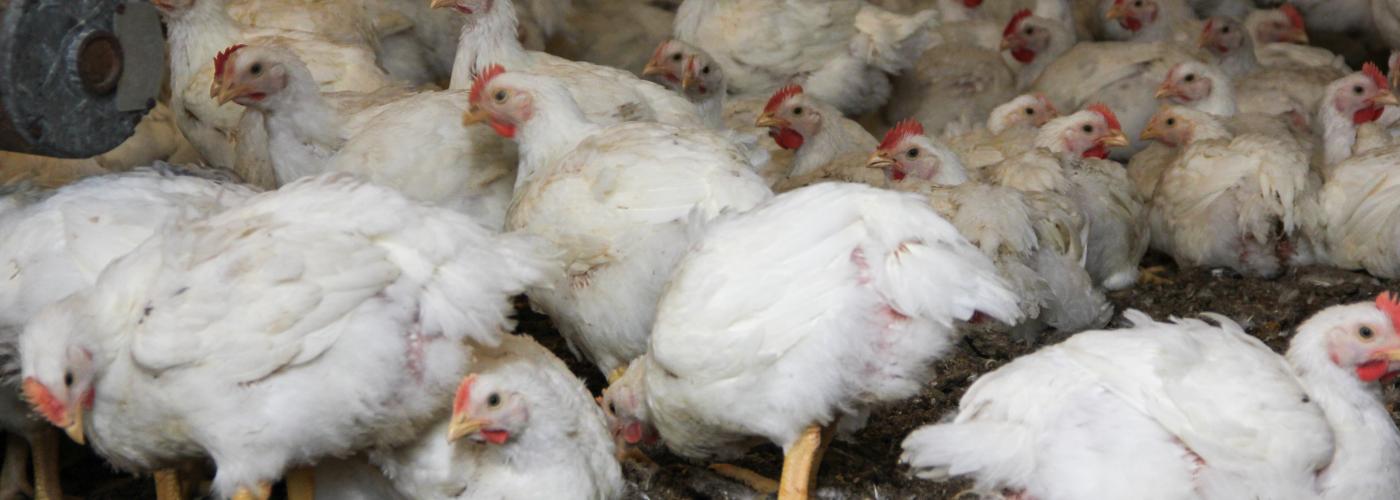
Industrial Livestock

The industrial meat and dairy sector emits more greenhouse gas than the entire transportation sector, while often relying on forced farm and slaughterhouse labor and draconian contracts for farmers. IATP has, for the first time, assigned greenhouse gas footprints directly to the corporations responsible. We are building a global coalition to hold these companies accountable to climate, food safety and human rights standards. 

Smart Guide to Minnesota Dairy Without rBGH

Recombinant Bovine Growth Hormone (rBGH) was one of the first genetically engineered agriculture products and is a synthetic hormone given to dairy cows to force increased milk production. It can also cause udder infections leading to increased antibiotic use. rBGH also raises the levels of Insulin-like Growth Factor-1 (IGF-1) in cows and cow's milk.

Penicillin in Peril

The reckless use in animals of tried-and-true human antibiotics has contributed to the development of serious antibiotic-resistant human disease. The most straightforward way to address resistant diseases such as CA-MRSA is to curb unnecessary use of all antibiotics important to human medicine in U.S. livestock operations, including penicillin and tetracycline.

Group Letter to FDA re: U.S. Livestock May Be Reservoir for MRSA

Comment to FDA expressing concerns that the agency is not pursuing the likelihood that U.S. livestock operations are a reservoir for Methicillin-resistant Staphylococcus aureus (MRSA) and the FDA is not responding to NARMS data indicating the emergence in the United States of Enterobacteriaceae resistant to cephalosporins.