
Search
The Institute for Agriculture and Trade Policy hosted a webinar to provide more information on the second Rural Climate Dialogue in Grand Rapids, including outcomes, follow up, and a participant's perspective.
The congressional vote on Fast Track Trade Promotion Authority (TPA) has entered into a period of what appear to be rather convoluted twists and turns.
The [U.S.] economy is not working for those who depend on paychecks to make a living, that is to say, almost everyone.1
New York Times editorial: November 7, 2014
Tomorrow, June 6, thousands of people from across the Great Lakes region will come together for the Tar Sands Resistance March in St. Paul, MN. This will be the largest action against tar sands to date in the region; speakers include Bill McKibben, Winona LaDuke, and Keith Ellison among others.
Dr. Christine Porter Food Dignity Presentation Slides 6/4/2015
MinneapolisPoliticians and executives from some of the worlds biggest agribusiness companies are today meeting in Cape Town, South Africa for the leadership council of the controversial New Alliance for Food Security and Nutrition.
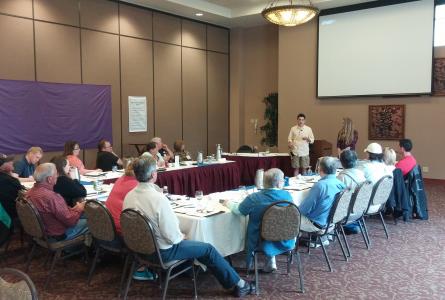
This blog overviews the 2015 Itasca County Rural Climate Dialogue in Grand Rapids, MN.
The Obama Administration claims that the new round of secret trade deals will be the greenest ever.
Bird flu has dominated the regions news for the past few months as it sweeps the Midwest killing millions of chickens and turkeys in its path. Industrial poultry production in Minnesota and other states have been hit by a deadly strain of avian influenza A (H5N2) with the sources still unknown. To protect a 265.6 billion-dollar-a-year industry, the poultry sector has laid blame upon farm workers and wild waterfowl. In actuality, H5N2 demonstrates the sectors dysfunctional economy of scale. Industrial poultry production survives solely by externalizing the damage it produces to consumers, workers, governments and the environment. In a market economy, the effect would hit a companys margins ending the industry as we know it. Dr. Robert G. Wallace will speak about the mechanisms of poultry's bioeconomics and how they will select for deadly disease with the potential to kill millions of consumers worldwide in a shorter timeframe than anticipated.
Speaker:
Dr. Robert G. Wallace, a Visiting Scholar at the Institute for Global Studies at the University of Minnesota, will be leading our discussion. Dr. Wallace has written extensively on the poultry industry and the dangers it poses to human and animal health.
IATP presents a number of public conversations about current events related to agriculture and trade at our office in the Whittier neighborhood of Minneapolis. Light refreshments, including Peace Coffee, will be provided.
Parking is available behind our office with access from 1st Avenue. We are also conveniently located within a few blocks of several Metro Transit buses (Routes 2, 11, 17 and 18) and less than a mile from the Midtown Greenway bike trail (exit at Nicollet Avenue).
Registration encouraged but not required.
The longstanding principal goal of U.S. trade policy is to advance U.S. economic interests.
So, why is the Obama administration fighting so hard to help Monsanto -- a company that is openly trying to slash its taxes by moving its headquarters from St. Louis to Switzerland?
There were some decidedly Kafkaesque aspects of the Congressional debate this week on Fast Track legislation, designed to speed through the passage of secret trade deals that could have a serious impact on our food system. At first, the Senate refused to approve a bill to limit debate on Fast Track.
While it might seem obvious that the rights to water and food are inextricably linked, all too often policies around their use and governance are developed for one without regard to the other. To address this problem, the UN Committee on World Food Security formed a High Level Panel of Experts and charged it with weaving these two policy strands together.
As the Senate lurches toward consideration of Fast Track, it's important to remember that the debate is more than a political game. Fast Track Authority is an abdication of Congressional responsibility and accountability.
Dear Secretary Burwell and Secretary Vilsack,
Sharon Treat
Senior Analyst, Institute for Agriculture and Trade Policy
Key Points
TTIP through the Backdoor: Agribusiness counting on CETAs regulatory cooperation agenda for the bulk of the benefits AFTER implementation